
Last updated on May 13th, 2023 at 10:55 pm
Florida is home to four types of ibis birds, including the white ibis, glossy ibis, white-faced ibis, and sacred ibis. The white ibis is the only bird native to Florida among these species, but glossy ibises and a few white-faced ibises are also perennial residents.
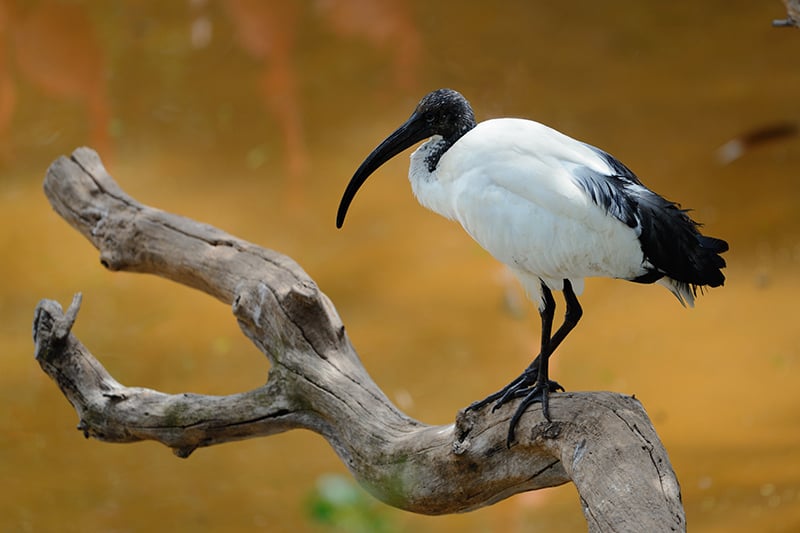
The sacred ibis (Threskiornis aethiopicus) is the only species of ibis birds considered invasive to Florida. The native white ibis nor the migratory glossy ibis is invasive. The white-faced ibis is not a widespread or predominant species in Florida.
Not All Species of Ibis Birds Are Invasive to Florida
The ibis birds have had an interesting tale of fluctuating populations in Florida and across many states.
The unpredictable trends have influenced the conservation status of most ibis species over the years, not just federally but also throughout the state.
The Florida Fish and Wildlife Conservation Commission’s directory doesn’t classify ibis birds as invasive.
While the FWC doesn’t have any species listed as invasive birds at this time, the reality is somewhat different.
The Introduced Sacred Ibis Species Is Considered Invasive to Florida
Threskiornis aethiopicus, or sacred ibis, is an African native. The species was neither a migratory bird nor a resident species of Florida.
Sacred ibis was introduced to the state, especially in the south.
The species was initially confined to several zoos and private bird collections in southern Florida, but Hurricane Andrew changed the status quo in 1992.
The destruction and aftermath led many sacred ibises to escape from their captive habitats.
The escaped sacred ibises bred in the wild, and their population increased in the following years.
Most of these birds in the wild were spotted at or around the following places:
- South Florida
- Miami Metro Zoo
- Miami Metropolitan Area
- Everglades National Park
- Arthur R. Marshall Loxahatchee National Wildlife Refuge
Similar zoo-break events have also occurred in Europe, including the following countries:
- Belgium
- France
- Germany
- Italy
- Spain
- The Netherlands
Sacred ibis is found mostly in zoos and ecological parks, but the bird is often reported as flying out of these refuges and reserves.
The species can establish feral populations and expand its breeding range.
Thus, the Center for Agriculture and Bioscience International classifies the sacred ibis as an invasive species in many countries, including the United States.
Florida recognized the threat of sacred ibis’ rapidly growing population in the wild.
The species couldn’t be allowed to have established breeding colonies due to these facts:
- Sacred ibis has a flexible habitat, so the species can adapt to various places throughout Florida and beyond.
- The species can inhabit coastal estuaries, lagoons, marshes, inland wetlands, wet or dry agricultural fields, and retention ponds.
- The species can also thrive in suburban and urban areas, including lakes, golf courses, and waste management dumps.
- Sacred ibis can prey on nestlings and eggs of various birds, including those of the imperiled species in Florida.
- Sacred ibis poses a risk to many species, including wood storks, gulls, pelicans, gannets, terns, and other seabirds.
Multiple government agencies and organizations teamed up to contain the spread of sacred ibis in the wild, including the following:
- Palm Beach County and other local governments
- Florida Fish and Wildlife Conservation Commission
- The US Department of Agriculture Wildlife Services
- Florida Audubon Society, scientists, and many concerned citizens
While sacred ibis is no longer an active threat to wildlife or the ecosystem, the species is still considered invasive to Florida.
The Native White Ibis Was Imperiled in Florida and Federally Till 2017
Eudocimus albus, or white ibis, is a Florida native and a perennial resident.
While the species is known to be a medium-distance migratory bird, most of the local white ibises don’t leave Florida at any time of the year.
The white ibis is not invasive to Florida, and in fact, it was a federally endangered species and an imperiled bird in Florida due to its declining population.
That changed in 2017 as the population was recorded to be relatively stable and growing.
The white ibis is no longer imperiled in Florida or endangered federally, but it’s still a protected bird as per the Imperiled Species Management Plan.
The Glossy Ibis Invaded the New World But Isn’t Invasive To Florida Now
Plegadis falcinellus is the second-most abundant species of ibis birds in Florida.
Also known as glossy ibis, this bird is not invasive to Florida, but it did invade the New World over the centuries, including the United States.
Glossy ibis isn’t a threat to other birds’ eggs, chicks, or ecosystems.
The glossy ibis is a medium-distance migratory bird. While the species isn’t a Florida native, many of these birds are perennial residents, unlike the white-faced ibis.
The White-Faced Ibis Isn’t a Native or Predominant Species in Florida
The white-faced ibis appears similar to a glossy ibis, but it is a different subspecies.
Plegadis chihi, or white-faced ibis, isn’t an abundant species in Florida and is more prevalent in the west.
Although the bird has expanded eastward in recent years, it is yet to set up an established breeding range east of the Mississippi River.
This means that it isn’t invasive to Florida.
The Federal Migratory Bird Treaty Act Protects Most Ibis Species
The Federal Migratory Bird Treaty Act protects 3 of the 4 ibis species found in Florida:
- White ibis
- Glossy ibis
- White-faced ibis
You can’t hunt any of these 3 ibis birds, and you’re unlikely to find sacred ibises out in the wild after the efforts to contain their feral populations in Florida.
Also, you shouldn’t feed white ibis birds in the state due to the following concerns:
- Health risks, including infectious diseases
- Changes in behavior and dietary habits
- A negative impact on white ibis’ ecosystem
That said, you can enjoy watching ibis birds in many places throughout Florida, including the following:
- Ding Darling National Wildlife Refuge
- Everglades National Park
- Merritt Island National Wildlife Refuge
You can read more about these refuges and parks in our guide on the best birding hotspots in Florida.
Some ibis birds may come as close as a few feet to you, giving you a great ringside view.
Otherwise, you need reliable binoculars to spot and track them. Ibis birds are rarely stagnant as they wade, forage, and feed in the wild.
Get a pair like the Nikon Aculon A211 8×42 from Amazon. These affordable binoculars offer impeccable clarity without haze or glare.
The lightweight design and 8x magnification make the Aculon perfect when you scan and track ibis birds.
Don’t use 10x or 12x bins for ibises, as you’ll struggle to track them.