
Last updated on May 14th, 2023 at 11:50 pm
Birding enthusiasts find solace in Florida’s natural beauty, where diverse and colorful species await their discovery. The Sunshine State’s unique ecosystems attract a wide array of birds, making Florida a top destination for birding adventures.
From the expansive Everglades National Park to the hidden gems such as the Tomoka Marsh Aquatic Preserve, Florida offers endless opportunities for birding.
Here are 10 of the Best Birding Hotspots in Florida:
1. Fort De Soto Park
Fort De Soto Park in Florida is a premier location for birding and a popular birding destination in the United States.
The park is located in Pinellas County and consists of five interconnected islands.
It is home to a variety of beach plants, mangroves, wetlands, palm hammocks, hardwoods, and scores of native plants.
The park is known for its diverse birdlife, including shorebirds, gulls, terns, wading birds, migratory songbirds, hawks, eagles, owls, and more.
Over 330 bird species have been sighted in the park, making it a birding hotspot.
Even in the hottest months, there is something to see at Fort De Soto Park.
You’ll see nesting Laughing Gulls, Least Terns, and Magnificent Frigatebirds roosting on the small mangrove islands surrounding the park.
2. Lake Apopka North Shore
Lake Apopka North Shore is a wildlife restoration area located in Orange County, Florida, and is a popular birding destination in the state.
The area was once a site of extensive agricultural activity, but in the 1990s, the state of Florida began an effort to restore the wetlands and other natural habitats in the area.
This resulted in the creation of the Lake Apopka North Shore Wildlife Drive.
The drive is an 11-mile scenic route that winds through the restored wetlands, providing visitors with excellent opportunities to observe a variety of bird species.
Over 300 feathered species take refuge in Lake Apopka North Shore, establishing it as a prominent sanctuary for avid birdwatchers across the state and beyond.
The area is particularly well-known for its wading birds, including Great Blue Herons, Great Egrets, Snowy Egrets, and White Ibis.
Other bird species commonly seen in the area include Ospreys, Bald Eagles, Red-shouldered Hawks, and a variety of migratory songbirds.
The restoration efforts have also resulted in the return of several species that had been absent from the area for decades, including the Snail Kite and the Wood Stork.
3. St. Marks National Wildlife Refuge
St. Marks National Wildlife Refuge is partially located in Wakulla County, Florida, and is one of the oldest wildlife refuges in the United States.
The refuge covers over 70,000 acres and includes a variety of habitats, including saltwater marshes, tidal creeks, freshwater impoundments, and pine forests.
The refuge is home to a diverse range of wildlife, including over 300 bird species, making it a popular destination for birders.
St. Marks National Wildlife Refuge is particularly well-known for its wintering waterfowl, including Snow Geese, White-fronted Geese, and a variety of duck species.
The area is also home to one of the largest wintering populations of the endangered red-cockaded woodpecker in the southeastern United States.
This species of woodpecker is known for its unique social structure, where a group of up to four males will cooperate to help raise a single brood of chicks with one female.
4. Gulf Islands National Seashore
Gulf Islands National Seashore is located in Florida and Mississippi and is a popular destination for birders and outdoor enthusiasts.
The Florida section of the park is located on Santa Rosa Island and includes a variety of habitats, including beaches, dunes, salt marshes, and maritime forests.
The park is home to a diverse range of wildlife, including over 300 bird species, making it a popular destination for birders.
Gulf Islands National Seashore is particularly well-known for its shorebirds, including Piping Plovers, Snowy Plovers, and Least Terns.
5. Merritt Island National Wildlife Refuge
Merritt Island, located on Florida’s eastern coast, is a National Wildlife Refuge boasting over 300 different species of birds.
Its diverse habitats provide excellent birding opportunities for both residents and visitors.
The refuge is a crucial stopover for migratory birds and serves as a haven for numerous endangered species.
6. Honeymoon Island State Park
Honeymoon Island State Park is a picturesque barrier island located in Pinellas County, Florida, and is a popular destination for birders and outdoor enthusiasts.
The park boasts a diverse range of habitats, including sandy beaches, salt marshes, mangrove swamps, and pine forests.
The park is home to over 300 bird species, making it a premier birding destination in the state.
Honeymoon Island State Park is particularly well-known for its shorebirds, including Black-bellied Plovers, American Oystercatchers, and Red Knots.
7. Bald Point State Park
Bald Point State Park is a beautiful natural area located on the Gulf of Mexico in northern Florida.
This 4,065-acre park is a popular destination for birders due to its diverse habitats, which include salt marshes, tidal creeks, pine forests, and coastal scrub.
The park is also home to several rare and endangered species, making it an important conservation area.
Birders visiting Bald Point State Park can expect to see a wide variety of species, including shorebirds, wading birds, waterfowl, raptors, and songbirds.
Some of the most commonly sighted species include brown pelicans, ospreys, great blue herons, snowy egrets, and black skimmers.
Over 300 species of birds have been spotted here.
The park is also known for its population of bald eagles, which can often be seen soaring over the water.
8. St. George Island State Park
Located on a barrier island off the coast of Florida, St. George Island State Park is a haven for birdwatchers and nature enthusiasts alike.
The park’s pristine beaches, sand dunes, and salt marshes provide a diverse range of habitats that attract a wide variety of bird species.
Birders visiting St. George Island State Park can expect to see hundreds of species, including sandpipers, plovers, terns, gulls, and pelicans.
The park’s location on the Gulf of Mexico makes it an important stopover for migratory birds, with thousands of birds passing through the area each year.
In addition to its birding opportunities, St. George Island State Park offers visitors a chance to explore its stunning natural beauty through hiking, fishing, and kayaking.
The park’s miles of pristine beaches are a popular destination for sunbathers and swimmers, while its sand dunes provide a unique habitat for rare plant and animal species.
9. Bill Baggs Cape Florida State Park
Nestled on the southern tip of Key Biscayne, Bill Baggs Cape Florida State Park is a stunning natural oasis.
It offers visitors a chance to escape the hustle and bustle of Miami’s city life.
The park’s unique location on the Atlantic Ocean and Biscayne Bay provides a diverse range of habitats that attract a wide variety of bird species.
This makes it a popular destination for birdwatchers and nature enthusiasts.
Birders visiting Bill Baggs Cape Florida State Park can expect to see hundreds of species, including herons, egrets, ibises, pelicans, and ospreys.
The park’s location on the Atlantic Flyway makes it an important stopover for migratory birds, with thousands of birds passing through the area each year.
10. St. Andrews State Park
Nestled on the Gulf of Mexico in Panama City Beach, St. Andrews State Park is a natural paradise that offers visitors a chance to explore the beauty of Florida’s Emerald Coast.
The park’s diverse habitats, which include salt marshes, dunes, and pine forests, provide a home for a wide variety of bird species.
Birders visiting St. Andrews State Park can expect to see a wide variety of species, including shorebirds, wading birds, waterfowl, raptors, and songbirds.
Some of the most commonly sighted species include bald eagles, ospreys, great blue herons, snowy egrets, and brown pelicans.
The park’s location on the Gulf of Mexico also makes it an important stopover for migratory birds, with thousands of birds passing through the area each year.
In addition to its birding opportunities, St. Andrews State Park offers visitors a chance to explore its stunning natural beauty through hiking, fishing, and kayaking.
The park’s miles of pristine beaches are a popular destination for sunbathers and swimmers.
Its nature trails provide a unique opportunity to observe wildlife and explore the park’s diverse habitats.
For quick reference, here are all 10 above-mentioned birding hotspots in Florida:
| Rank | Birding Hotspot | Location | Notable Birds | # Species Sightings |
|---|---|---|---|---|
| 1 | Fort De Soto Park | West Central Florida | Red Knot, Piping Plover, Wilson’s Plover, Gull-billed Tern | 349 |
| 2 | Lake Apopka North Shore | Central Florida | Snail Kite, Limpkin, Black-bellied Whistling-Duck, Wood Stork | 346 |
| 3 | St. Marks National Wildlife Refuge | North Florida | Red-cockaded Woodpecker, Snowy Plover, Black Skimmer, Clapper Rail | 337 |
| 4 | Gulf Islands National Seashore | Northwest Florida | Reddish Egret, Black Skimmer, Least Tern, Wilson’s Plover | 321 |
| 5 | Merritt Island National Wildlife Refuge | Central Florida | Reddish Egret, American Avocet, Black Skimmer, Roseate Spoonbill | 317 |
| 6 | Honeymoon Island State Park | West Central Florida | Osprey, Reddish Egret, American Oystercatcher, Black Skimmer | 314 |
| 7 | Bald Point State Park | North Florida | Red-breasted Merganser, Black Scoter, Red-throated Loon, Northern Gannet | 305 |
| 8 | St. George Island State Park | Northwest Florida | Piping Plover, Reddish Egret, Black Skimmer, Least Tern | 296 |
| 9 | Bill Baggs Cape Florida State Park | South Florida | Brown Pelican, Magnificent Frigatebird, White-crowned Pigeon, Black-whiskered Vireo | 295 |
| 10 | St. Andrews State Park | Northwest Florida | Snowy Plover, Reddish Egret, Black Skimmer, Wilson’s Plover | 286 |
Florida’s Bird Species
Wading Birds
Florida is home to the largest number of wading bird species in the United States, with over 20 different species of herons, egrets, ibises, and spoonbills found in the state.
These birds can often be found in the state’s wetlands and marshes. Among them, the Wood Stork is a unique sight, known for its impressive size and bald head.
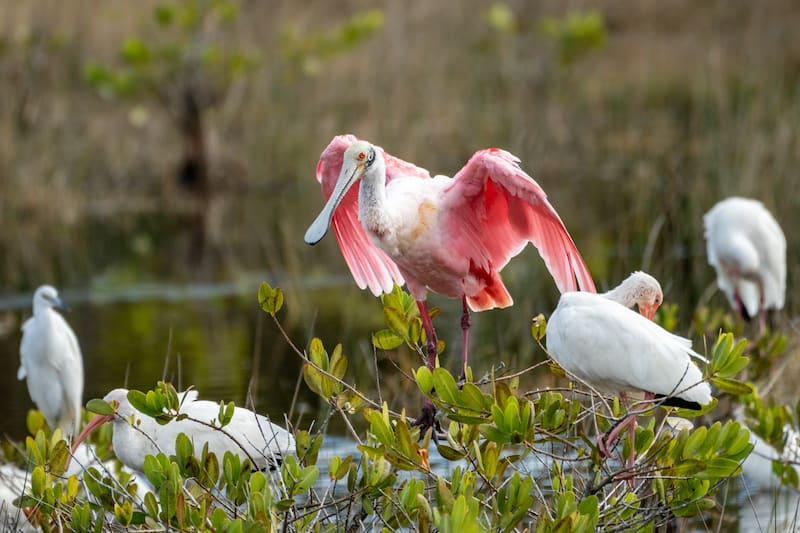
The roseate spoonbill is a wading bird that is unique to the Americas, and it can be found in Florida’s wetlands and coastal areas.
These birds are known for their distinctive pink coloration and their spoon-shaped bills, which they use to scoop up small fish and crustaceans from the water.
Shorebirds
Florida is a critical stopover point for many migratory shorebirds, including sandpipers, plovers, and terns, as they travel between their breeding and wintering grounds.
Some species, like the red knot, travel over 9,000 miles each way on their annual migration.
These birds feed on small fish, crustaceans, and mollusks found near the state’s shoreline.
The black skimmer is a unique shorebird that is found in Florida’s coastal areas.
These birds are known for their distinctive bill, which is longer on the lower mandible, allowing them to skim the water’s surface for small fish and crustaceans.
Raptors
Florida is home to the largest number of nesting bald eagles in the lower 48 states.
The state’s population of bald eagles has grown from just a few dozen pairs in the 1970s to over 1,500 pairs today.
The peregrine falcon, which is the fastest bird in the world, can be found in Florida during the winter months.
These birds can reach speeds of up to 240 miles per hour when diving to catch their prey.
Songbirds
The diverse ecosystem of Florida also supports many songbirds like the yellow-billed cuckoo and the endangered Florida scrub jay.
They fill the air with melodious songs, making birders’ hearts sing.
- Yellow-billed Cuckoo: Inhabits wooded areas.
- Florida Scrub Jay: Found only in Florida scrub habitats.
Nocturnal Birds
When the sun sets, Florida’s nocturnal birds come alive.
Owls, such as the barred owl and Eastern screech-owl, emerge from their hiding places to hunt for prey under the cover of night.
The rare limpkin can also be found, a nocturnal bird known for its distinctive, haunting calls.
- Barred Owl: Prefers wooded areas
- Eastern Screech-owl: Adaptable to a variety of habitats
- Limpkin: Wetlands and marshes
Great Florida Birding and Wildlife Trail
The Great Florida Birding and Wildlife Trail is a vast network of more than 500 premier wildlife viewing sites.
It guides residents and visitors seeking to observe native birds, butterflies, and more.
The Florida Fish and Wildlife Conservation Commission, supported by federal partners, ensures the trail’s preservation.
Birds find homes among Florida’s diverse habitats. The trail educates people about Florida’s 490 native bird species.
In this way, it fosters conservation and economic opportunities.
Visit trail gateways like Fort Clinch State Park and Merritt Island National Wildlife Refuge for birding information.
There, witness rare species like rails, pintails, teals, and shorebirds. Discover the richness of Florida’s birding hotspots amid the state’s natural beauty.
Birding Habitats in Florida
Wetlands
In the Sunshine State, wetlands like the Everglades and Lake Okeechobee offer ideal habitats for a variety of bird species.
Here, you’ll find large populations of wading birds such as wood storks, ibises, and roseate spoonbills.
The River of Grass in the Everglades is also home to the endangered snail kite.
Hardwood Hammocks
Hardwood hammocks are dense forests found in southern Florida, providing refuge for swallow-tailed kites and other native bird species.
One popular birding spot is the Anhinga Trail in the Everglades National Park, where diverse habitats converge to provide excellent birdwatching opportunities.
Coastline
Florida’s extensive coastline along the Gulf of Mexico and the Atlantic Ocean attracts numerous seabirds like pelicans and the magnificent frigatebird.
The Gulf Islands National Seashore and the beaches of Sanibel Island are just two examples of prime coastal birding locations in the state.
Additional Birding Hot Spots
Corkscrew Swamp Sanctuary
A pristine sanctuary, Corkscrew Swamp boasts diverse bird species. Among the birds is the rare Black-whiskered Vireo.
Trails offer encounters with this elusive gem.
J.N. Ding Darling National Wildlife Refuge
A refuge on Sanibel Island, J.N. Ding Darling houses the Mangrove Cuckoo. The Bailey Tract offers sightings of various egret species with ease.
Blackwater River State Park
A tranquil park, Blackwater River State Park provides birdwatching and camping opportunities.
Among the 160 species, visitors delight in spotting loons and bald eagles.
Shark Valley
In Everglades National Park lies Shark Valley. Here, one finds Sooty Terns among the countless wading birds. A leisurely tram ride unveils nature’s richness.
Everglades National Park
The Everglades, a vast wetland ecosystem, is the United States’ largest wilderness area in the east.
Visitors can access much of the park via the 38-mile-long main park road, offering plentiful birding opportunities.
As one of Florida’s most treasured natural resources, the park houses hundreds of bird species, including wading birds and raptors.
Sanibel Island
Sanibel Island’s pristine beaches and mangroves attract a diverse array of birdlife.
Visitors may spot more than 230 species of birds, including the rare roseate spoonbill and reddish egret.
The island’s famous “Ding” Darling National Wildlife Refuge is a must-visit site for bird enthusiasts.
Dry Tortugas National Park
Dry Tortugas National Park, located 70 miles west of Key West, is an archipelago of seven small islands that hosts a myriad of bird species.
Accessible only by boat or seaplane, this remote paradise is home to the country’s only regular breeding population of sooty terns.
The park also serves as an important stopover for migratory birds crossing the Gulf of Mexico.
Viera Wetlands
Viera Wetlands, situated on Florida’s east coast, is a popular destination for birdwatchers.
With its extensive marshes and shallow ponds, the wetlands provide ideal breeding and feeding grounds for various bird species.
Visitors may encounter great blue herons, white ibises, and an array of shorebirds throughout their visit.