
Birds possess a natural grace, even in sleep. In their quiet moments, they display an intriguing behavior of resting on one leg.
They sleep this way to conserve body heat, maintain balance, and keep a watchful eye on their surroundings. As the bird tucks one leg up into its warm feathers, it reduces heat loss, while the remaining leg anchors it securely. This seemingly simple act is a fascinating marvel of avian adaptation.
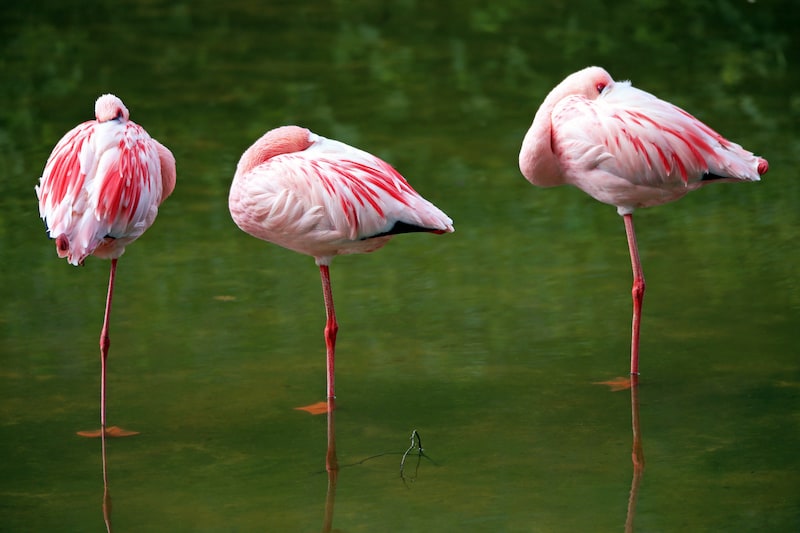
One Leg Sleeping Mechanism
Balance and Grip
Birds have a unique ability to sleep on one leg. This mechanism involves their tendons and muscles.
When perched, a bird’s foot automatically tightens its grip, allowing for balance and stability.
A study on the European Starling reveals that these birds can even sleep with a 90-degree angle, sometimes using just one foot.
They maintain balance with little active muscular force, as observed in flamingos. This passive mechanism helps them conserve energy while ensuring stability.
Comfort and Preference
Comfort could be another reason for birds to sleep with one leg up. This posture aids in regulating their body temperature.
Birds may lift one leg closer to their body to retain heat in cold environments.
In addition, birds have individual preferences for sleeping postures. Some decide to sleep on one leg, while others use two.
This could be due to differences in anatomy, species, or environmental conditions.
Benefits of Standing on One Leg
Temperature Regulation
Birds, like flamingos, have a peculiar habit: they stand on one leg to sleep. Why? The answer lies in temperature regulation.
In winter, they minimize heat loss by keeping one leg in their feathers.
By tucking their head and one leg beneath their body, they reduce the body heat exposure.
In summer, using only one leg to stand helps control their body temperature by preventing the blood from flowing through both legs.
This allows the unused limb to cool down.
Energy Conservation
Sleep is a time for rest. It’s crucial for birds to conserve energy during this period.
Standing on one leg requires less muscle force than keeping both legs on the ground.
This study on flamingos supports the idea that birds use this posture to save energy.
While resting, they can maintain their balance with little active muscular force, allowing them to preserve their resources for when they are awake and active.
Predator Protection
In the wild, birds are always in danger. Predators lurk nearby, waiting for an opportunity to strike. By sleeping standing up, birds can react quickly to threats.
One leg remains free, ready to push off the ground and take flight. They are always prepared to escape danger, even during a vulnerable time like sleep.
Different Bird Species and One Leg Sleeping
Waterfowl
Birds such as ducks and geese are known to sleep on one leg, a common adaptation among waterfowl.
This behavior helps conserve body heat, especially in cold water environments. They tuck one leg up, retaining warmth, while standing on the other leg.
Wading Birds
Wading birds like flamingos, egrets and herons also sleep on one leg. They typically rest near or in the water, balancing on one leg as they sleep.
This allows them to react quickly to any potential threats or opportunities for food, even when they’re in a resting state.
Shorebirds
Shorebirds like sandpipers and plovers share the one-leg sleeping adaptation. They rest in flocks, lifting one leg to conserve energy and reduce heat loss.
By resting on a single leg, these birds maintain their balance and remain vigilant for predators or weather changes.
Despite their distinct sleeping positions, the one-leg resting behavior is a valuable adaptation for many bird species.
From wading birds to shorebirds, this method saves energy and allows them to maintain a heightened sense of awareness.
The variety of sleeping behaviors seen in birds demonstrates their adaptability and resilience in their respective environments.