
Birds have evolved a variety of adaptations to attract and select mates, from elaborate courtship displays to colorful plumage. Do they mate with other species?
Birds typically do not mate with other species. However, there are exceptions, such as when closely related species may occasionally interbreed. This can result in hybrid offspring which, depending on the specific pairing, may have decreased survival rates or infertility.
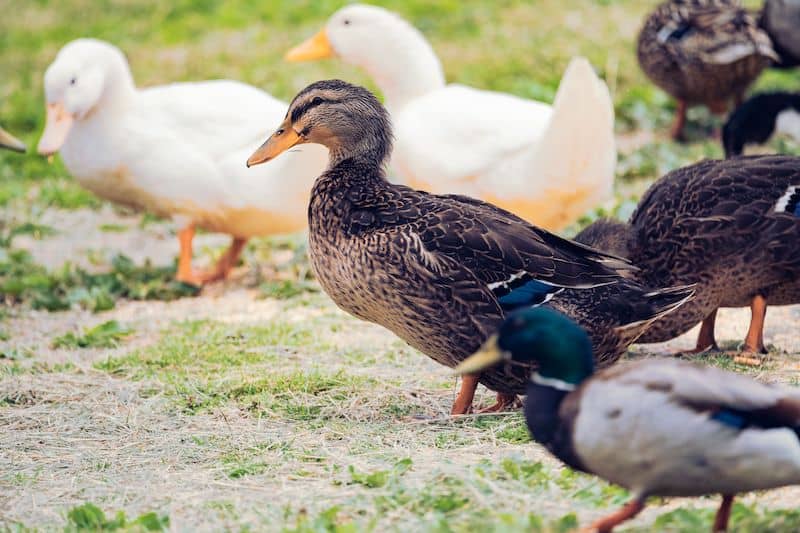
Do Birds Mate With Other Species?
Hybridization and Its Occurrence
Birds, like other organisms, occasionally mate with members of different species, resulting in hybrids.
Although many bird species remain true to their own kind, some cases have been documented where birds have bred with other species.
Hybridization occurs in varying degrees, from rare and isolated incidents to more frequent occurrences, depending on the bird species involved.
Some of the more common bird hybrids include those between closely related species such as ducks, geese, and gulls.
These offspring might exhibit characteristics of both parent species and, in some cases, may be unable to reproduce themselves.
Factors Influencing Interspecies Mating
Several factors can influence the likelihood of interspecies mating among birds. One key element is the availability of suitable mates.
In situations where prospective mates of the same species are scarce, birds may be more willing to mate with individuals from other species.
Geographic overlap between the ranges of different bird species may also contribute to interspecies mating.
When different species with similar habitat requirements and breeding seasons come into contact, the probability of hybridization increases.
It is worth noting that song repertoire might play a role in the mate choice for some bird species.
Environmental factors, including habitat disturbances and changes in land use, can likewise prompt hybridization.
Alterations to ecosystems may bring previously separate bird species into closer contact or force them to adapt to new conditions.
This increases the chances of interspecies mating.
Famous Examples of Bird Hybrids
Mallards and Ducks
Mallards are known to breed with various duck species, producing diverse hybrid offspring. Many waterfowl hybrids arise from mallard pairings, such as:
- Mallard x American Black Duck
- Mallard x Northern Pintail
- Mallard x Gadwall
These hybrids display unique combinations of plumage, size, and behavior from their parents.
Swans and Geese
Swans, being closely related to geese, also engage in crossbreeding. Some noteworthy swan and goose hybrids are:
- Mute Swan x Canada Goose
- Mute Swan x Greylag Goose
- Black Swan x Canada Goose
The offspring of such swan-geese pairings often exhibit intermediate features between the two species, such as body size and feather coloration.
Parrots and Parakeets
Parrots and parakeets can interbreed, resulting in intriguing hybrids known as mules. Particular hybrid pairings in captivity include:
- African Grey Parrot x Amazon Parrot
- Cockatiel x Budgerigar
- Lovebird x Indian Ring-Necked Parakeet
These mules have distinctive appearances and behaviors, influenced by their parental species.
Hummingbirds and Birds-of-Paradise
Hybridization among birds is not limited to related species, as seen in the merger of hummingbirds and birds-of-paradise.
For example, a hybrid called the Rackelhuhn results from a Golden-Collared Manakin mating with a Lance-tailed Manakin.
These rare hybrids showcase a blend of vibrant colors and elaborate displays from both parent species.
Mating And Courtship Behaviors
Bird Mating Displays
Birds exhibit distinct courtship and copulatory behavior in their species-specific ways.
Males often display vibrant plumage or exaggerated body parts to catch the attention of females.
These displays serve to signal their readiness for mating and showcase their fitness as a potential partner.
Some examples of bird mating displays include:
- Puffing out chest feathers or spreading tail feathers
- Erecting crest feathers on their heads
- Performing aerial acrobatics or hovering in place
Singing and Dancing
During the breeding season, many male birds use songs to proclaim their territory and attract females.
Rich and complex songs showcase the male’s vocal prowess and reveal valuable information about his health and fitness.
Females then choose partners based on the quality of their songs, indicating the likely success of their offspring.
Dancing is another common component in bird courtship rituals. Males may incorporate intricate dance moves or rhythmic displays to impress females. Examples include:
- Bouncing back and forth while singing
- Leaping into the air with fluttering wings
- Parading around with exaggerated steps and head-bobbing
Attracting Mates
In addition to visual displays and vocalizations, birds employ various tactics to attract mates.
Some males build ornate and elaborate nests, demonstrating their skill and dedication as potential fathers.
Others engage in mate guarding, a behavior that involves closely monitoring and following their chosen female to prevent rivals from mating with her.
Birds can also utilize olfactory cues, with some species producing unique scents to entice females.
Additionally, gift-giving is common among certain bird species.
This is where males present females with food items or decorative objects as a token of their interest and parental capability.
These myriad behaviors serve to increase the chances of successful mate selection and subsequent reproduction.
The survival and continuation of each bird species are then ensured.
The Bird Reproductive Process
Cloaca and Copulation
Birds possess a unique reproductive organ called the cloaca. Both males and females have one, serving as an important part of their reproduction process.
Copulation occurs when the cloacas of a male and female bird touch, a brief yet crucial moment known as the “cloacal kiss.”
During this contact, sperm is transferred from the male bird to the female.
Sperm Transfer and Fertilization
The sperm that is transferred during the cloacal kiss travels up the female’s oviduct to her ovaries. Here, it meets and fertilizes the ovum.
Different species exhibit diverse mating behaviors, such as elaborate dancing rituals performed by some birds like mallard ducks and ostriches.
Such displays are crucial in the selection of mates and can impact the success of fertilization.
Fertilization typically occurs internally, but a few exceptions exist.
Such as domesticated birds like chickens that still manage to reproduce despite varying mating practices.
After fertilization, the egg, with its protective shell and nutrients, begins forming within the oviduct of the female bird.
Egg Laying and Incubation
Birds lay eggs following the fertilization process. The number and size of eggs depend on the species.
Some birds, like emus, lay comparatively larger eggs, while others produce smaller, more numerous clutches.
Once laid, the eggs must be incubated to ensure proper development of the embryos within.
Parental care varies among species, with some birds solely relying on the female for incubation.
Whereas others, like the mentioned mallard ducks, share this responsibility between both parents.
Incubation periods also differ, generally dependent on the size and species of the bird.
Birds demonstrate a remarkable yet varied method to continue their lineage.
This includes the entire reproductive process, from cloaca and copulation to egg laying and incubation.
Whether in domesticated or wild settings, these diverse approaches to reproduction allow birds to successfully adapt and thrive in their environments.
Implications
Sterile Offspring and Genetic Diversity
Animals of different species, including birds, may mate occasionally, but the resulting offspring are often sterile.
Chicks with mixed genetic backgrounds can have difficulty reaching embryonic stages or surviving incubation.
For example, a mallard duck may mate with a swan, creating a “swoose,” that bears the physical characteristics of both parent species.
However, its chances of survival are slim.
Sterility in hybrids can be attributed to DNA incompatibility, which inhibits the production of fertile offspring.
Consequently, these hybrids do not contribute to the genetic diversity of the populations from which they originate.
Conservation and Evolution
Inter-species mating in birds might pose an obstacle to preserving the integrity of the species’ DNA over millions of years.
Researchers and conservationists studying avian species take these occurrences into account when studying classification, reproductive organs, and mating behaviors.
In aves, one of the most diverse groups of vertebrates, classification is based on orders and families.
Instances of inter-species mating could influence taxonomic classifications over time.
Some bird species practice polyandry, where a female mates with multiple males.
Inter-species mating may sometimes be documented here, which may provide valuable insights into the mating habits and genetic evolution of birds.
Genetic Experiments and Bird Mating Behaviors
Researchers studying birds have been investigating how genetic manipulation can affect animal behavior such as attracting mates.
For example, BMP4 and apoptosis play significant roles in bird mating positions and sperm transfer.
Inter-species mating in birds, while relatively rare and usually sterile, offers valuable insights into the worlds of genetics, conservation, and evolution.
Understanding these implications is crucial for researchers, bird enthusiasts, and conservationists alike.