
Last updated on May 22nd, 2023 at 10:07 am
Acrobatic birds like woodpeckers, nuthatches, and chickadees have evolved to feed upside down, giving them access to resources others might miss. These agile species belong largely to the order Passeriformes, which comprises over half of all known bird species.
Here are four types of birds that eat upside down:
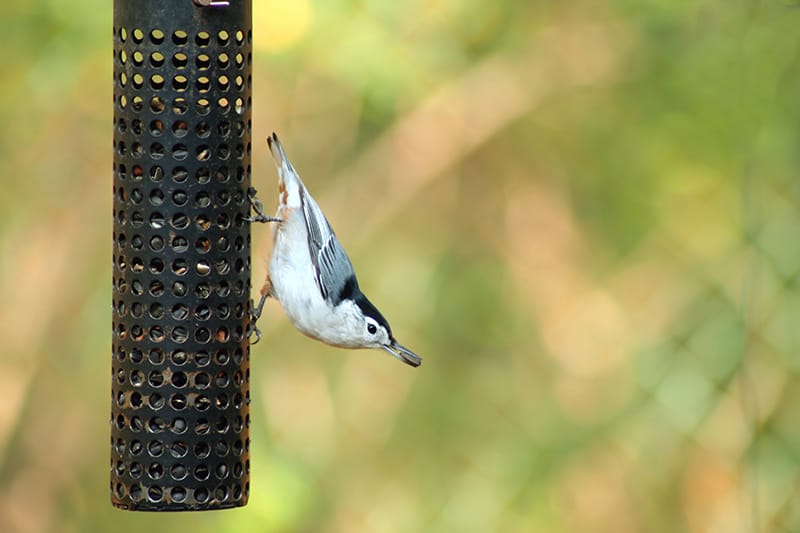
1. Nuthatches
Nuthatches, like the White-breasted Nuthatch, have specially adapted necks and beaks that allow them to hang upside-down while feeding.
These small birds, measuring about 5-1/2 inches, are usually bluish-gray on top with white undersides and a dark cap.
Their agile and acrobatic feeding skills help them access hard-to-reach insects and seeds.
2. Woodpeckers
Some species of woodpeckers, like the Downy Woodpecker, exhibit upside-down feeding behavior as they forage for insects on tree bark.
These forest dwellers are sometimes mistaken for the larger Hairy Woodpecker.
But the Downy can be easily distinguished by its smaller size and unique feeding habits.
3. Chickadees
Though not as well-known for their upside-down feeding as nuthatches and woodpeckers, Chickadees display this unique behavior.
With their short, stout bills and long tails, these small birds are able to hang upside-down while searching for insects and seeds, often using their feet for additional support.
4. American Goldfinches
The American Goldfinch is another bird species that showcases upside-down eating abilities.
These colorful finches frequently hang upside-down from seedheads and bird feeders to access their favorite food sources.
By doing so, they can reach seeds that are otherwise inaccessible to other, less agile birds.
Acrobatic Feeders
Hang Upside Down
The white-breasted nuthatch, commonly known as the upside-down bird, is particularly known for its acrobatic feeding habits.
This bird clings to tree trunks in search of insects hidden within crevices, making upside-down feeding a necessity for survival.
Adaptability
Birds like the nuthatches and woodpeckers have developed this effective technique to adapt to the environments they inhabit.
By hanging upside down while feeding, these birds are able to reach food sources that may be inaccessible to other birds.
This valuable feeding style allows them to exploit a wide range of food options, from insects to seeds.
An example of such adaptability is demonstrated by the goldfinch and pine siskin.
Both of these birds are acrobatic and can feed on an upside-down feeder; however, birds like house finches prefer to remain upright while feeding.
Gravity
The gravity-defying behavior of these birds plays a significant role in their feeding method.
Their strong claws and muscular legs provide them with the necessary grip to maintain their position while hanging upside down.
Acrobatic feeders like the nuthatch not only possess physical adaptations to hold them in place but also exhibit excellent balance and coordination skills.
Feeding Habits and Diet
Various species of birds showcase unique feeding behaviors, including the remarkable ability to eat upside down.
Their diets and foraging techniques will help you better comprehend their distinct eating habits.
Insects, Nuts, and Seeds
Birds that feed upside down have diverse preferences when it comes to their diet.
Some, like the Black-capped Chickadee and Downy Woodpecker, primarily consume insects like beetles, ants, gall wasps, and caterpillars found on tree bark or leaves.
Occasionally, these birds also eat seeds, berries, and nuts, such as sunflower seeds, or high-energy foods like suet and peanut butter provided at bird feeders.
Seed Retrieval
Feeding upside down allows birds to access seeds and nuts from different angles, making it easier for them to retrieve their food.
By using their strong beaks, upside-down feeding birds like woodpeckers and robins can efficiently extract insects and seeds from tree trunks and branches.
This unique eating method provides them with an exclusive source of nourishment that many other bird species cannot access.
Foraging Techniques
When foraging for food, these birds hop among twigs and branches, often hanging upside down to reach the underside of branches.
They deftly glean food from the surface or retrieve insects hidden within tree bark.
Moreover, they have the agility to catch insects mid-air or hover over food sources to consume their meal.
Apart from their remarkable foraging skills, many of these species store food and recover it for later consumption.
Types of Nuthatches
These agile, acrobatic birds are well-known for their unique upside-down feeding habits as they forage insects and nuts on tree trunks.
These are the four species of Nuthatches in North America:
White-Breasted Nuthatch
White-Breasted Nuthatches sport clean black, gray, and white markings, with a characteristic black cap on the males and a more grayish cap on the females.
They measure 5-1/2 inches in length with a wingspan of 11 inches.
Similar to their red-breasted relatives, these birds deftly maneuver upside down on tree trunks searching for insects, spiders, and nuts.
During the winter, White-Breasted Nuthatches tend to flock toward bird feeders that offer sunflower seeds, peanuts, and mealworms.
Moreover, suet proves to be an irresistible enticement for these energetic little nuthatches.
Red-Breasted Nuthatch
The Red-Breasted Nuthatch is a striking bird with a slate-blue back and a bold black eye stripe, contrasting against its warm rusty-red underparts.
While foraging, it clings upside down on tree trunks and dead branches, diligently searching for insects and larvae in the crevices.
The Red-Breasted Nuthatch is also known for its distinctive calls, a nasal yank-yank sound.
Fans of these birds can take delight in attracting them to their own backyards by providing suet and sunflower seeds in bird feeders.
Brown-Headed Nuthatch
Brown-Headed Nuthatches are the smallest of the three and are easily distinguished by their distinctive brown heads.
This contrasts beautifully with their blue-gray backs and wings. These birds are primarily native to the pine forests of the southeastern United States.
Like the other nuthatches, Brown-Headed Nuthatches forage upside down, probing the bark of pine trees for insects, larvae, and seeds.
Pygmy Nuthatch
The Pygmy Nuthatch is a small bird commonly found in western pine forests, with a brown head, slate-gray back, and buffy-white underparts.
They are known for their acrobatic abilities and can often be seen feeding upside down on the undersides of branches and pine cones.
They breed in large family groups and nest in cavities in dead conifers, lining the bottom with soft plant and animal materials.
Attracting Upside-Down Birds to Your Backyard
Location and Season
To attract upside-down birds to your backyard, consider the location and season.
These agile birds often prefer wooded areas with plenty of trees to forage and nest in.
Planting native trees and shrubs in your backyard will help create a suitable environment for them.
Fall is an excellent time to attract these birds as they search for food sources in preparation for the winter months.
Types of Bird Feeders
Choose bird feeders designed to accommodate upside-down feeding habits.
For example, suet feeders allow birds like nuthatches and woodpeckers to cling effortlessly to the wire mesh, eating upside down.
Another option is the upside-down tube feeder, which has feeding ports positioned to encourage birds like the white-breasted nuthatch to hang upside down while eating.
Consider placing feeders at various heights and locations within your yard, as this can attract a broader range of upside-down feeding birds.
Feeders placed closer to trees and shrubs provide cover and safety, while others positioned further away can attract more visible species like starlings and sparrows.
Preferred Food Items
Attract a wide variety of upside-down birds by offering several food options. Some preferred food items include:
- Black oil sunflower seeds: Popular with many bird species, it’s highly favored by upside-down feeding birds like nuthatches.
- Safflower seeds: This seed offers a unique flavor that attracts additional bird species.
- Millet: Smaller bird species like sparrows and starlings appreciate this seed variety.
- Suet: An essential food for upside-down birds like woodpeckers, suet provides essential fat and protein during colder months.
Why Do Some Birds Feed Upside Down?
Feeding upside down provides these birds with several advantages over others and allows them to exploit resources in different ways.
Firstly, the behavior allows birds to access food sources that might be hidden or difficult to reach.
By hanging in this manner, they can explore tree bark and foliage from new angles, using their strong beaks to extract insects and seeds other birds could miss.
This naturally leads to less competition for resources, making the effort worthwhile.
Another reason birds might feed upside down is to enhance their ability to spot potential predators.
This position provides a different perspective on their surroundings, increasing their awareness and making it more challenging for predators to approach unnoticed.
Moreover, eating upside down can help birds conserve energy when foraging.
By using gravity to their advantage, these birds can more efficiently extract food from tree trunks and branches.
Strong beaks and feet further support this lifestyle, allowing for better grip and feeding efficiency.