
Each bird species has its own feeding habits, creating a natural harmony in the ecosystem. The amount they consume each day can vary depending on their size, type, and habitat.
Smaller birds have higher metabolic rates, so they consume more food relative to their body weight. For instance, a hummingbird may eat up to 50% of its body weight in nectar daily. Meanwhile, larger birds can suffice with fewer meals throughout the day, maintaining a balance in the avian world.
Factors Affecting Bird Food Consumption
Bird Size and Body Weight
Birds of different sizes and body weights have varying food consumption rates.
Large birds typically eat more than smaller ones, but energy requirements also play a role.
For example, hummingbirds, despite their small size, eat a significant amount due to their high metabolism.
Bird Species
The food amount a bird consumes heavily depends on their species. Some birds have unique feeding habits that influence their consumption.
For instance, birds that primarily eat seeds might have different consumption rates than those feeding on insects or fruits.
Metabolism
A bird’s metabolism directly affects its food consumption. Birds with higher metabolic rates require more energy, leading to increased food intake.
For example, the tiny hummingbird has an extraordinarily high metabolism.
And needs to consume a large amount of nectar to sustain its energy levels throughout the day.
Temperature
Birds are sensitive to temperature changes, affecting their energy requirements.
Cold temperatures cause birds to expend more energy to maintain their body temperature, resulting in increased food intake.
In contrast, warm weather may lead to decreased food consumption as birds spend less energy on thermoregulation.
Migration
Migratory birds have unique food consumption patterns.
They often undergo a period of intense feeding, known as hyperphagia, before embarking on their journey.
This enables them to build up fat reserves, providing the necessary energy for long flights.
Once they are on the move, they will eat less, relying on their fat reserves.
Consequently, these birds’ food consumption varies throughout the year, peaking prior to migration and decreasing during their journey.
Types of Food Birds Consume
Seeds and Nuts
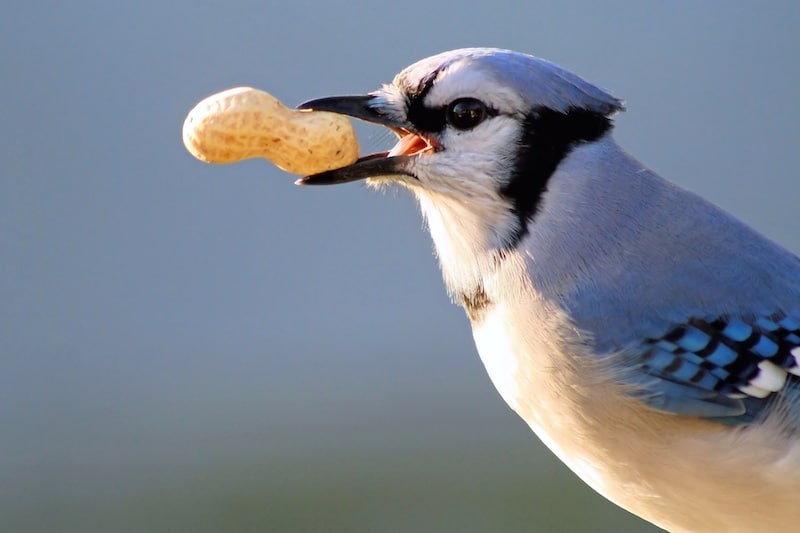
Birds such as chickadees and sparrows relish seeds and nuts. These are essential caloric sources, providing energy for their daily activities.
Bird feeders offer a supply of such food, with sunflower seeds being a favorite among many wild birds.
However, seeds alone do not satisfy all dietary needs, as birds also require protein for muscle and feather growth.
Insects, Spiders and Bugs
A considerable number of bird species, including warblers and swallows, feast on insects, spiders, and bugs.
These protein-rich sources not only help in muscle development but also aid in the proper functioning of their immune systems.
According to the Cornell Lab of Ornithology, about 96% of North American terrestrial birds rely on insects during their breeding season.
Fruits and Vegetables
Fruits and vegetables form a substantial part of many birds’ diets. They consume berries, grapes, apples, and other fruits, providing essential vitamins and minerals.
Some birds, like parrots, thrive on a mix of vegetable matter and fruits. Bird feeders can incorporate these foods to attract a diverse range of bird species.
Nectar and Sugar Water
Lastly, hummingbirds and other nectar-loving birds consume nectar from flowers or sugar water from feeders.
This high-caloric liquid diet sustains their rapid metabolism and energy demands.
An adult hummingbird may consume up to half its body weight in nectar daily.
Sugar water can be easily prepared by mixing four parts water and one part sugar, closely mimicking the natural caloric value of nectar.
Feeding Behaviors and Timing
Morning and Early Afternoon
Birds start their day early. In a backyard in New York, one might find sparrows searching for food as soon as the sun rises.
They spend much of their morning consuming their first big meal. Feeding in the early daylight hours maximizes energy for the day.
Mid-morning, birds get restless. With food in their system, they engage in other essential activities. Feeding resumes in the early afternoon.
This pattern helps them maintain energy levels throughout the day.
Late Afternoon and Evening
As the sun begins to set, birds prepare for the night.
Sparrows and other diurnal species wrap up their feeding activities, resting in safe locations away from predators.
They conserve the energy they gathered during the day.
Late afternoon and early evening are busy times for owls and other nocturnal species. As daylight fades, they venture out in search of prey.
Owls feed during this time, blending in with their surroundings and silently hunting. Their natural night vision and stealthy skills create optimal feeding conditions.
Nighttime Feeding Habits
Nighttime belongs to the nocturnal birds like owls. They hunt and feed through the darkness.
Their unique ability to see and hear in low light environments sets them apart from diurnal birds, who spend their night tucked away.
Nocturnal birds might face their own set of challenges during feeding, but they overcome these by adapting their behavior to maximize feeding efforts.
While the rest of the bird world sleeps, owls remain highly active, searching for food and playing their crucial role in the ecosystem.