
Last updated on May 10th, 2023 at 10:12 am
Bird feeding stations make great opportunities for photographers because of the way that they draw in birds. Otherwise, it’s hard to capture a moment when birds are standing still.
Here’s how to set up a bird feeding station for photography:
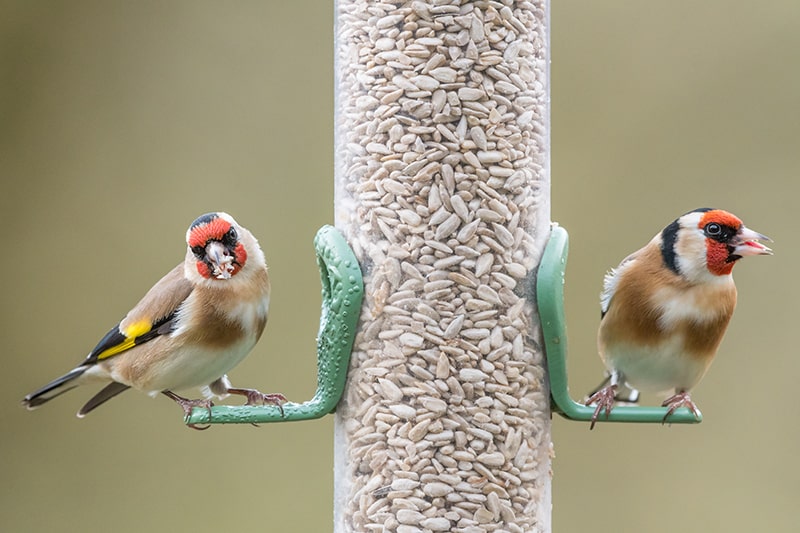
1. Decide Which Birds You Want To Attract
Each bird has a different preference when it comes to food.
Deciding what to put out will determine which birds come to your feeder and which stay away.
Here’s a chart of seed types and the species that they attract:
| Bird Type | Food that Attracts |
| Quail, Pheasants | Cracked corn, wheat, millet, milo, sunflower hearts |
| Pigeons, Doves | Cracked corn, millet, wheat, Nyjer, sunflower hearts, buckwheat |
| Roadrunner | Meat scraps, suet, hamburger |
| Hummingbirds | Sugar solution, or nectar, insects |
| Woodpeckers | Suet, meat scraps, sunflower seeds and hearts, peanuts, nectar, mealworms, millet, cracked corn, grapes/raisins, citrus |
| Jays | Sunflower seeds and hearts, suet, meat scraps, peanuts, cracked corn, mealworms, citrus, grapes/raisins, safflower |
| Crows, Nutcrackers, and Magpies | Meat scraps, dog food, cracked corn, suet, peanuts, mealworms, sunflower seeds and hearts, citrus, grapes/raisins |
| Chickadees, Titmice | Peanut kernels, peanut butter, mealworms, sunflower seeds, and hearts |
| Nuthatches | Suet, peanut butter, peanut kernels, mealworms, sunflower hearts, and seeds |
| Wrens, Creepers | Suet, peanut kernels, peanut butter, fruit, millet, sunflower hearts and seeds, mealworms |
| Mockingbirds, Catbirds, Thrashers | Apple halves, chopped fruit, nutmeats, suet, soaked raisins, sunflower hearts, millet |
| Robins, Bluebirds, Thrushes | Suet, berries, mealworms, chopped fruit, currants, nutmeats, sunflower hearts, citrus |
| Kinglets | Suet |
| Waxwings | Fruit, such as berries, chopped fruits, raisins, currants, and canned peas |
| Warblers | Suet, fruit, nectar, chopped nutmeats, mealworms |
| Tanagers | Nectar, suet, fruit like grapes, raisins, or citrus |
| Cardinals, Grosbeaks | Sunflower seeds and hearts, cracked corn, safflower, fruit |
| Juncos, Towhees | Sunflower, millet, peanuts, nutmeats |
| Buntings, Sparrows | Millet, sunflower hearts, black-oil sunflower seeds, cracked corn, peanuts, milo |
| Blackbirds, Starlings | Millet, wheat, milo, suet, safflower, peanuts, sunflower hearts |
| Orioles | Fruit, like orange halves, apples, berries, or currants, mealworms, suet, nectar |
| Finches, Siskins | Nyjer, fruit, sunflower hearts, peanut kernels, suet |
Most people want to attract more than one kind of bird, and thankfully, there are simple ways to do this.
There are many different types of bird feeders and each serves its own unique purpose.
Whether it be a fruit, multi, or window feeder you’ll want to find what works best for your garden.
Amazon sells this Best Choice Products Multi-Feeder that can hold suet, peanuts, black oil sunflower seeds, thistle, and just about anything other seeds you might feed a bird all at once.
It also has a birdbath attached for a bonus.
What this multi-feeder doesn’t have is a feeding station for orioles, bluebirds, or hummingbirds.
Orioles require a feeder that can hold jelly and oranges, like this Solution4Patio Baltimore Oriole Feeder from Amazon.
Editor’s Note: If you’re concerned about orange peels, see our article Can Birds Eat Orange Peels?
For bluebirds, you can use the same feeder but fill it with mealworms.
Hummingbirds require liquid nectar, so for them, you should use a feeder like this LUJII Hand-Blown Glass Feeder on Amazon.
This feeder’s bright color is sure to attract hummingbirds, and it’s made to avoid leaks.
2. Find the Right Location for Your Feeder
Birds appreciate feeders that have safe spaces nearby. Look for a location with bushes or shrubs nearby where the birds can perch and hide while eating.
A feeder near the woods is a great idea, but a feeder in the middle of a field is not.
If your yard doesn’t have woods nearby or a garden, consider planting native plants to support the bird populations.
This would be a great first step towards bringing birds into your yard, even more so than setting up a feeder.
At the same time, you shouldn’t put your feeder right next to a tree or a fence if you want to keep the squirrels away.
You should also keep your feeder either within three feet or more than eight feet away from your house so that birds don’t accidentally fly into your windows and glass doors.
Even if you’re setting up a feeder camera, the chances are that you want to be able to see the birds that come to your feeder.
Try to make the feeder visible from your windows indoors, in addition to making it accessible for taking photos or refilling.
3. Decide If You Want To Set Up a Mounted Feeder Camera
Setting up a mounted camera at your feeder is a great way to ensure you don’t miss a moment.
While there are benefits to taking your photos the traditional way, a feeder camera can capture photos at such close range and with such consistency that it might be worth trying.
This Jishiyu Trail Camera from Amazon, for example, is motion-activated and waterproof so that you can leave it sitting outside in all weather and expect great photos in return.
It has both Wifi and Bluetooth capabilities to give you the ultimate access to your photos and control over the camera.
See this live feeder camera for an example of the kind of footage you might be able to get with your setup:
If you don’t want to set up a camera at your feeding station and leave it there, you’ll need to get to know when the peak feeding times are for birds so that you know when to go take photos.
Make sure that you use bird blind or muted clothing colors so that you can sneak in and get your photos without disturbing the birds.
Robins, finches, and sparrows are the least likely to be spooked by a photographer.
With this in mind, consider setting up feeders that’ll attract these birds if you want to take photos up close without a feeder cam.
Finally, consider the type of lens you’re using. See our article where we ask the question: Is 300mm Enough for Bird Photography?
4. Find Out What Time of Day Birds Are Using Your Feeder
Most birds feed in the morning and late afternoon, so watching your feeder at this time is a good idea.
Still, get to know the birds in your area and narrow down their specific feeding times once you have your feeding station set up.
Then you’ll be able to plan your photography sessions better to get better photos.
Thankfully, the same times that are great for capturing birds are also great for photography because of the lighting.