
Examination of a bird’s brain suggests that its olfactory capabilities might be more developed than previously thought.
Newer studies have uncovered insights into the avian olfactory world, dismantling age-old assumptions about their sensory abilities.
Birds can smell, and in some cases, rely on their sense of smell to fulfill essential functions in their daily lives. Birds possess olfactory receptor genes, enabling them to perceive aromatic stimuli and effectively regulate their behavior in response to environmental cues.
Can Birds Smell? The Basics
Variety in Bird Species and Olfaction
Birds, the diverse creatures they are, possess varying levels of olfactory abilities.
Some, like the kiwi, rely heavily on their sense of smell to locate food hidden in the earth. Others, like vultures, detect carrion from afar with their keen noses.
Many birds, contrary to popular belief, have a well-developed sense of smell that aids in their survival and daily activities.
Olfactory Bulb and Olfactory Receptors
A bird’s smelling capabilities stem from the olfactory bulb and olfactory receptors located within its brain.
Previously, scientists underestimated these structures in birds, casting doubt on their ability to smell.
However, research has since uncovered that many birds do have a competent sense of smell, sometimes rivaling that of mammals.
[Editor’s Note: We wrote a related article on smell distance in “How Far Can Birds Smell?“]
Birds with Remarkable Sense of Smell
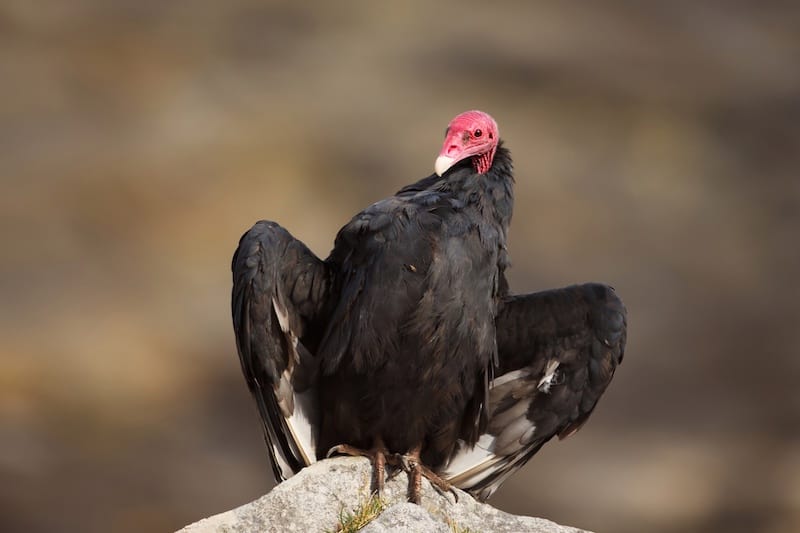
Turkey Vultures and Carrion Detection
Turkey vultures are scavengers, meaning they primarily feed on carrion (dead animals). They are known for their exceptional ability to detect the remains from great distances.
This is due to their keen sense of smell, which is one of the best among birds. In fact, turkey vultures can detect the scent of carrion from up to a mile away!
They use their sense of smell to locate food, which is especially important since they do not have a strong sense of vision.
Once a turkey vulture has detected carrion, it will quickly make its way to the location to feed.
They play an important role in the ecosystem by helping to clean up decomposed waste and prevent the spread of disease.
Seabirds: Petrels and Albatrosses
Petrels and albatrosses have remarkable olfactory abilities. They rely on the sense of smell to locate prey, such as fish, krill, and squid.
Their hunting strategy includes:
- Flying low over the water
- Following the scent of fish oils and other prey smells
- Diving quickly to catch prey
Their sense of smell aids in mating too.
They use the major histocompatibility complex, a group of molecules, to detect the scent of potential mates and avoid inbreeding.
Nocturnal Birds and the Kiwis
Nocturnal birds, such as kiwis, have an exceptional sense of smell that compensates for their poor vision.
Kiwis rely on their olfactory abilities to hunt for insects, seeds, and invertebrates. They use their long beaks to:
- Probe the ground
- Detect prey through scent
- Catch their food
In addition, kiwis have excellent hearing, which helps them locate prey and navigate their surroundings.
The combination of their sense of smell and hearing allows them to thrive in their habitats.
These bird species demonstrate the incredible adaptations that nature has provided for them.
And use their remarkable sense of smell to navigate their surroundings, find food, and mate successfully.
Scent and Mate Selection
Plumage and Scent Communication
Birds use a variety of signals to communicate with each other, including plumage and scent.
These signals are not only important for social interactions but also for mate selection.
The Kiwi, for example, forages in environments it knows well and has a strong sense of smell.
It uses both visual and olfactory cues for communication and mate selection.
MHC and Mate Preference
Birds like the Blue Petrel have been shown to use odor-based MHC (Major Histocompatibility Complex) genes to choose mates.
MHC olfactory cues are important in mate selection because it affects scent.
Birds can recognize the gene similarities and choose mates accordingly.
Mate selection in birds is not always about bright feathers and elaborate songs. Smell matters too.
Olfaction in Domestic and Wild Birds
Pigeons and Their Sense of Smell
Pigeons often thought to depend on vision, can also rely on their sense of smell. Scientists found that these birds can navigate using a mosaic map of scents.
Their olfactory bulbs, larger in some bird families, developed differentially in evolution, indicating importance in pigeons using smell.
Hummingbirds and Scented Flowers
Hummingbirds, equipped with acute vision and brilliantly colored feathers, also detect scents.
They use their sense of smell to find nectar-rich flowers, often drawn to ornithophilous flowers that emit strong odors.
This vital sense helps hummingbirds locate their primary food sources, providing essential calories to fuel their rapid wing beats.
Some plants the hummingbirds are attracted to:
- Peppermint
- Cinnamon
- Other scented flowers
Chili Peppers and Wild Birds
Wild birds play a significant role in chili pepper dispersal.
They are insensitive to capsaicin, the chemical causing the heat in chilies, which deters mammals from eating them.
These birds locate and consume chilies using their sense of smell, thus aiding the plant in spreading its seeds.
Certain bird species, such as the domestic fowl, can even distinguish predator and prey odors.
By responding to unique scents, like that of predator feces, wild birds become better equipped for difficult survival situations.
Using their olfactory sense, birds – from pigeons to hummingbirds and wild species – have a refined approach to locating resources and perceiving threats.
Although not as well known as their vision or hearing, olfaction plays a crucial role in the life and survival of these varied avian species.
Future Research in Bird Olfaction
Bird olfaction remains a mystery. Many scientists seem skeptical about the importance of the sense of smell in birds.
New studies must be conducted to further understand the role of the olfactory gland in our avian friends.
One area of interest is the potential of plant volatile cues usage by birds.
Investigating the relationship between plants, insects, and birds might reveal how olfactory senses in birds help them locate their prey.
Another frontier is avian navigation involving scent. Displaced birds seem to rely on olfactory cues to find their way home.
Research must venture deeper into this phenomenon and unravel the intricate details of a bird’s interpretation of scents.
Understanding behavioral responses to predator odors is another promising area. Birds have shown reactions to predator smells, indicating an inherent olfactory ability.
Such research helps understand how birds’ senses keep them safe in the wild.