
Last updated on May 13th, 2023 at 11:38 pm
From the delicate and intricately woven nests of hummingbirds to the massive and sturdy nests of eagles, each species has developed unique techniques and materials to create a home for its young. Which birds build the best nest?
What may be considered the “best” nest for one species may not necessarily be the same for another. There are many factors to consider, such as the size and strength of the nest, the materials used, and the level of protection it provides for the eggs and chicks.
Top Nest-Building Birds
Weaver Birds
Weaver birds are known for their intricate and elaborately woven nests, which are not only beautiful but also provide excellent protection from predators.
These nests are constructed using grass, leaves, and twigs, often creating fascinating hanging structures.
The complexity and time-consuming nature of their nesting process showcases their remarkable nest-building abilities.
Bald Eagles
Bald eagles build some of the largest and strongest nests of any bird species.
Known as aeries, these nests can weigh more than 2,000 pounds and measure up to 10 feet in diameter.
Bald eagles build their nests high in trees, using large branches and twigs, often returning to the same nest site year after year, adding to the nest each breeding season.
This constant renovation displays their exceptional skills in nest-building and maintenance.
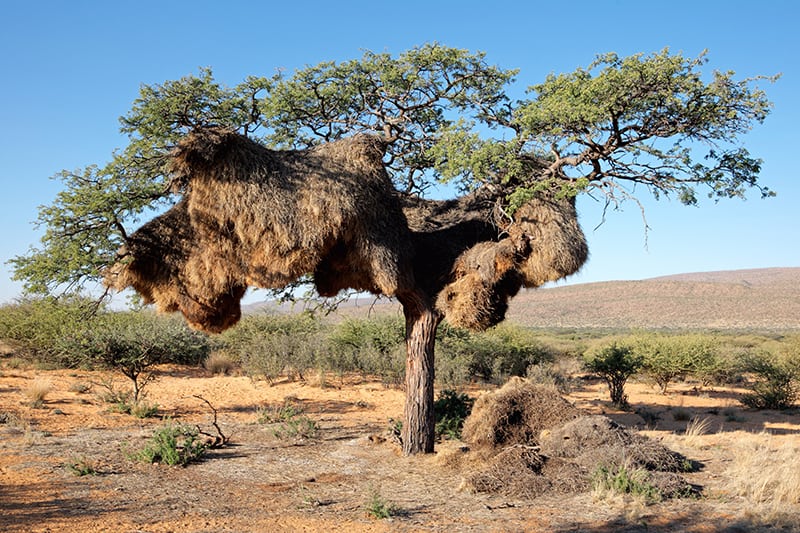
Sociable Weavers
Sociable weavers create monumental, communal nests that house multiple families of birds.
These astonishing nests can be up to 20 feet long and usually built on trees or large structures.
Sociable weavers use twigs, grass, and other vegetation to create a sturdy and well-insulated nest structure that can provide shelter for over 100 individual birds.
The cooperative, community-driven nature of these nests is a testimony to their exceptional nest-building capabilities.
Montezuma Oropendolas
Montezuma oropendolas construct mesmerizing, pendulous nests that hang from high tree branches.
These nests are woven from flexible vines, grasses, and other vegetation, often with an elegant tube-like entrance.
Montezuma oropendolas build their nest colonies close to one another, offering a dazzling sight.
The architectural details and structural consistency of these nests demonstrate their impressive nest-building aptitude.
Hammerkop Birds
Hammerkop birds build massive, dome-shaped nests, which are among the most elaborate of any bird species.
These enormous nests can be over six feet in diameter and can hold over 100 pounds of material.
Hammerkop birds use twigs, reeds, and other vegetation to create a strong nest structure, lining their nests with mud for insulation and camouflage.
The sheer scale and durability of these nests exemplify their remarkable nest-building talents.
Ovenbirds
Ovenbirds are a family of birds that are known for building dome-shaped nests that resemble ovens.
These nests are constructed from mud and other materials and are often built on the ground or in trees.
One species of ovenbird, the rufous hornero, is known for building particularly impressive nests. These nests are made from clay and are shaped like a large vase.
The nests are built on trees or poles and can measure up to two feet in height.
Hummingbirds
Hummingbirds are known for their small size and agility, but they are also skilled nest builders.
Female hummingbirds build tiny, cup-shaped nests out of plant fibers, spider webs, and other materials.
These nests are often decorated with lichens and other materials to camouflage them from predators.
Hummingbird nests are so small that they are often mistaken for knots on tree branches or leaves.
Hummingbird nests are built high off the ground, usually in the fork of a tree branch.
The female hummingbird lays her eggs in the nest and incubates them until they hatch.
Once the chicks are born, the female feeds them with nectar and insects until they are ready to leave the nest.
Penguins
Penguins are known for their waddling gait and their ability to swim, but they can also be skilled nest builders.
Some penguin bird species, such as the Adelie, Chinstrap, and Royal Penguins build their nests out of pebbles and rocks instead of twigs and leaves.
The male penguin spends weeks collecting pebbles and arranging them into a circular nest.
The nest is designed to keep the eggs off the cold ground and away from predators.
Once the nest is built, the female penguin lays her eggs and the male takes over the job of incubating them.
The male penguin will stay on the nest for weeks, without leaving to eat or drink, until the eggs hatch.
Once the chicks are born, both parents take turns feeding and caring for them until they are old enough to leave the nest.
Other penguin species such as The Emperor and King Penguins don’t build nests at all.
Essential Nesting Materials
Twigs and Sticks
We often observe birds collecting twigs and small sticks for their nests. These materials provide a sturdy framework and help create the nest’s overall structure.
The natural components are easy for birds to find and manipulate, making them a popular choice for many species, like robins and sparrows.
National Audubon Society recommends offering twigs or small sticks to support local birds with nesting.
Leaves and Grass
Leaves and grass, including dead leaves and grass clippings, are commonly used by birds to build their nests, as they provide insulation and padding.
Some birds selectively gather specific types of leaves or grass for their nests, depending on their preferences and the materials’ availability.
According to The Spruce, these materials are popular with many types of birds, like finches and blackbirds.
Feathers and Soft Materials
Birds use feathers and other soft materials, such as animal fur, moss, and lichen, to make their nests cozy and warm.
Feathers play a crucial role in insulating the nest, keeping the eggs and hatchlings safe from cold temperatures or sudden weather changes.
Other soft materials like cotton, wool, or spider web silk can also be used to help hold the nest together and accommodate the growing nestlings.
Mud and Clay
Lastly, mud and clay are essential nesting materials for certain bird species, such as swallows and some types of wrens.
These materials help bind the other components together and provide additional stability and insulation.
Mud and clay also play a vital role in constructing more elaborate nest designs, like the intricate mud nests built by swallows.
Nest Types and Shapes
Cup Nests
One of the most common nest types is the cup nest. These nests are shaped like small, shallow bowls and are typically built in tree branches or other sturdy structures.
The nests are often made from a variety of materials such as twigs, leaves, grass, and moss.
Some of our favorite birds that build cup nests include robins, sparrows, and finches.
Platform Nests
Platform nests are relatively flat, large structures often built in trees or on the ground. They are typically made from sticks, branches, and other sturdy materials.
As the name suggests, these nests provide a platform for the birds to lay their eggs on.
We admire the impressive platform nests built by the bald eagle, osprey, and great blue heron among other raptors and large wading birds.
Cavity Nests
Birds that build cavity nests often choose natural tree hollows or create holes in trees, but sometimes they might use human-made structures like nest boxes.
Woodpeckers, for example, often create holes in trees. Other cavity nesters include the eastern bluebird and various owls.
Pendulous Nests
Pendulous nests are intricately woven sacks that hang from branches, providing the birds and their young excellent protection from predators.
The delicate-looking yet strong nests can be attributed to weaver birds, oropendolas, and some species of orioles.
Adaptations for Nest Building
Beak and Foot Shape
When it comes to nest building, the beak and foot shape of birds plays a crucial role.
Different species have evolved unique beak shapes that assist them in gathering and manipulating various nest materials.
For example, weaver birds have slender, pointed beaks that help them to weave intricate nests from grasses and twigs.
On the other hand, woodpeckers have strong, chisel-like beaks to excavate cavities in trees for their nests.
Similarly, the foot shape and structure of birds are vital for handling and positioning building materials.
Many birds have zygodactyl feet, which means that they have two toes facing forward and two facing backward.
This configuration enables them to grip branches and twigs securely, providing stability and dexterity during nest construction.
Nest Building Techniques
Birds employ a variety of nest building techniques to construct their safe havens. Some examples include:
- Cup-shaped nests, made from a combination of vegetation and mud, are common among songbirds such as robins and sparrows.
- Mud nests, formed by birds like barn swallows and phoebes, are made by mixing mud with plant materials to create a sturdy structure.
- Some birds, such as orioles, weave elaborate pouch-like nests using grasses, twigs, and other natural fibers.
- Cavity nesters, like woodpeckers, use their strong beaks to excavate a hole in a tree or other suitable structure.
Camouflage and Nest Security
Camouflage is a crucial aspect of nest building, as it helps protect the eggs and nestlings from predators.
Many birds carefully choose their nest locations and materials to blend in with their surroundings.
For instance, hummingbirds often use plant materials, lichen, and spider webs to create a nest that resembles a natural bump on a branch.
Nest security adaptations also include constructing nests in locations that are inaccessible to predators.
Some seabirds nest on cliff ledges, while certain songbirds build their nests high up in the tree canopy, making it difficult for predators to reach them.
Additionally, some birds enhance nest security by building their homes close to aggressive or noisy neighbors, who can help deter potential threats.
Factors Influencing Nest-Building
Habitat
One of the primary factors that shape a bird’s nest-building approach is the habitat in which they live.
The environment dictates the types of materials available for nest construction, as well as the architectural design best suited for protection and stability.
For example, birds living in woodland areas tend to use twigs, leaves, and moss, while those living near water sources may use reeds or aquatic plants in their nest-building efforts.
Availability of Materials
The availability of materials is another essential factor in nest building.
Birds often use materials from their surroundings, such as twigs, grass, leaves, and even man-made items like string and plastic.
The male oriole helps supply nest-building materials, but the weaving is undertaken by the female alone, typically over 12 to 15 days.
The availability and diversity of materials and the time it takes to gather and assemble them all contribute to the quality and stability of a bird’s nest.
Weather and Climate
The weather and climate of a region play a vital role in nest-building as well.
Birds must account for temperature fluctuations and precipitation when constructing their nests.
For example, a well-insulated nest can conserve heat and energy for the bird.
In areas with harsh weather conditions or significant temperature changes, birds may have to adapt their nest designs to withstand the elements and keep their eggs and hatchlings safe.