
Last updated on June 4th, 2023 at 10:21 am
Taming wild birds could potentially build relationships and provide birders an up close experience with these beautiful creatures. Can they be tamed?
It is possible to tame wild birds to an extent, but success varies by species and individual temperament. Birds such as the crow, displaying remarkable intelligence, are known to develop trust in humans who consistently offer food and kindness.
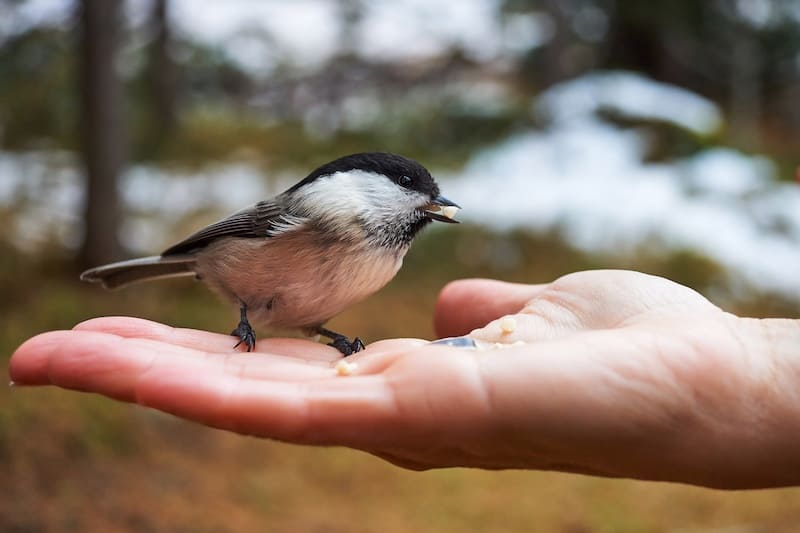
Understanding Wild Birds
Birds in Their Natural Habitat
Wild birds thrive in environments where they can access food, shelter, and water.
They are adapted to their surroundings, with unique skills and behaviors enabling survival in diverse habitats.
Some wild birds, such as doves and chickadees, reside in forests and woodland areas, taking advantage of the trees and vegetation for nesting and food.
Others, like house sparrows and certain parakeets, can be found in urban environments, nesting in small crevices and feeding on available food sources.
[Editor’s Note: We wrote a related article on the risk of getting sick from feeding wild birds. We discuss prevention measures there.]
Common Wild Bird Species
These are some common wild bird species you may encounter:
- Doves: Known for their gentle nature, they feed on seeds and fruits while staying close to the ground. They can be found in different habitats, from forests to urban areas.
- Parakeets: Small, brightly colored birds with the ability to mimic sounds. They are social animals, living in flocks and feeding on seeds, fruits, and nectar.
- House Sparrows: Adaptable little birds found in urban and suburban environments. They consume seeds, insects, and fruit.
- Chickadees: Agile and curious, they are found in forests and wooded areas. Their diet consists of insects, seeds, and fruits.
Understanding the natural habitats and behaviors of these wild birds can help in their proper care if one decides to tame them.
However, it is essential to appreciate their unique characteristics and respect their place in nature.
The Taming Process
Establishing Trust
To tame wild birds, first focus on building trust. Offer food at regular intervals. Consistency is key. Utilize a routine to habituate the bird to your presence.
Be patient, progress takes time. Limit sudden movements; they may startle the bird. Approach the bird calmly and gently.
Creating a Bond
Familiarity breeds comfort. Spend time close to the bird, allowing it to recognize you. Offer treats by hand.
This bonding process deepens trust, making the bird more tame. Be mindful of the bird’s body language—retreat if it displays signs of distress.
Gradually increase interaction time as the bird becomes more comfortable.
Hand-Taming Techniques
Hand-taming requires practice. As the bird gains confidence in you, try gently touching its feet or feathers. This initiates the bird to agreeable contact.
Position treats closer to your body, encouraging the bird to come nearer. Over time, the bird may even perch on your hand.
Praise the bird when it exhibits desirable behavior, strengthening the bond.
Taming wild birds is an ongoing process. Patience, consistency, and gentleness are essential.
Recognize the limitations of working with wild creatures, and respect their boundaries.
Attracting and Habituation
Choosing the Right Food
Wild birds can be tempted, and some habits formed. It starts with food. One must select food types that entice them.
Millet spray, for example, attracts many species with its plump seeds. Greens like lettuce and kale are attractive too, providing nourishment for birds.
Offer food in moderation—too much may make them reliant on humans.
Fostering a Positive Human Interaction
Approach birds with care. Be quiet and still. Let them observe and develop curiosity. Keep distance at first, gradually closing it over time.
If the birds are comfortable, try offering treats directly. Move slowly but predictably, avoid sudden movements.
Food may habituate them, foster friendships, but wild birds should not become pets. Respect their nature, foster bonds, and cherish the moments shared.
Building a Connection
Reducing Fear and Anxiety
Wild birds often experience fear and anxiety around humans due to their unfamiliarity with people. Building a connection involves gradually reducing their fear.
Start by observing the bird from a distance, allowing it to become accustomed to your presence.
Over time, slowly decrease the distance between you and the bird, ensuring not to make any sudden movements or noises.
Offering food can be a useful way to build trust. Use a gentle approach when offering food, such as extending an open palm.
This gesture is less intimidating than quickly grabbing at the bird.
Over time, the bird may begin to associate your presence with positive experiences, such as receiving food.
Using a Soothing Tone of Voice
Communicating with the bird in a soothing tone of voice can also help reduce its anxiety.
Avoid loud or high-pitched tones, as these can startle the bird or make it feel threatened.
Instead, speak calmly and softly, using simple, repetitive words or phrases.
Incorporating a soothing tone of voice while gradually reducing the distance can be an effective combination.
A skittish bird may eventually feel comfortable enough to approach and even accept food from you.
Keep an open mind and remain adaptive to the bird’s unique reactions and progress.
Behaviors to Watch
Understanding Body Language
Birds display various behaviors based on their feelings. It is crucial to observe and understand their body language.
When birds are calm, their feathers lay flat against their bodies. Pay attention to their eyes, as they may dilate when stressed or excited.
Watch for postures, like raised wings or puffed-up feathers, which may signify defensiveness or aggression.
Tail movements can also indicate their emotions. A wagging tail might reflect happiness, while fanned-out tail feathers can be a warning sign.
Monitoring these subtle cues helps in taming wild birds and creating trust.
Managing Biting Tendencies
Biting is a natural behavior in birds that can stem from fear, territoriality, or frustration. To tame wild birds and manage biting tendencies:
- Offer treats patiently to build trust.
- Respond calmly to biting, as yelling or pushing may worsen the situation.
- Identify triggers, like sudden movements or loud noises, and avoid them.
- Redirect the biting energy by providing toys for them to chew on.
- Train the bird to “step up” on your hand, allowing them to feel in control.