
Last updated on October 15th, 2022 at 03:02 pm
When it’s hot outside, birds need to escape the heat as much as we do. So how and where do they find shelter?
Birds find shelter in shaded areas under roofs or trees in the summer. They stay cool by panting, spreading their wings wide, drinking water, and taking baths. You can help birds find cool shelter by building light-colored nesting boxes with a sunshade, kept out of sunlight in the afternoons.
Where Birds Find Shelter in Hot Weather
When it’s hot outside, birds seek shelter in shaded areas, like beneath the shelter of roofs or other standing structures.
They will also nest in tree cavities, up high where temperatures are cooler, and birds who sometimes roost together will roost alone in the hot summer.
Birds will also shelter in man-made bird boxes during hot weather, so it’s important to build these bird boxes to stay cool.
How To Keep Nesting Boxes Cool in Hot Weather
If you build nesting boxes for birds to use, you can be sure that they’ll use them in the summer as well as in the cool months.
However, the temperatures inside a nesting box can reach 120 °F on a hot day if it’s not built to withstand the weather, and this kind of heat is fatal for eggs and nestlings.
Bird eggs need a temperature between 96.8 °F and 104.9 °F to develop properly. They cannot survive anything hotter than 107 °F.
This is how you can make sure that your bird boxes won’t overheat when it’s hot outside:
- Build your nesting boxes outside of direct sunlight. You can increase the amount of time the box is in the shade and avoid the direct sun during the hottest part of the day by ensuring it faces northeast. But avoid putting your nesting box close to large branches on a tree, as these would help predators reach the box.
- Place a heat shield on the roof of the bird box. A piece of styrofoam works well to deflect the heat and keep it from accumulating inside the box. Just attach a ¾” (19.05 mm) piece of styrofoam on top of the box, keeping a gap between the roof and the foam. You can use push-pins to achieve the right gap size, about ¼” (6.35 mm).
- Paint the exterior of the nesting box white or tan. Paint with a high Light Reflective Value (LRV%) can reduce the temperature in the nesting box by 18 °F (-7.77 °C) compared to a dark-colored nesting box.
- Consider using a PVC pipe nesting box. These are typically as cool as or cooler than nesting boxes made from ¾” (19.05 mm) thick natural wood.
- Cut ventilation slots into the wood. Slots along the top of the box are the most efficient way to allow a breeze through the box. Just make sure that your box also has an air vent closure in place to close the slot during the colder months.
- Make sure the roof overhangs the sides of the box. The roof should extend over the sides of the box by 2” (50.8 mm) on the sides and 4” (101.6 mm) out front.
How Birds Handle the Heat
When it’s hot outside, birds must regulate their body temperature to keep from overheating.
Their feathers are built to keep them warm, so they need to work against their natural insulation to stay cool. And, they can’t sweat as much as we can.
The following are ways that birds handle the heat in the summer:
- They stay out of direct sunlight. Birds seek shelter in shaded areas where they can escape the direct heat brought on by the sun.
- They pant. You can see birds in hot weather sitting with their beaks open, panting in much the same way that a dog does.
- They spread their wings apart. Extending their wings lets air move close to their bodies, drawing away heat to bring down their core body temperature.
- They drink water. Drinking water is one of the most common ways that birds regulate their body temperature. Finding cool water to drink is key.
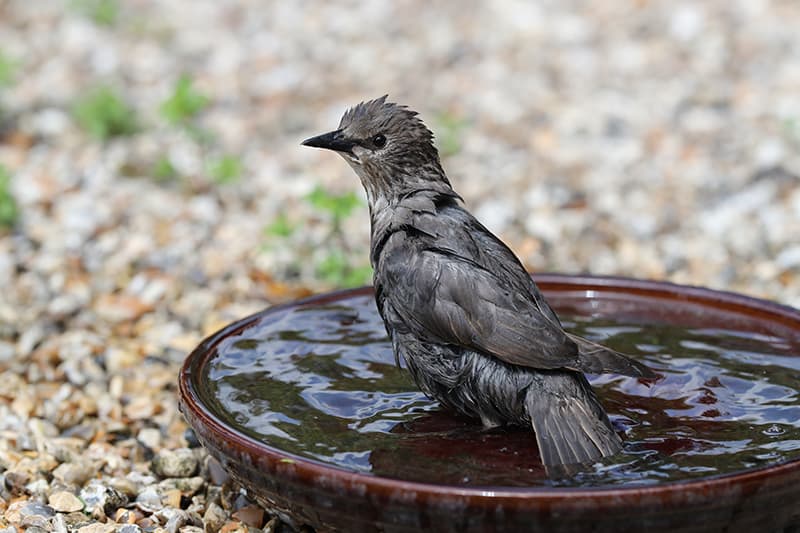
- They bathe. Birds dip their bodies into water and shake to move water through their feathers and cool them down.
- They fluff up their feathers. This may seem counterintuitive, but birds will fluff up their wings to insulate their bodies against hot air, just like they fluff up their bodies to insulate against cold air in the wintertime.
What Happens if Birds Get Overheated?
Hot temperatures can be fatal for birds, often due to heat stress or heat stroke. Heat stress looks like panting, fluffing up, and taking to the ground.
They will droop, and eventually, they will slip into a coma and die from heatstroke.
Birds can also easily become dehydrated in hot weather, so they must stay near water sources.
How To Help Birds Stay Cool in the Summer
One of the best things you can do to help birds stay cool through the summer is provide a birdbath and regularly change the water to keep it cool.
Hot weather will sometimes cause natural water sources to dry up, and birds rely on finding cool water to stay hydrated and refreshed.
The best water sources for birds are shallow, wide, and close to the ground. Birdbaths work, but so do tubs or saucers of water.
Birds like moving water and are attracted to the sound of trickling water, so consider adding a dripper or a sprayer in your birdbath if you want birds to discover and enjoy it.
The Birds Choice Ground Level Bird Bath from Amazon.com is a great choice because it sits ground-level and has a built-in dripper.
Birdbaths like this resemble natural water sources from the bird’s perspective, and they work well at cooling the birds down.
You may also want to include a second birdbath elevated from the ground so that birds can stay away from ground predators while getting cool.
The Arcadia Garden Stone Bird Bath from Amazon.com is another great option because it keeps birds safe from cats and other on-the-ground predators.
You should also place a stick in whichever bird bath you choose to help smaller birds climb out of the water if they fall in.
And, make sure that you keep your birdbath clean, free from algae and other unwanted growth.