
Last updated on May 31st, 2022 at 11:44 pm
Are you looking for a quiet pet or just interested in learning about birds for fun? If so, you may be curious to know which birds make the least noise. Surprisingly, there are quite a few birds that barely make any sounds.
10 birds that barely make any sounds include:
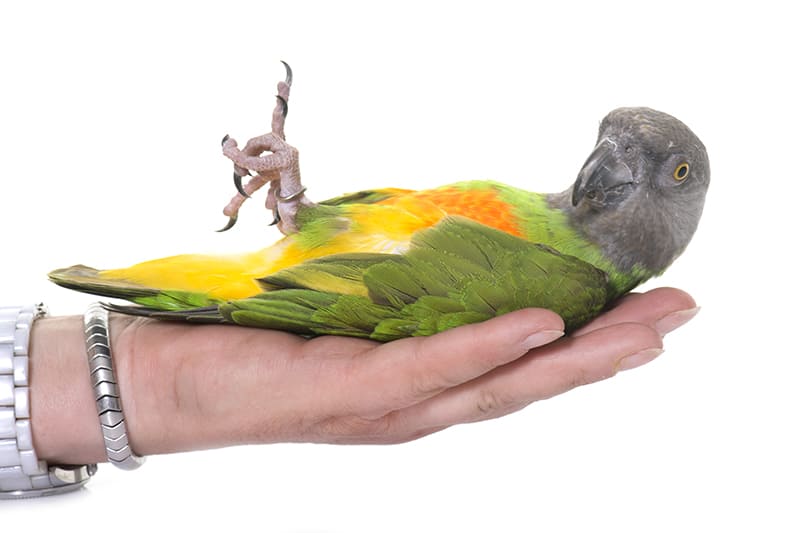
1. Senegal Parrot
The Senegal parrot is quieter than most parrots, especially when you keep it occupied with toys and other forms of entertainment.
Ideal toys include chewable softwood, and rope, so long as there are no loose strings for them to get tangled on.
Senegal parrots are capable of making very loud noises, but they do so infrequently.
These birds make great companions for life, as they live for over 30 years and are very unobtrusive.
2. Bourke’s Parrot
Bourke’s parrots are active but fairly quiet, especially during the middle of the day.
You might hear some chatter at morning and dusk, but even then, it’s much less than that of another parrot.
Because these birds are smaller, they’re somewhat easier to handle than other parrots, provided that they have plenty of space to fly around and toys to stay occupied.
3. Budgie
Budgies are one of the most popular pet birds, partly because of how little noise they make. Individuals or pairs of budgies tend to be quieter than an entire flock, however.
Females are also typically quieter than males.
When budgies do make noise, they usually sing and chatter rather than screech. Only when they are calling to a flock do they make loud, repeated “EEP” noises.
4. Lineolated Parakeet
The lineolated parakeet is overall a very calm bird, making just a few distinctive noises. One is a small amount of chatter, low-level vocalization that most find non-annoying.
Another is the flock call, which is a bit more shrill but less frequent and shorter-lasting.
These parakeets are native to Central and South America, although they are now found in North America as pets.
5. Cockatiel
Cockatiels are quiet yet bold, and they like to cuddle. They make wonderful pets for people who like to have fun with their pet birds.
They’re also quite curious, so make sure that you have plenty of toys and exploratory time for your pet cockatiel should you get one.
Cockatiels may sometimes vocalize when they are stressed or hear other birds, so don’t be surprised if your quiet bird occasionally lets out a shriek.
Just know that this should happen only occasionally. You should contact a veterinarian if your cockatiel seems to be shrieking unhappily more than what’s normal.
6. Gouldian Finch
The Gouldian finch is a popular pet, much quieter than zebra finches or canaries.
They sing at a lower decibel than larger birds and with less frequency than their relatives.
Their song is generally considered tolerable and ambient rather than shrill and annoying, and they rarely scream.
7. Diamond Dove
Diamond doves are social birds, but they communicate by cooing, not by squawking or calling.
They’re smaller than most pigeons, and so their cooing is even softer and less disruptive.
For an example of what a diamond dove’s cooing sounds like, see the following video:
8. Pionus Parrot
The Pionus parrot is a quiet bird that’s generally shy around others, and it can become overwhelmed if housed alongside louder birds.
It’s best to keep Pionus parrots on their own so that they can be at peace.
That said, you must socialize with your Pionus parrot if you want it to develop a positive temperament and trust in people.
9. Button Quail
Button quail are less popular than some other birds because of their smell and messiness, but the amount of noise that they make is less compared to other birds.
They make soft cooing noises and meeps, but they don’t scream or screech loudly.
Button quail do well with other birds and can be adopted alongside a louder bird or another bird that appreciates the quiet.
10. Parrotlet (Forpus)
Parrotlets of the Forpus species are among the quietest and smallest parrots you can keep as a pet, some weighing as little as 25 grams.
When they do make noise, it usually lasts for a short period of less than a couple of minutes, even if it’s somewhat noisy.
This is in contrast to birds who would spend all day making loud noises.
How To Teach Your Pet Bird To Be Less Noisy
Part of adopting a pet bird is accepting that your bird will sometimes make noise.
However, you can do things to minimize the noise that your bird makes simply by meeting the bird’s needs.
If you’re afraid that getting a pet bird will introduce too much noise, consider the following tips for making a pet bird less noisy:
- Place a dark cloth over the birdcage at night. This will reduce distractions and stimulants when you want the bird to be resting rather than chirping.
- Talk softly to your bird. Birds will imitate human noises, and they’ll lower their volume to be able to hear you.
- Scan the environment for triggers. Other pets, bright lights, and other triggers can upset pet birds and cause them to vocalize more heavily. Take note of the surroundings and do what you can to introduce calm, consistent environmental factors.
- Reward your bird with treats when it’s quiet. This will teach your bird that it’s doing something positive when it’s not making excessive noise.
Loudest Pet Birds
If you’re looking for a quiet companion, there are several species that you should avoid.
As a general rule, bigger birds will have the capability of producing louder sounds, but smaller birds might chirp more frequently if they’re used to being in flocks.
You should avoid most parrot species if you’re looking for quiet, especially macaws, Amazon parrots, and African greys.
Conures and cockatoos are also significantly noisy birds, non-ideal for quiet apartment living.
That said, know that owning a bird of any kind means dealing with some degree of noise.
Ensure that you check with your apartment building or landlord before adopting a new pet bird if you’re concerned about meeting noise level requirements, especially at dusk.