
Last updated on May 11th, 2023 at 11:39 pm
Patience and observation are key to identifying your pet parakeet’s gender. A closer examination of the parakeet’s cere, behavior, and feather patterns can help aid in your identification. Understanding these subtle differences will not only help you identify their sex but also deepen your bond with your avian companion.
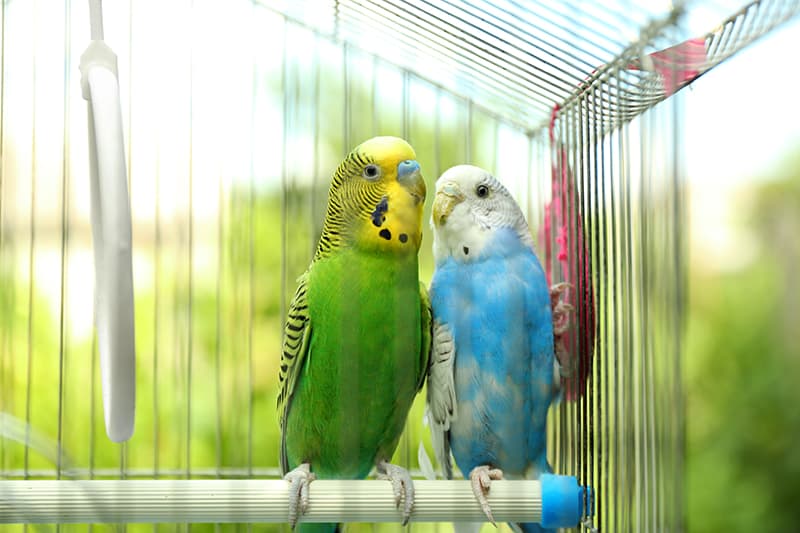
Determining Gender
By observing your parakeet’s physical characteristics and behaviors, you can gain valuable insight into its gender identity.
Below we’ve compiled a table outlining the key differences in their physical characteristics and behavior:
| Characteristic | Male Parakeet | Female Parakeet |
|---|---|---|
| Cere Color | Blue | Beige or brown |
| Cere Texture | Smooth | Crusty or bumpy |
| Head | Larger, rounder | Smaller, tapered |
| Beak | Thicker | Finer |
| Cheek Spots | Larger, brighter | Smaller, duller |
| Tail | Longer, pointed | Shorter, square |
| Feather Colors | Brighter, bolder | Duller, subdued |
| Behavior | More vocal, active, and territorial | Calmer, more reserved, and nurturing |
Note: These are general differences and may not apply to all parakeets. Observation of multiple characteristics is necessary for accurate gender identification.Physical Characteristics
Consider examining the cere, the fleshy area above your parakeet’s beak, where the nostrils are located.
Colors of the cere tend to vary depending on your budgie’s age and sex.
Generally, a blue or purple cere suggests a male, while a pink or brown one signifies a female parakeet.
Keep in mind, though, that it can be challenging to discern cere color for some females with a touch of blue and white near their nostrils.
Additionally, age might play a role in determining your parakeet’s gender.
Younger parakeets (under one-year-old) tend to have less distinct differences in their appearance, which might make it harder for you to conclude their sex.
Behavioral Differences
While observing your lovely bird, you may notice certain behavioral disparities that can provide clues about its gender.
For instance, if you find your budgie nesting and laying eggs, you can safely assume that you have a female parakeet.
However, it’s worth noting that not all females lay eggs, so relying on this method alone might not suffice.
Of course, it’s crucial to remember that each bird is unique, and their behavior can sometimes deviate from the norm.
Therefore, the most effective approach to ascertain your budgie’s sex might involve combining both physical and behavioral observations.
Why Gender Matters
In the world of parakeets, also known as budgies, gender plays a significant role in their interactions and well-being.
Understanding the importance of gender can help you create a nurturing environment for your feathered friends.
Here are a few important gender factors to consider:
Breeding
Recognizing the difference between male and female parakeets is essential for successful breeding.
Males and females exhibit unique behaviors during the breeding process, such as courtship and nesting.
Knowing the gender of your parakeets allows you to ensure a suitable pairing and helps you monitor their progress throughout breeding.
Bonding
Budgies are social creatures that enjoy the company of their fellow birds.
However, their bonding preferences may vary based on gender.
In many cases, budgies of the same gender tend to form strong relationships, while opposite-gender pairings may lead to breeding behavior.
Being aware of your parakeets’ genders can help you create comfortable, harmonious living arrangements.
Socializing
Gender also plays a role in the social dynamics within a group of parakeets. Males tend to be more vocal, making them engaging and entertaining pets.
Females, on the other hand, can exhibit more territorial behavior, but they can also form strong bonds with their human caretakers.
It’s essential to understand the gender-specific traits to provide for your parakeets’ emotional and social needs adequately, ensuring a healthy and happy environment.
Now that you have a better understanding of the importance of parakeet gender, you can apply this knowledge to enhance your budgies’ quality of life.
By recognizing and respecting their individual needs, you can foster a nurturing environment where your feathered friends can truly thrive.
Age Characteristics
In determining the gender of your parakeet, age plays a significant role.
With their vibrant colors and adorable features, parakeets, or budgies, exhibit certain age-related characteristics that help discover their gender.
Typically, parakeets reveal signs of their gender between 6 and 12 months of age.
However, you may be able to discern their gender earlier or later if they are undergoing cere molting, during which their cere and feather colors slightly change.
As the budgies grow older, the color of their legs and feet can also serve as a valuable clue.
For instance, male parakeets older than one year usually exhibit bright blue legs, resembling their blue ceres, while female parakeets of the same age have pink or brown legs.
It is important to remember that you cannot rely solely on physical attributes to determine gender in budgies younger than one year.
Both males and females have similar cere colors at a younger age, making it difficult to tell them apart.
DNA Testing
In the colorful world of parakeets, sometimes you’re left guessing about the gender of your little feathered friend.
The good news is that DNA testing offers a highly accurate method for determining whether your budgie is male or female.
It’s simple, non-invasive, and suitable for both breeders and bird owners who care for their parakeets’ well-being.
To start the process, collect some of your bird’s fallen feathers or any other forms of DNA samples.
In certain cases, your vet may request a blood sample instead.
Don’t worry, though – this method is completely safe and ensures the least amount of stress for your beloved pet.
DNA testing examines the bird’s chromosomes in a laboratory setting by using advanced techniques like Polymerase Chain Reaction (PCR) to detect male and female DNA markers.
The results are typically available in a short period, and this method is recognized for its high accuracy.
Opting for DNA testing not only helps you identify your parakeet’s gender, but it also contributes to a better understanding of their behavior and overall well-being.
Common Misconceptions
There are some common myths out there regarding budgie gender.
One popular misconception is that the color of a parakeet’s feet can determine its sex. In reality, there is no significant correlation between foot color and gender.
A more accurate indicator is the color of the cere, a fleshy area above the beak, which varies between males and females.
Another misconception is that behavior alone can reveal a budgie’s sex.
While there are some behavioral differences between the genders, such as males generally being more vocal and females displaying nesting tendencies, relying solely on these observations may be misleading.
Individual personalities may vary, and some parakeets may present atypical behaviors.
Many people also assume that male and female budgies have significant size differences, with males being larger.
In truth, healthy males and females can be similar in size, making it difficult to determine gender based on their body and head sizes.
Getting Expert Advice
Seeking expert advice is a wise decision if you’re still unsure about determining your parakeet’s gender.
Veterinarians with experience in avian medicine or knowledgeable breeders can provide valuable insights to help you identify whether you have a male or female budgie.
When you visit an expert, bear in mind that your parakeet might feel uncomfortable in a new environment.
Therefore, it’s essential to keep your budgie’s well-being in mind while seeking advice.
Handle your parakeet gently and with care to reduce any stress during the examination.
If a physical examination is not conclusive or if it’s unfeasible, you can explore the option of DNA bird sexing.
This approach involves collecting a sample of your parakeet’s feathers or blood and sending it to a specialized laboratory for testing.
Although this method may be more costly, it ensures accurate results.
Finally, don’t hesitate to join online forums or social media groups dedicated to parakeet enthusiasts.