
Last updated on May 16th, 2023 at 11:57 pm
Nearly 200 species of birds breed in Florida, but the state considers only around 60 of these as native birds. Hundreds of other species migrate back and forth through and to Florida yearly, many of which are multiseason residents. Given the diversity, how many of these Florida birds eat suet?
The Florida Scrub-Jay, Chimney Swift, and Seaside Sparrow are some of the Florida birds that eat suet. However, many wild birds that may eat suet are unlikely to frequent backyard feeders. Likewise, several Florida birds will eat suet only if it is in a rendered form with insects, seeds, or fruits.
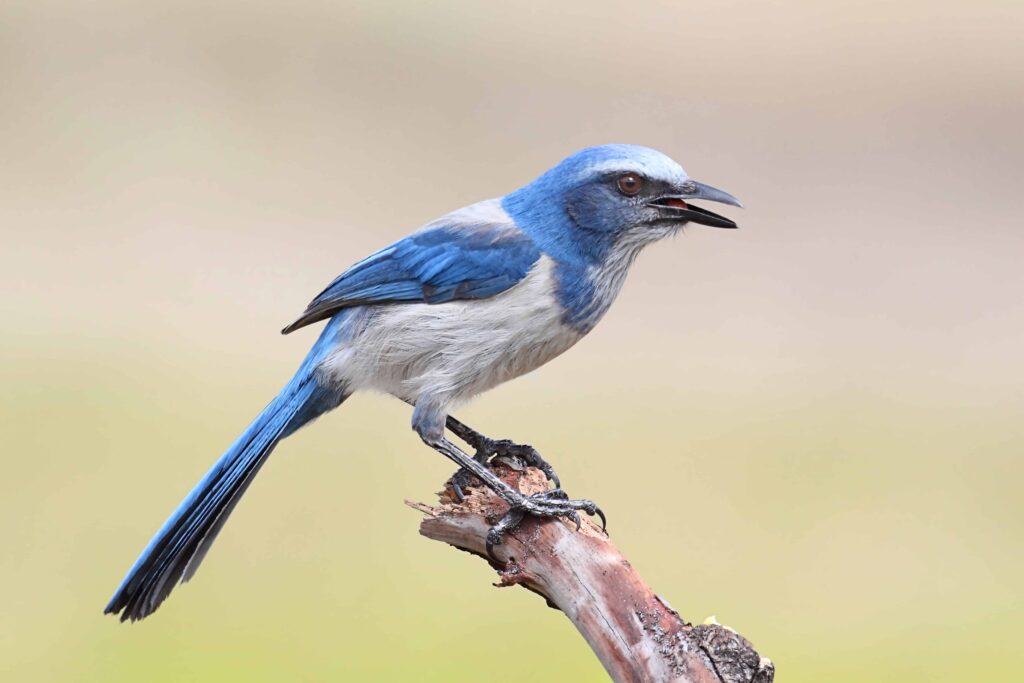
Many Native Florida Birds Eat Suet
The following native Florida birds eat suet:
- American Bittern
- American Kestrel
- Bachman’s Sparrow
- Seaside Sparrow
- Chimney Swift
- Crested Caracara
- Eastern Bluebird
- Florida Scrub-Jay
- Kirtland’s Warbler
- Marsh Wren
- Red-Cockaded Woodpecker
- Seaside Sparrow
- Wood Thrush
A few other native Florida birds eat suet.
However, either they won’t visit your backyard feeders, or you wouldn’t want them scaring and chasing the smaller, tender birds away.
Some of these native Florida birds include:
- Bald Eagle
- Barn Owls
- Burrowing Owl
- Sandhill Crane
- Snowy Egret
- Snowy Plover
- Swallow-Tailed Kite
- Whooping Cranes
While you don’t want raptors swooping down on the feeders in your garden, there are birds like the Florida Grasshopper Sparrow that eat suet.
But they are unfortunately imperiled. You may not find many of them or even one around your home.
The Least Tern and Little Blue Heron may feed on suet, and so might a Piping Plover.
But Limpkin and Wild Turkeys aren’t exactly your targets with backyard feeders, even though suet may entice these native species.
Many Migratory Birds in Florida Eat Suet
Florida is a birding haven.
Not only due to its native and nesting or breeding species but also because many migratory birds in the United States and North America traverse the state twice yearly.
You are probably familiar with Mourning Doves and Northern Cardinals, as they are likely to visit your garden or backyard feeders.
But they aren’t too fond of suet. Both these species rarely eat suet.
However, suet draws many migratory birds in Florida, including the following:
- American Goldfinch
- Ash-Throated Flycatchers
- Black-Throated Green Warbler
- Blue Jays
- Blue-Gray Gnatcatcher
- Blue-Headed Vireo
- Brown Creeper
- Carolina Chickadee
- Chipping Sparrow
- Common Grackles
- Dark-Eyed Junco
- Eastern Phoebes
- Fox Sparrows
- Golden-Crowned Kinglet
- Hermit Thrush
- House Finch
- Indigo Buntings
- Northern Parula
- Northern Waterthrush
- Orange-Crowned Warblers
- Painted Buntings
- Palm Warblers
- Pine Siskin
- Purple Martins
- Red-Bellied Woodpeckers
- Red-Winged Blackbirds
- Ruby-Crowned Kinglets
- Scissor-Tailed Flycatcher
- Tufted Titmouse
- Vermilion Flycatchers
- Virginia Rails
- Western Kingbird
- White-Throated Sparrow
- Winter Wren
- Yellow-Bellied Sapsucker
- Yellow-Rumped Warblers
There are several caveats to these Florida birds eating suet. For instance, American Robins may eat suet if a cake or plug has mealworms and fruits.
But a cake stacked in a feeder won’t entice a Dark-Eyed Junco as it feeds on the ground feeder, so it is unlikely to respond to a tube.
Similarly, woodpeckers and nuthatches can hang upside down a tubular or another type of suet feeder.
However, Whip-Poor-Will may not respond to any suet feeder at all.
Some Florida Birds Don’t Eat Suet
Many Florida birds, whether native or migratory, may eat suet but not be drawn to or find your feeders in the garden or backyard.
Irrespective of that reality, several species don’t eat suet at all, including Florida’s native and migratory birds.
Native Florida Birds That Don’t Eat Suet
The following native Florida birds don’t eat suet:
- Black-Bellied Whistling-Ducks, as they are granivorous and herbivorous.
- Brown Pelican, as they are pescatarian.
- Canada Geese, as they eat mostly plants.
- Common Loon, as they mostly eat small fish and aquatic plants.
- Fulvous Whistling-Ducks, as they are granivorous.
- White Ibis, as they are pescatarian.
- White-Crowned Pigeons, as they rarely feed on insects, let aside fat like suet.
- Wood Ducks, as they are herbivorous and granivorous.
A few native Florida birds are unlikely to eat suet in most circumstances, including the following species:
- American Oystercatcher, as it eats mostly aquatic organisms.
- American White Pelican, a pescatarian bird.
- American Flamingo
- Black Skimmer, another pescatarian.
- Cerulean Warbler, albeit it eats insects.
- Snail Kite, since it prefers freshwater snails.
- Peregrine Falcon, as it doesn’t feed on carrion or insects.
- Red-Shouldered Hawk, unlikely as it doesn’t prefer carrion.
Some native Florida birds may or may not eat suet, including the following:
- Mottled Duck
- Northern Bobwhite
- Osprey
- Reddish Egret
- Roseate Spoonbill
- Roseate Tern
- Tricolored Heron
- Wood Stork
Many of these birds aren’t drawn to feeders anyway.
Rather, backyard feeders are unsuitable for several species, especially the waterfowl, riverine, and coastal birds.
Still, there’s little to no evidence suggesting that these species prefer suet in other circumstances.
Migratory Birds in Florida That Don’t Eat Suet
You probably don’t want to invite Turkey Vultures to your backyard, even if they are a temporary resident in Florida and eat suet.
The Great Horned Owl is unlikely to visit a feeder even though it feeds on many kinds of flesh and fat, while Cedar Waxwings are unlikely to eat suet.
Likewise, migratory birds like American Coot and Avocets don’t eat suet.
But many gulls may perplex most birders.
For instance, Laughing Gull or Ring-Billed Gull aren’t known to be regular suet eaters in their natural habitats, but Herring Gulls may eat suet.
Here’s a flock of hungry Herring Gulls feeding on suet pellets:
Dietary Habits Of Birds That Eat Suet
Florida birds have the following dietary habits:
- Granivorous (grains and seeds)
- Herbivorous (plants and grains)
- Carnivorous (only animals)
- Omnivorous (plants and animals)
- Pescatarian (only fish and seafood)
- Varied (aquatic plants, arthropods)
- Others (sap, fruits, combo diets)
I’ve excluded entomophagy because a vast majority of birds eat insects, whether terrestrial or aquatic.
Many granivorous and pescatarian birds also eat insects whenever their staple food sources are scarce.
Likewise, those with variable or other diets eat anything they find palatable.
In theory, carnivorous and omnivorous Florida birds should eat suet, whether it is in a feeder or spread on logs or trees.
But that’s not how reality pans out because Florida birds have many distinct characteristics, including habitat preferences, especially where and how they feed.