
Last updated on June 4th, 2023 at 03:02 pm
Climate change is rapidly changing ecosystems, driving mass extinctions. More than 25,000 species are now in danger of disappearing, including 1,469 bird species.
Climate change affects birds by causing heat stress, decreasing food availability, and disrupting the mating and breeding cycles. Many species face extinction threats, while others are adapting by shifting their ranges and developing heat-tolerant physical characteristics.
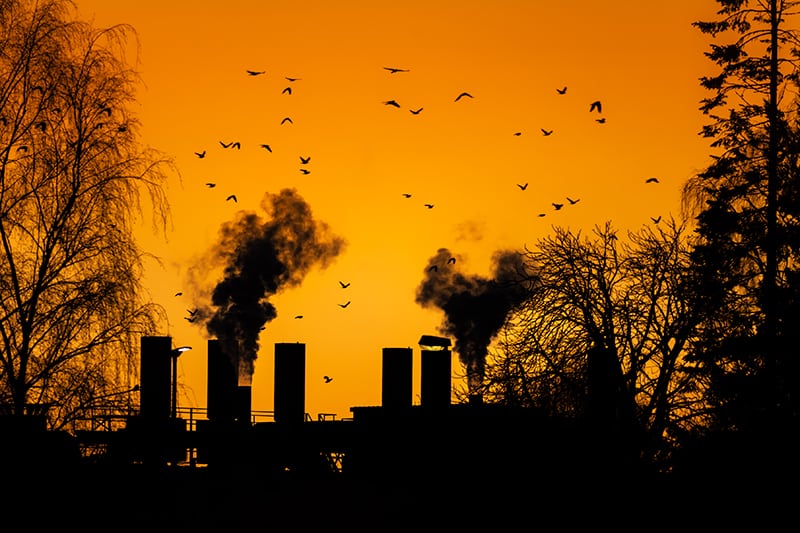
How Climate Change Affects Birds
“Two-thirds of North American birds are at an increasing risk of extinction from global temperature rise,” say Audubon scientists.
Worldwide, 1,469 bird species are now facing extinction threats.
Global Warming-Caused Extinction in Birds
Since the year 1500, at least 161 bird species have gone extinct.
Since 2000, three species have gone extinct: the Spix’s Macaw, the Hawaiian Crow, and the Poo-uli.
Now, one in eight birds is threatened with extinction.
Global warming has caused species to go extinct at a rate 100 to 10,000 times what is normal, a rate that has been rising rapidly in recent history.
When temperatures rise, birds become confused and suffer a disruption to mating, breeding, and migration patterns. Often, this results in a failure to reproduce.
Birds also struggle to maintain their relationships with predators, competitors, and prey due to these changing cycles, disrupting the entire ecosystem.
Food becomes harder to find, and population sizes are thrown out of balance.
Invasive species exacerbate the problem by taking resources away from native species and failing to provide the same ecosystem services that their native counterparts do.
Why Global Warming Means More Avian Illnesses
Global warming also increases the size of mosquito populations, which means more mosquito-borne avian illnesses like malaria.
This is because mosquitos thrive in warm environments, and with the warm seasons extending in many areas, they have more chances to breed.
Their populations are becoming denser and more diverse, meaning they are becoming more of a threat to birds and humans alike.
Bird Range Shift in Response to Climate Change
Sometimes, birds can escape their changing ecosystems to find more suitable habitats, often meaning higher ground.
As the world warms, some uninhabitable places become habitable.
However, the space available for new birds is limited, and most of the time, the entire population cannot squeeze into a new environment.
So even when birds can survive a shifting climate, the populations generally decrease in size.
Birds that live at high elevations are especially at risk in these cases because they cannot move up in elevation to find cooler temperatures.
Migration Pattern Changes
Perhaps one of the biggest shifts in range for North American birds has to do with their migration patterns.
More than 305 North American birds have moved their wintering grounds northward since 1966, altering the range by anywhere from 40 to 200 miles.
Morphological Changes in Birds as a Response to Global Warming
According to a study of 52 North American migratory bird species, global warming has caused measurable changes in morphology.
Over a 40-year period in which temperatures increased, bird size decreased, and bird wingspan increased.
A larger wingspan is useful for a smaller bird because it offsets the metabolic cost of flying with a small body.
Which Bird Species Are Most Threatened by Climate Change?
Some bird species are more likely to be impacted negatively by climate change, either due to their habitat or overall population size.
The bird species that are most threatened by climate change include:
- Allen’s Hummingbird
- American Goldfinch
- American Robin
- Baltimore Oriole
- Cerulean Warbler
- Common Loon
- Greater Sage-Grouse
- Hooded Warbler
- Lark Bunting
- Nashville Warbler
- Northern Pintail
- Piping Plover
- Purple Finch
- Red-breasted Nuthatch
- Royal Tern
- Sage Thrasher
- Sandhill Crane
- Scarlet Tanager
- Semipalmated Plover
- Wood Thrush
- Yellow Warbler
Why Montane Birds Are Most Affected by Climate Change
When birds shift their range in response to climate changes, it’s often a shift upward in elevation.
This presents a problem for alpine ecosystems, where the birds and other species have nowhere to go.
For example, the spruce-fir ecosystem of the White Mountain National Forest in New Hampshire is shrinking, threatening the survival of the Bicknell’s Thrush.
How To Mitigate the Impacts of Climate Change on Bird Populations
Climate change is happening now and cannot be prevented in the near future, so helping birds adapt is a must.
Thankfully, there are things you can do to make it easier for birds to adapt to their changing ecosystems.
Maintaining Native Plant Populations
A robust plant population decreases the impacts of drought and heat stress on birds. Native plants provide food, water, and shelter, and they stabilize the entire ecosystem.
To strengthen plant populations, you can encourage the spread of native species while slowing down the spread of invasives.
Slowing the Spread of Invasive Species
Invasive species out-compete natives to the degree that they destabilize the ecosystem.
For example, cheatgrass grows in grassland areas where it doesn’t belong, and it causes an inordinate number of wildfires due to its flammability.
The invasive species don’t work well with the rest of the ecosystem, and many species suffer as a result.
What Can We Do To Stop Global Warming?
We can stop global warming by making changes to how we harvest and use energy.
Such a shift will lead to the gradual decline of global warming, helping ecosystems to find balance.
In the long term, the effects of global warming can be reversed. But it will take decades for the rate of global warming to stabilize, even if we reduce carbon emissions dramatically.
How to Slow Down Global Warming
There are many things we can do to slow down global warming and save endangered bird populations, including the following:
- Switch to renewable energy sources like wind and solar.
- Transition to electric vehicles.
- Use mass transit.
- Conserve energy with insulation and energy-efficient appliances.
- Plant trees and encourage plant life.
- Invest in carbon capture and storage technologies.
- Shop local.
Ultimately, transitioning into a period of total climate stability will require carbon neutrality, where we take carbon out of the atmosphere as quickly as we produce it.
This means that plant populations will need to thrive and that our energy consumption will need to change.