
Last updated on April 22nd, 2022 at 11:39 pm
Budgies make for good pets, but like any bird, they’re sensitive to stressors. Understanding these stressors goes a long way in addressing and preventing freakouts.
Your budgie may be freaking out because it was scared by sudden sounds or movements or because it recently had a change in environment or diet. Additionally, the budgie could be sick, lonely, or have a history of abuse. You can help by maintaining a consistent routine and speaking in a calm voice.
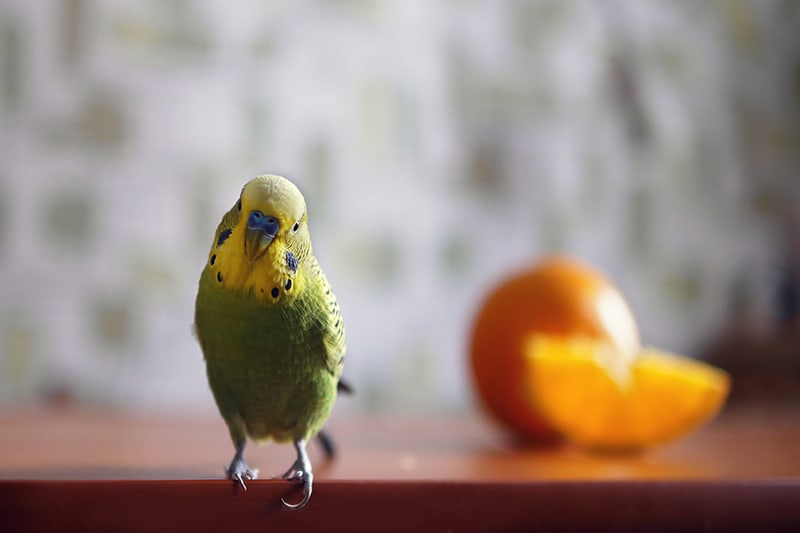
This Is Why Your Budgie Is Agitated
Your budgie may be startled, stressed, or otherwise freaking out to numerous different causes.
It’s important to nail down which reason is behind your budgie’s freakouts so that you can address the problem appropriately.
You can also prevent budgie freakouts by understanding and limiting the introduction of stressors.
Night Frights
When budgies wake up suddenly at night, they tend to become very agitated and stressed out.
This can happen due to loud sounds, flashes of light, sudden movements, or even a scary nightmare.
Night frights are most likely to happen if your budgie’s cage is situated next to an uncovered window or near a part of the house that gets a lot of nighttime activity.
Even small movements and changes in light are perceptible to sleeping budgies.
This is because they sleep with one eye open during the NREM stage of sleep.
History of Abuse
Budgies that have shared a home with abusive owners or had close contact with predator species may be especially prone to freakouts.
You may notice that birds that come from abusive households are especially sensitive to other stressors, and they might not be comfortable with human contact at all at first.
Change in Environment
Even small changes in the environment can cause budgies to freak out.
This could be something as small as new paint colors or something as big and jarring as moving the budgie to a new room or house.
Changes in environmental sounds are also a major stressor for budgies, especially if the new noises are loud or repetitive.
Change in Diet
While it’s possible to change your budgie’s diet healthily, this change should always be gradual.
Otherwise, you’ll risk the budgie rejecting the new food and feeling stressed out about not being able to find their usual food source.
The best foods for your budgie are nutrient-dense, species-specific pellets, fruits, and vegetables. Avoid feeding them fatty or salty foods.
Loneliness
Budgies are naturally flocking birds, so it can be lonely for them to be kept without a companion bird.
Being alone can make them stressed out, especially if they once had a companion bird that’s now gone away.
You can expect budgies without a companion to be less resilient to other stressors and more likely to freak out.
Sickness
One very serious consideration is that your budgie may be freaking out due to illness.
If you can’t identify any obvious triggers causing your budgie to freak out, consider taking your bird to an avian veterinarian to seek advice.
Even if you think you know what’s stressing out your budgie, a trip to the veterinarian might not be a bad idea.
How To Help a Stressed-Out Budgie
Helping a stressed-out budgie is simple in some cases and more complicated in others.
Usually, it’s best to handle stressors right when they first appear or prevent them from occurring at all with a little foresight.
Recognizing Early Signs of Stress in Budgies
One important piece of addressing freakouts in budgies is recognizing them right when they get started.
That way, you’ll be able to deal with the issue at the start rather than waiting while it builds and gets worse.
These signs include:
- Plucking feathers
- Gnawing at their feet
- Yelling/excessive vocalization
- Puffing their feathers
- Perching at the bottom of the cage
- Loss of appetite
- Any other drastic change in behavior
How To Calm Down a Stressed-Out Budgie
The right way to calm down a stressed-out budgie depends on the stressor.
If your budgie is suffering from night frights, for example, you might consider removing the cage cover if you have one and turning on the lights in the room.
This will allow your budgie to regain their full vision and see no present threats.
If your budgie is stressed out because of environmental changes, there’s not much you can do besides giving your bird time to adjust.
To prevent stress associated with environmental changes, you can work to keep the bird’s routine as consistent as possible during a transition like a move.
Never try to pick up a budgie that’s freaking out.
Your best bet is to stay away from the cage but close enough that it can hear you.
Then, speak in a calm, cool, and collected tone, reassuring the budgie that it’s okay. This is more likely to be effective when your budgie knows and trusts you.
New budgies may take more time to trust you in these situations.
Preventing Night Frights in Budgies
Night frights are one of the most common sources of stress in budgies.
Putting time into making the nighttime routine more comfortable is a big step towards keeping your budgie calm and happy.
Budgies prefer to sleep in total darkness.
However, it’s a good idea to leave a nightlight on in the budgie’s room if there’s going to be any movement or sounds nearby or if it’s experienced night frights in the past.
This will help the budgie see that the movements or sounds aren’t coming from predators.
Additionally, it’s very important that the budgie sleeps in a quiet room by itself, away from the main activity of the household.
Keep to a certain routine at night, luring your budgie to its cage around the same time every night and sleeping when they sleep.
That way, you won’t keep the budgie awake with your activity.
Some budgie owners go so far as to soundproof the budgie’s room with wall-mounted acoustic panels such as the AudioSoul Sound Panels (available on Amazon.com).
These panels decrease the amount that outside noise enters the room, and they can work wonders for your budgie if you live near commotion or busy highways.