
From ancient times to modern-day symbolism, birds such as the dove, osprey, and cardinal enrich our world with their maternal instincts, shedding light on the powerful connections they share with their offspring. Each bird effortlessly conveys a singular story of motherhood waiting to be discovered.
Here are 7 types of birds that represent motherhood:
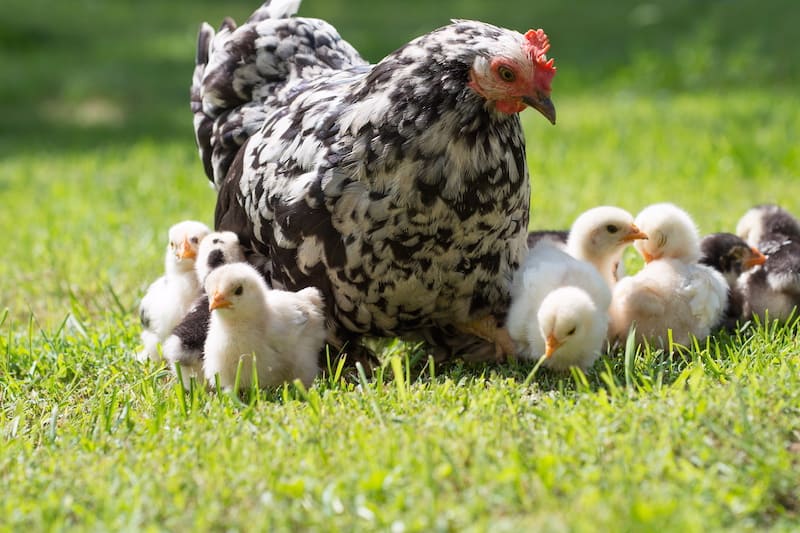
1. Hen
The hen symbolizes motherhood and nurturing because of her dedication to caring for her chicks. She offers warmth and protection, perfect for nesting and raising chicks.
This bird species exhibits strong guardianship instincts and emphasizes the importance of community and family.
2. Dove
Doves are another bird species symbolizing motherhood due to their associations with peace, love, and tranquility.
In ancient lore, the dove was considered a companion of Venus, the Roman goddess of love.
These maternal qualities make the dove a fitting symbol for loving and caring mothers.
3. Swallow
Swallows represent home and family, often making long migrations to return to their nesting grounds.
These birds are associated with loyalty and devotion to their family, which can be seen in their extensive care for their young.
The swallow’s dedication to its nest and offspring makes it a suitable symbol of motherhood.
4. Goose
Geese are known for their strong instinct to protect their goslings. They are courageous, loyal, and nurturing parents, making them an ideal representation of motherhood.
Geese also migrate in supportive flocks, emphasizing the significance of community and family bonds.
There is also the story of Mother Goose. This fictional character is often associated with traditional nursery rhymes and children’s songs.
Her work has become a symbol of motherhood and the importance of passing down stories and songs to the next generation.
5. The Pelican
The pelican is seen as a symbol of selflessness, motherhood, and the divine.
In Christian iconography, it is often depicted as a representation of Christ’s sacrifice and believed to symbolize the redemption of humanity.
The pelican’s self-sacrifice embodies the essence of motherly love and devotion.
6. Magpie
Magpies represent homemaking and nurturing. These intelligent birds are known to build elaborate nests, providing a safe and comfortable home for their offspring.
The magpie’s dedication to nest-building and caring for its young emphasizes the importance of creating a nurturing environment for family members.
7. Sparrow
Sparrows symbolize motherhood through their diligent efforts to care for their young.
These small birds are known for their adaptability and resilience, often building nests in various environments to support their offspring.
Sparrows also find shade and food sources, showcasing their commitment to providing for their family.
Motherhood Symbolism in Culture and Mythology
Throughout cultures, myths, and folklore, various birds have symbolized motherhood. Their nurturing and protective nature resonates with human mothers.
Doves, often associated with peace and love, connect to Venus, the Roman goddess of love.
In many communities, the dove embodies the essential tranquility and nurturing nature of a mother.
In Hindu mythology, the peacock signifies resurrection and immortality.
As a totem animal, the peacock is an eternal mother figure and conveys the enduring spirit of motherhood.
Native American cultures hold the turtle in high regard. The turtle represents Mother Earth, who saved mankind from a great flood.
As a symbol of fertility and motherhood, the turtle carries the burden of humanity on her back.
Celtic traditions use symbols to represent the three phases of womanhood: maiden, mother, and crone.
The maiden signifies innocence and purity, while the mother represents love and nurturing. The crone encapsulates the wisdom of old age.
Cows, held sacred in Hindu cultures, stand as the animal counterpart of motherhood, representing kindness and contribution.
Hindus associate cows with Mother Earth and consider them highly revered.
These birds and animals, their stories interwoven throughout world cultures, immortalize the transcendent role of motherhood in the tapestry of myth and history.
Motherhood Traits in Bird Species
Birds, as representatives of motherhood, exhibit traits such as family, safety, growth, healing, protection, love, loyalty, and nurturing.
Throughout history and cultural lore, certain bird species have been associated with these qualities due to their unique behaviors and characteristics.
Doves symbolize peace, love, and tranquility. As companions of Venus, the Roman goddess of love, their gentle nature embodies the essence of love and nurturing.
They build strong family bonds, raising their young with dedication and care.
Female Peregrine Falcons share parenting duties fairly equally with their male counterparts, demonstrating loyalty and cooperation in their partnership.
Both parents participate actively in providing safety and protection for their offspring.
Hummingbird mothers, on the other hand, shoulder the entire burden of nesting, incubating, and tending to their young.
Their unwavering commitment to nurturing their family signifies growth and healing, as they work tirelessly to ensure the well-being of their offspring.
Protection is another significant motherhood trait in bird species.
Mother ducks, grouse, and songbirds often take on the full responsibility of parental chores, nurturing their young with immense dedication.
In summary, birds offer a rich variety of traits that represent motherhood, including:
- Family: Building strong connections within their flocks or nests
- Safety: Vigilant in guarding their young from potential threats
- Growth: Ensuring the physical and emotional wellbeing of their offspring
- Healing: Providing support and care in times of distress
- Protection: Shielding their offspring from danger or harm
- Love: Exemplifying selflessness and devotion towards their family
- Loyalty: Commitment to their mating partners and offspring
- Nurturing: Actively tending to their young’s needs
Influence in Art and Literature
Bird symbolism is deeply rooted in art and literature. Love, light, and vision are common themes attributed to these creatures.
In many cultures, different bird species symbolize various aspects of motherhood. They can represent protection, nurturing, and wisdom.
The bird has long been a powerful symbol in the Bible. Doves, in particular, evoke the idea of peace and love.
They are often seen as messengers of hope and purity.
The dove’s nurturing qualities can be found in the story of Noah’s Ark, where the bird ensures the survival of life on Earth by carrying an olive branch.
A Hindu belief paints birds as higher states of being, their presence often tied to divine knowledge.
Cranes, another bird of significance, exemplify power and transformation. Their long necks and legs paint a poetic image of grace and elegance.
In Chinese mythology, the crane embodies wisdom and intelligence, while in Japanese culture, these birds symbolize good fortune and long life.
Their partnership in mate selection and parenting adds to the symbolism of love and motherhood.
As for visual art, the peacock represents beauty, vision, and protection.
In Hindu mythology, the spread of the peacock’s tail feathers is said to symbolize the all-seeing eye.
Motherhood is also evident in the peacock’s portrayal, as the female bird is known to protect her chicks under her intricate tail.
The vibrancy and iridescence of their plumage command attention, inspiring creativity in artists.
In literature, caged birds signify subjugated authority, especially regarding feminism and matriarchal power.
This motif is found in works that focus on themes of confinement, freedom, and the fight for autonomy.
Many authors use caged bird imagery to depict the struggle for independence and personal sovereignty.
Take, for example, Maya Angelou’s famous book “I Know Why the Caged Bird Sings” which chronicles her unsettled and sometimes traumatic childhood.
Bird symbolism plays an essential role in art and literature, conveying themes of motherhood, love, and power.
These creatures, whether found perched on a branch or depicted in a work of art, inspire and challenge the human imagination.
They reveal the intricacies of life and give voice to the journeys of growth, transformation, and wisdom.
Spiritual and Religious Connections
Birds hold significant symbolism in various spiritual and religious beliefs.
Their presence often signifies luck, hope, freedom, and rebirth, elements that make them an ideal representation of motherhood.
Doves, long associated with peace, love, and tranquility, are companions of Venus, the Roman goddess of love.
In Christianity, doves serve as symbols of purity and faith.
These qualities render doves a popular symbol of motherhood, embodying the nurturing and supportive aspects required in caretaking.
Cranes, known for their unwavering commitment and loyalty, signify eternal love and youth.
Renowned for their steadfast devotion to a single partner for life, they effortlessly embody the essence of maternal bonds.
Notably, birds also serve as spirit animals and bird totems, offering insight and balance to one’s life journey.
The bird spirit animal’s influence signifies independence, strength, and the ability to face and overcome darkness.
Some common birds, like sparrows and cardinals, convey deeper spiritual meanings.
For instance, the sparrow, associated with Aphrodite, the Greek goddess of love, signifies the spiritual connection found in true love.
The cardinal, known for its purity, represents life after death and profound connections with the universe.
Birds play an essential role in symbolizing motherhood across different cultures and spiritual beliefs.
By representing qualities such as love, commitment, faith, and independence, they help us appreciate the divine and nurturing connections between mothers and their offspring.