
Last updated on June 4th, 2023 at 10:26 am
Palm trees provide an attractive nesting spot for various types of birds. These majestic trees not only offer a safe place to build nests, but they also provide food sources, such as nectar and insects, which help sustain the bird populations.
Here are 8 types of birds that nest in palm trees:
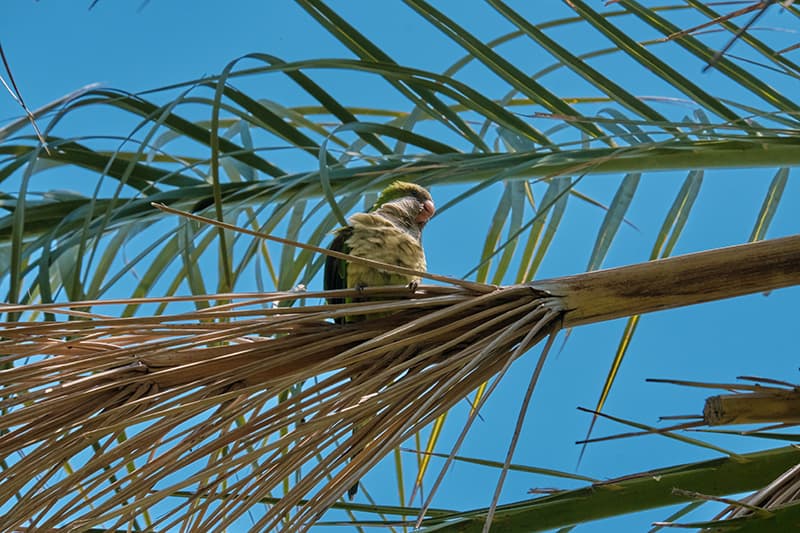
1. Parrots and Parakeets
Parrots and parakeets are known for their vibrant colors and social nature.
They often find palm trees to be a suitable home, thanks to the protection offered by the foliage and branches.
These bird species typically prefer the taller branches, as it provides an ideal vantage point for potential threats and food sources.
The dense foliage of palm trees also offers them privacy and shelter from harsh weather conditions.
2. Woodpeckers
Another group of birds that commonly nest in palm trees are woodpeckers.
They are attracted to the soft and fibrous texture of the trunk, which is perfect for excavating nesting cavities.
This helps them create customized living spaces in the trunks of palm trees.
In South Florida, they are heavily known to nest in dead palm trees.
Not only do these cavities provide them with a safe place to lay their eggs, but they also serve as a tool to help regulate temperature inside the nest during different weather conditions.
3. Hooded Orioles
Hooded Orioles are known for their intricate and beautifully woven nests, which are often found hanging from palm tree branches.
The hanging nests are well-hidden from predators and provide a safe haven for the orioles during their breeding seasons.
These birds prefer palms due to their sturdy branches and easy access to nesting materials such as palm fibers and leaves.
The proximity of palm trees to food sources, such as insects and nectar, is another reason why these birds are attracted to them.
In California where they are commonly found, the birds have garnered the nickname “palm-leaf oriole.”
4. Doves and Pigeons
Doves and pigeons have a preference for nesting in palm trees, as they provide an excellent nesting location with coverage from their dense fronds.
These birds build their nests using twigs and leaves found nearby, creating a flat platform in the palm tree’s higher branches.
As with other bird species, the protection from predators and weather provided by palm trees make them an appealing nesting spot for these birds.
5. Owls
Owl species, such as the Barn Owl, may use palm trees as nesting sites.
These nocturnal birds take advantage of the tree’s natural cavities or create their nests in the leafy crown of the palm tree.
The dense foliage offers protection from predators and provides a secluded space for raising their young.
6. Passerines
A variety of passerine birds, including sparrows, finches, and wrens, build their nests in palm trees.
These birds typically create nests in areas with dense and compact foliage, providing safety and seclusion for their eggs and young ones.
Some of these birds may even utilize the palm’s fronds to construct elaborate hanging nests that offer additional protection from predators.
7. Egrets and Herons
Large wading birds such as egrets and herons also use palm trees for nesting.
These birds usually build platform nests in the tree’s upper branches, providing ample space and support for their young.
This elevated position offers a great vantage point and helps protect their nests from potential predators.
8. Tropical Birds
Various tropical birds, such as toucans, tanagers, and hummingbirds, also find palm trees to be an attractive nesting option.
These colorful birds are commonly found in tropical and subtropical regions where palm trees frequently grow.
These species often build their nests in the midsection of the tree, offering them safety from predators, along with easy access to the palm tree’s nectar and fruit as a food source.
Why Birds Choose Palm Trees
Palm trees offer several benefits to birds when it comes to nesting.
First, the height of these trees provides safety from ground predators, ensuring that birds have a secure location to lay their eggs and raise their young.
Another advantage of nesting in palm trees is the presence of the palm fronds themselves. The fronds offer birds additional shelter from weather and predators.
In particular, birds like are known to build nests by suspending them from the underside of palm leaves, maximizing their protection in this unique environment.
Besides safety, palm trees also create an ideal habitat for some bird species due to their natural food sources.
Palms typically attract various insects, which in turn serve as a reliable food supply for insectivorous birds.
As a result, birds find it easier to find food for themselves and their chicks without having to travel far from their nest, conserving energy and time.
Lastly, the natural structure and design of palms provide birds with various nesting options.
Birds can create nests in old leaf petioles, among the fronds, or use the natural cavities at the top of the tree as a nest site.
These diverse nesting opportunities make palm trees attractive nesting spots for various bird species with different nesting habits.
Adaptations for Palm Tree Nesting
Beak and Foot Adaptations
Many birds that nest in palm trees have developed specialized beak and foot adaptations to make their lives easier.
For instance, some small birds with narrow gapes, like flowerpeckers and mynas, have developed ways to tear off the fruit’s flesh, which allows them to feed effectively.
Additionally, their feet have evolved to have strong grasping abilities, critical for holding onto the fronds and branches of palm trees.
Nest Building Techniques
Birds nesting in palm trees have developed a variety of nest-building techniques to ensure a secure and comfortable environment.
For example, Palm Warblers create cup-shaped nest using grass, sedges, rootlets, and ferns.
They place their nests on the ground, usually at the base of a small tree or shrub or nestled in peat moss.
Similarly, other bird species like wrens, juncos, and finches construct their nests in bushes and shrubs with dense, compact foliage, or on the ground below them.
Some birds even build their nests directly on the fronds of the palms, weaving them into the fronds or using the palm’s infructescence for added support.
Camouflage and Defense
Birds nesting in palm trees often take advantage of natural camouflage to protect themselves and their offspring from predators.
The varying colors and patterns found on birds’ feathers and nests help blend them into the palm tree’s surrounding foliage.
Furthermore, some birds display territorial behavior to defend their nests from potential threats.
Their aggressive displays and vocalizations deter predators and ensure the safety of their nestlings.
The Benefits of Palm Trees for Birds
Palm trees offer a unique habitat for birds, providing several benefits that make them ideal nesting sites.
One significant advantage is their tall, straight trunk, which can offer birds a safe and elevated location to build their nests.
This height can help protect birds from ground predators, increasing their nesting success rate.
Some bird species, such as Orioles, are known to build their incredible hanging nests in palms.
The leaves of palms and other similar plants offer a stable and secure platform for these ornate nests, ensuring that they remain safely suspended and shielded from the wind and other elements.
Besides providing nesting opportunities, palm trees also benefit birds by supporting food sources. The fruit and seeds produced by these trees can be an essential part of their diet.
In addition to seeds and fruit, palms attract insects, which in turn provide a plentiful food supply for insectivorous birds.
Lastly, palm trees contribute to birds’ water needs in tropical areas.
The broadleaf evergreens can collect water on their leaves, offering small birds a place to bathe as they rub against them.
This unique feature can further contribute to the overall appeal of palm trees as bird habitats.
Threats to Palm Tree-Nesting Birds
Habitat Loss
Many bird species rely on palm trees for nesting and foraging.
However, increasing urbanization and land conversion for agriculture have led to habitat loss, significantly reducing the availability of palm trees for these birds.
This loss of habitat forces the birds to find alternative nesting locations, which often do not provide the same level of protection and resources as the palm trees do.
Climate Change
Climate change is another factor that can negatively affect palm tree-nesting birds.
As temperatures continue to rise, the range of suitable habitats for these birds may shift, causing them to migrate and adapt to new environments.
Moreover, extreme weather events, such as storms and persistent droughts, can damage palm trees and render them less suitable for nesting.
Predators and Pests
Palm tree-nesting birds also face threats from predators and pests.
Animals such as snakes, rats, and squirrels can access the nests and prey on eggs and young birds, causing a decline in their population.
Additionally, pests like insects can infest the palm trees, making them unhealthy or even causing them to die, which in turn can affect the birds that nest in them.
Palm tree-nesting birds are facing numerous challenges which threaten their existence.
Habitat loss, climate change, and predation all contribute to the struggles these birds go through in an ever-changing environment.
Efforts to preserve and protect their habitats, as well as combating the broader issues of climate change, can help ensure these birds continue to thrive in their unique palm tree homes.
Conservation and Protection Measures
Protecting habitats and minimizing threats are essential for ensuring healthy and sustainable populations of birds that nest in palm trees.
Here are some key conservation and protection measures:
Firstly, it is vital to plant palms wisely and in locations where they pose the least risk to birds.
This requires consideration of factors such as the bird species that typically nest in the area and the palm’s eventual height and spread.
When working with existing palms, always check for bird nests before carrying out maintenance, pruning, or tree removal.
Nests can be well-concealed, so a thorough examination of the tree is essential.
Preserving natural habitats is crucial for migratory birds and their young.
This includes maintaining a variety of trees, bushes, and shrubs to provide a diverse ecosystem for nesting birds.
To protect ground nests, mark areas where potential nests can be found using an upright stick or bamboo pole.
In urban settings, maintaining a distance of at least 60 meters from large bird nests, such as those of raptors and herons, is recommended.
Implementing these conservation and protection measures can greatly benefit nesting birds in palm trees and contribute to the overall health of their populations.