
Are moles and voles becoming a problem in your yard lately? It could be due to extra birdseed in your yard, or it could be something else. Since they both have different diets, it might be difficult to determine what it could be.
Birdseed attracts moles and voles to your yard. Moles are attracted because it encourages other food sources that moles eat to become available. Voles eat bird seeds, so having birdseed in your yard will attract them.
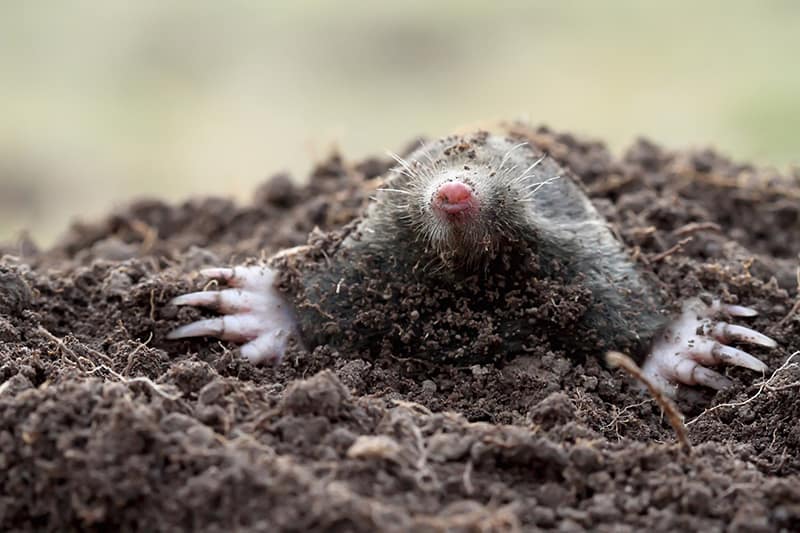
Why Moles Are Attracted to Yards With Bird Seed
While moles are not attracted to birdseed, they are attracted to a yard that contains birdseed.
This is because it brings in other food sources that they do eat, such as insects and worms.
Moles burrow underground and get all their needs met, including food, water, and shelter below the ground.
They don’t need water as their food contains all the water they need. The main attraction for moles is an environment with a rich food source.
When you have a bird feeder, you are likely to attract many birds. And since your yard attracts more birds, of course, you’re going to have more bird droppings.
These droppings attract insects and worms, which are excellent food sources for moles.
It is also common for the seeds to fall onto the grass, attracting more insects.
Why Voles Are Attracted to Yards With Bird Seed
Since voles are omnivores, they eat anything but prefer a vegetarian diet.
Having a bird feeder that spills bird seed onto the ground is very attractive to them, as they tend to scavenge the seeds that spill to the ground.
Bird feeders contribute to attracting voles to your yard.
You might not notice them in winter if you live in an area where there is snow, as they burrow underground and the snow conceals them.
But once the snow melts, the damage they’ve caused to your lawn will become glaringly obvious.
Voles are also attracted to yards with many thick shrubberies and long grass and weeds, as these are fantastic food sources.
They also enjoy unkept yards with fallen leaves and debris because it is easier to burrow.
Getting Rid of Moles and Voles
Bird feeders are a great addition to a garden, especially if you enjoy bird watching.
If you’ve noticed the tell-tale signs of moles or voles in your garden and have a bird feeder, you don’t need to get rid of it.
Instead of having your bird feeder on the grass, move it onto a patio or tiled area.
Moles and voles can’t burrow under a hard surface, so even if seeds spill onto the ground, the moles and voles won’t be able to get to them.
Place a tray under the bird feeder if this isn’t an option, as any seeds that may fall out of the bird feeder will fall into the tray instead of onto the grass.
Ideally, the tray should be bigger than the bird feeder, which ensures that all falling seeds are caught.
Apart from keeping bird seeds away, there are other things you can do to stop moles and voles from coming into your yard.
Whether they are moles or voles will determine the methods you use.
Moles
You’ll know there are moles in your yard if the burrowing is deep and there are mounds of loose sand on the surface of your lawn.
If you’re looking for humane ways to deter moles from your garden, try the following:
- Mow your grass and keep your flower beds neat. Moles are attracted to overgrown areas as they provide places to hide. Mow the lawn regularly, trim back hedges and keep flower beds neat and tidy. Also, rake up leaves, debris, and any wood that may lay around.
- Grow plants that moles don’t like. There are some plants that moles don’t like, so growing them in your yard will keep moles away. Some of these plants include daffodils, shallots, marigolds, and alliums. Planting them on the edge of the lawn is a practical, natural mole repellent that looks beautiful too.
- Flatten mole tunnels. You can gently flatten mole tunnels using a shovel or your foot by pushing down on the soil mounds. This method requires patience as the moles usually create the bumps again soon after you’ve flattened them. If you’re persistent, they will eventually go away.
- Don’t overwater your lawn. Overwatering your lawn causes worms and grubs to come up to the ground’s surface, attracting moles. Only water your lawn when necessary and ensure that you don’t overwater it.
Voles
Voles’ tunnels are different from those of moles because they are shallow and near the ground’s surface.
They don’t leave any soil mounds, but you’ll notice other damage like partially eaten root vegetables, flower bulbs, and chewed-up tree bark.
Try the following to keep voles away:
- Place gravel around planting holes. If you have bulbs that you don’t want voles to get to, try adding gravel to the bulbs’ holes, which makes it difficult for the voles to get to.
- Spray irritants into the tunnels. There are some natural foods that voles don’t like. Spraying them into the vole tunnels will deter them from your yard. Try mixing garlic, cayenne powder, castor oil, or onion in water, pour it into a spray bottle, and spray it into the tunnels.
- Wrap tree bark in mesh or cloth. If voles destroy your trees, you can protect them by wrapping the bark in mesh or cloth. Make sure that you cover the tree bark loosely, and that mesh or cloth is buried into the sand so that the voles can’t get to the tree bark and roots.
- Use fencing. To keep voles out of your vegetable patch, place a hardwire fence around the area. The fence should be buried about 5”-10” below the ground and should stand about 12” tall. This keeps voles away since they cannot climb and can’t dig that deep.