
California has stringent laws about feeding wildlife, including birds, so bird feeders have always been a contentious issue in the state. The issue becomes even more complicated when infectious diseases, like a highly pathogenic avian influenza or salmonellosis, kill innumerable poultry and wild birds.
You should take your bird feeders down in California if and when a highly pathogenic and fatal disease is reportedly affecting and killing wild birds. If you have poultry, you mustn’t feed wild birds at the same site. This will also prevent your bird feeders from spreading diseases.
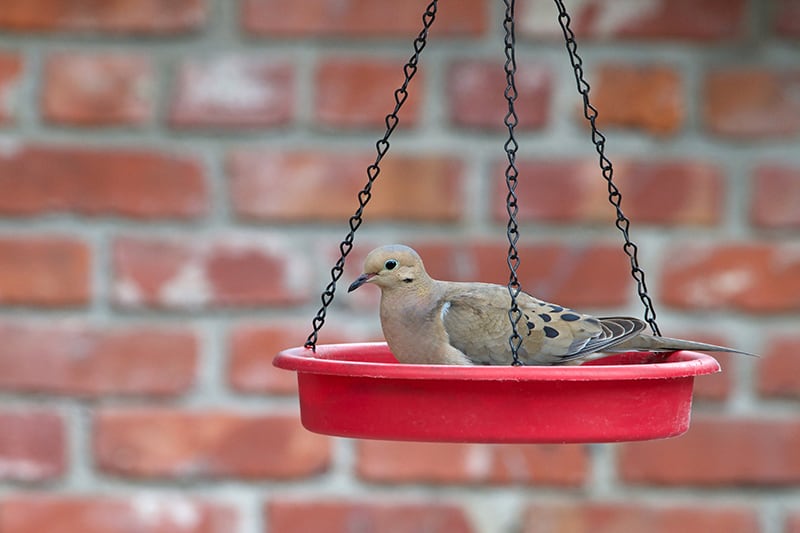
5 Scenarios When You Should Take Your Bird Feeders Down in California
Generally, backyard and garden feeders used by birders are for wild avian species.
While they aren’t as vulnerable to infectious diseases as poultry, the wild species are not immune to all pathogens, either.
That’s why you’ll need to assess a scenario to decide if you should take your bird feeders down.
1. When You Have Captive Poultry at the Same Property or Site
The wild birds breeding in or native to California and the hundreds of species migrating through, and wintering, in the state have much stronger immune systems than captive poultry.
A stock of poultry, whether in your backyard or a large commercial farm, doesn’t have the same genetic diversity as the wild birds visiting your feeders.
Thus, backyard poultry is vulnerable to many infectious diseases, including the following:
- Aspergillosis
- Avian Encephalomyelitis
- Avian Influenza
- Colibacillosis
- Favus
- Fowlpox
- Infectious Bronchitis
- Marek’s Disease
- Mycoplasmosis
- Newcastle Disease
- Parasitic infections: roundworms, tapeworms, etc.
- Salmonellosis
You don’t want your backyard poultry to get exposed to anything causing a common and highly infectious disease, including the following pathogens:
- Bacteria
- Fungi
- Parasites
- Viruses
The prevalent antibiotic usage may protect captive poultry from many bacteria, but the drugs don’t offer any immunity against viruses.
Wild birds flying across states and countries to your feeders may also bring various microbes that can cause pathogenic diseases in backyard poultry.
Therefore, you should take your bird feeders down in California if you have backyard poultry.
Or, you can use something like Ruolan Garden Netting (available on Amazon.com) to segregate the wild birds from your poultry.
This heavy-duty but light protective netting is rot-proof and UV-resistant.
The nets will also keep deer and squirrels away and protect any fruits or veggies that you may grow in your garden.
2. When Birds Are Affected by a Highly Pathogenic Avian Influenza
You should definitely consider taking your bird feeders down in California when there is a highly pathogenic avian influenza (HPAI) outbreak.
At the time of writing (late August 2022), a nationwide HPAI outbreak is killing millions of poultry and thousands of wild birds, almost all due to the EA H5N1 strain.
This strain has affected more than 40 million poultry in 39 states, as well as 2,000+ wild birds in 45 states.
In California, a few dozen wild birds are reportedly dead due to the HPAI outbreak, and those are only the casualties that have been diagnosed.
Here’s the casualty data for different wild bird species from various counties of California:
| County | Dead Wild Birds |
| Butte | American white pelican, Canada goose |
| Colusa | American white pelican, Canada goose |
| Glenn | American white pelican, Canada goose, wood duck |
| Mendocino | Wood duck |
| Placer | Canada goose |
| Plumas | American white pelican |
| Sacramento | Canada goose |
| Santa Clara | Canada goose |
| Siskiyou | Canada goose |
| Solano | American white pelican |
| Sonoma | Canada goose, mute swan, Turkey vulture |
| Stanislaus | Canada goose, mallard, Muscovy duck |
| Yolo | Canada goose |
It is worth noting here that these HPAI outbreaks are usually caused and facilitated by wild birds.
Most of the wild species are immune to these pathogenic diseases, but poultry stocks are highly vulnerable.
Wild bird feeders in California might help in spreading such pathogenic diseases.
3. When Wild Birds Spread and Get Infected With Salmonellosis
Avian flu doesn’t infect wild birds as easily or fatally as it affects and kills poultry. Consider the example of songbirds, who are rarely affected by avian influenza viruses.
However, the wild songbirds may spread the viruses to species that aren’t immune to avian flu or influenza.
Also, many wild bird species are vulnerable to several infectious diseases, including but not limited to the following:
- Avian pox
- Avian trichomoniasis
- Salmonellosis
A salmonella outbreak in California killed many songbirds recently.
These wild birds became infected through droppings, which is extremely common at feeders and baths in backyards and gardens.
The droppings may also readily spread pathogenic diseases from wild birds to backyard poultry.
4. When You Have Unclean Bird Feeders Due to Poor Maintenance
Not all pathogens are airborne, as many microbes survive in or on various mediums, including:
- Alloys
- Fabrics
- Metals
- Plastics
- Soil
- Water
- Wood
Add to this list your bird feeders, the countless droppings, and seeds or other stuff you may offer to the wild species in your California backyard or garden.
If you can’t clean and maintain the bird feeders and the immediate surroundings, you should take them down when there’s an outbreak.
You’re probably aware that you should frequently clean feeders with bleach.
However, tube feeders may be difficult to clean unless you have a tool like the Droll Yankees Bird Feeder Brush (available on Amazon.com).
The 24-inch (60.96 cm) brush has 5-inch (12.7 cm) bristles for an effective clean.
You should always use clean and disinfected bird feeders regardless of any ongoing avian flu outbreak or influenza and other pathogenic diseases, such as salmonellosis.
5. When Laws or Wildlife Conflicts Warrant Taking Down Bird Feeders
California has a stringent Code of Regulations to avert potential conflict with wildlife and to prevent adverse effects of feeding birds and other wild animals.
For example, Title 14 Section 251.1 prohibits disrupting or interfering with the normal behaviors of wild animals in California.
The laws aren’t always enforced literally or punitively, but you must take your bird feeders down if they attract other wildlife, such as bears or deer.
You should also refer to any applicable local laws and community guidelines from your homeowners’ association.
When You Don’t Have To Take Your Bird Feeders Down in California
Here are the circumstances when you don’t have to take your bird feeders down in California:
- You are not legally notified to take your feeders down.
- No local or community bylaws require such compliance.
- Your bird feeders aren’t attracting other wildlife species.
- You clean and disinfect all the bird feeders frequently.
- There is no avian pathogenic disease outbreak in California.
Sources
- Centers for Disease Control and Prevention: Bird Flu Current Situation Summary
- California Department of Fish and Wildlife: Avian Influenza Virus Detected in Wild Birds in California
- Animal and Plant Health Inspection Service, United States Department of Agriculture: 2022 Detections of Highly Pathogenic Avian Influenza in Wild Birds