
Last updated on April 23rd, 2023 at 11:48 pm
Bird feeders are a practical and effective way to invite local birds to your yard, but they still have problems. Familiarizing yourself with the most common bird feeder issues and learning how to fix them can improve your experience and keep birds returning to your property.
Bird feeders can attract unwanted visitors like squirrels and hawks. They can also develop mold, which can prove fatal to birds. You can solve these issues by investing in a new feeder, buying spicy bird seed, and protecting feeders with tarps and anti-squirrel devices.
1. Squirrels Are Eating All the Food In the Bird Feeder
Squirrels are often attracted to bird feeders because they prefer a diet rich in high-fat foods like nuts and seeds.
Because bird seed mixes often contain these foods, squirrels can empty a backyard bird feeder over the course of a few days.
Even more troubling, some squirrel species, such as the American Red and California Ground, can be territorial over food sources.
As such, they may chase away birds and other squirrels that visit your bird feeder in addition to consuming all of the food inside it.
These woodland creatures can also damage your bird feeder.
While bird feeders are designed to support the weight of one or two songbirds, few are designed to support the weight of larger animals like squirrels.
For example, the average North American squirrel weighs about one pound, but small songbirds may only weigh about 0.5 ounces (97% less than squirrels).
So when a squirrel acrobatically swings onto a bird feeder, its weight may cause the bottom portion to detach or break away.
This excess weight can snap the string or hook at the top of the feeder, causing it to fall.
Fortunately, there are several ways to keep squirrels away from your bird feeders.
Invest In Bird Seed That Squirrels Don’t Like
One of the simplest ways to keep squirrels from frequenting your bird feeders is to invest in bird seed that’s unpalatable to squirrels.
Wild Delight Bird Food (available on Amazon.com) is a fantastic option.
This bird feed contains seeds and nuts that songbirds enjoy, but the ingredients are covered in chili pepper powder.
The spicy powder produces a heat sensation when consumed by squirrels due to the capsaicin content.
But since birds don’t share this reaction, this powder-covered bird food can repel squirrels without negatively affecting local bird species.
You can also hang your bird feeder on a strong fishing line between two poles.
You can reuse glass bottles with holes drilled into the bottom to feed the line or large plastic containers for this solution.
Installing these containers on the fishing line will make it challenging for squirrels to remain stable while attempting to scamper toward the feeder.
The containers will roll around the fishing line. In most cases, hungry squirrels will roll off the containers and away from your bird feeder.
2. Mold Is Growing on the Inside of the Bird Feeder
Many bird feeders have a tube-like container that holds seeds and nuts.
While this component helps protect the feed from water and insects, it can fill with moisture due to high humidity or torrential rainfall.
When this happens, the enclosed tube becomes an ideal breeding ground for mold spores.
This can spread throughout the interior chamber of the feeder.
In turn, this results in rotting the food it touches and potentially harming the birds that feed on it.
If you’ve noticed patches of white fuzz or gooey black growth on your bird feeder, you’re likely seeing signs of mold.
Investing in easy-to-clean and mold-resistant bird feeders are potential solutions.
But keeping a close eye on the food you’re pouring into a feeder is also crucial.
Wash and Dry Bird Feeders Before Refilling
It’s essential to wash and dry your bird feeders before refilling them, as this prevents mold growth and keeps the feeder in excellent condition.
But scrubbing out a thin feeder tube can be challenging, even with the help of a scrubbing wand.
Fortunately, there are bird feeders with large seed chambers.
These are much easier to hand-clean, as the compartments are wide enough to accommodate your hand and a gentle sponge.
The REALEAD Bird Feeder (available on Amazon.com) is an excellent example, with a glass seed holder that’s 6 inches wide.
The components are easy to take apart, making cleaning convenient and uncomplicated.
It also has a powder-coated finish that helps prevent rusting, making it one of the more durable wide-chambered bird feeders.
Still, regular cleaning may not be enough to prevent your bird seed from developing mold.
So before adding bird seed to a clean feeder, you’ll want to check it for signs of decay and moisture.
If seeds have germinated, are sticking together, or have visible signs of mold growth, it’s crucial to toss them out and purchase a new bag of bird seed.
Don’t forget to clean the feeder before adding new seed, however.
3. The Bird Feeder Is Attracting the Wrong Kinds of Birds
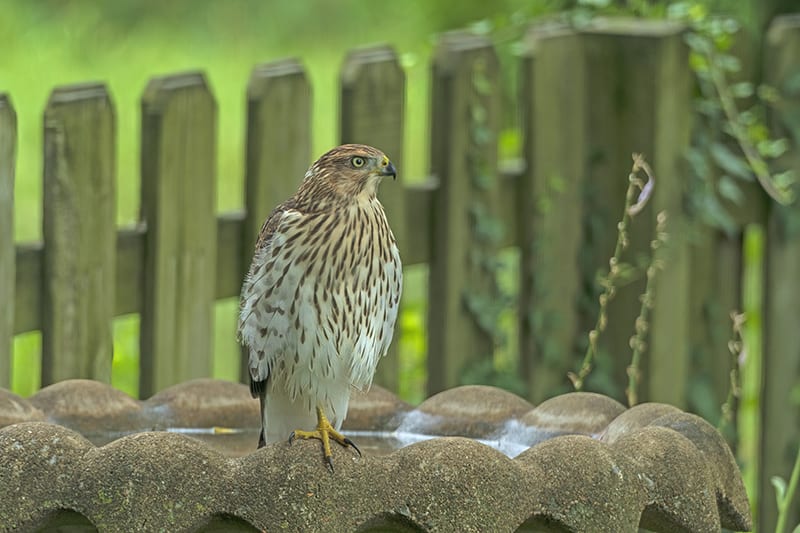
In addition to attracting predatory animals like cats, dogs, and bears, bird feeders can attract predatory bird species like hawks and falcons.
These raptors can stake out bird feeders in wait for prey.
Feeders can also attract “nuisance” bird species like pigeons, European starlings, house sparrows, and crows.
Keeping these unwanted birds away from your feeders can be challenging, but it’s not impossible.
Investing in a bird feeder with smaller feeder holes or installing protective covers over bird feeders are two potential solutions that may help.
Install a Tarp Above the Feeder
If your bird feeders attract predatory birds, you may want to install a tarp above the feeder.
A sizeable opaque tarp blocks a predatory bird’s line of sight to songbirds, making it more challenging to spot and attack them.
A new bird feeder might be a better option if you want to repel unwanted non-predatory bird species like pigeons.
Feeders with smaller openings can attract small-sized birds and keep larger, unwanted species away.
The SPRODUCE Squirrel Resistant Bird Feeder (available on Amazon.com) is a top-notch option, as it has a small cage enclosing the feeding tube.
This cage keeps large, unwanted bird species out while allowing smaller songbirds inside, and it can prevent squirrels from stealing bird food.