
Last updated on April 30th, 2022 at 12:20 am
Cardinals are beautiful and interesting birds to watch, and it’s a joy to have them in your backyard. So it can be quite disappointing when they suddenly stop showing up.
Here are 10 reasons why your backyard cardinals have disappeared:
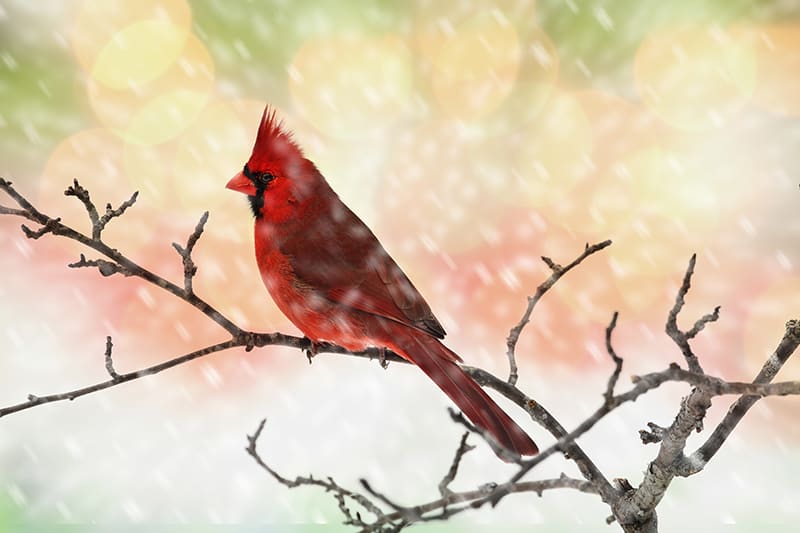
1. Cardinals Use Feeders Less in the Summer
One major reason why your backyard cardinals have disappeared might be that they’re simply finding food elsewhere.
Cardinals are most likely to use feeders in the winter when insect populations and fruiting plants are less abundant.
In the summer, cardinals may skip the feeders to hunt insects and gather berries.
2. Your Bird Seed Is No Longer Fresh
Cardinals will stop coming to your feeders if the seed has become stale or moldy, so be sure to clean and replace the seed in your feeders regularly.
Replacing the seed may seem wasteful, but it’s necessary if you want birds to continue coming to your feeder.
If you find that your seed is often growing stale and being ignored by birds, consider filling the feeder only halfway the next time so that the seed doesn’t go to waste.
You must watch your birds and feeders and understand how much they’ll go through in a given day.
3. You Changed Feeders
If you’ve recently changed your feeders, that may be why you’re no longer seeing cardinals in the yard.
Feeders with small perches are not ideal for cardinals, as they tend to be bigger than other songbirds.
This means they need either a tray feeder or a hopper feeder with larger perches to feed.
For example, the Audubon Feeder Absolute Hopper (available on Amazon.com) is a bright red hopper feeder with plenty of accessible perching space. It works well for attracting cardinals.
The Nature’s Way Tray Bird Feeder (available on Amazon.com) is another great choice for attracting cardinals.
If you have one of these feeders, it’ll be simple for cardinals to find and eat the seed you put out.
4. You’ve Been Inconsistent Filling the Feeders
Birds will prioritize consistent food supplies, so if you sometimes let your feeder run out and leave them empty, birds will learn to look elsewhere for food.
Ensure that you keep the feeders full every day if you want birds like cardinals to count on the feeders as a food source.
Otherwise, you’ll see more than just the cardinals avoiding your yard.
5. There Are New Predators Outside
If cardinals notice predators near a feeder, they’ll likely seek out an alternate food source and stop coming to your feeders.
This could happen if migrating birds of prey enter the area or if you or a neighbor start letting a neighborhood cat outside.
You can offset the danger of new predators by placing the feeder within quick flying distance of vegetation without burying it in the forest.
This allows them to get away quickly while still not making it easy for predators to hide in the brush awaiting a meal.
6. Neighbors Have Started Feeding the Birds
If your neighbors recently put up new feeders, there’s a chance that the cardinals have simply started visiting their feeders instead of yours.
This could be because their feeders are in a safer area than yours, the food is fresher, or because you’re using different kinds of seeds.
Cardinals will eat most seeds, fruit, nuts, and mealworms.
But their favorite food is black oil sunflower seeds such as the Wild Delight Black Oil Sunflower Seeds (available on Amazon.com) with all-natural ingredients.
You can also find the seeds at most stores that sell bird supplies.
7. You No Longer Have Clean Water in Your Yard
If the puddles or birdbaths in your yard have dried up, there’s a good chance that cardinals will stop coming to your yard.
Cardinals and other birds need water sources to drink and bathe in, and they’ll seek out yards with both food and water.
Remember to keep refilling your birdbath, changing out the water when necessary. Cardinals will avoid birdbaths that are either dirty or empty.
8. Squirrels Have Discovered Your Feeders
Once squirrels find a feeder that they can access, they begin to dominate and scare away birds like cardinals.
It’s a good idea to install a squirrel baffle to keep them away, especially if you’re using a tray feeder full of their favorite foods.
Alternatively, you could invest in a weight-activated feeder that makes the seed inaccessible when a big animal like a squirrel tries to eat the birdseed.
The Droll Yankees Squirrel-Proof Bird Feeder (available on Amazon.com), for example, has a circular perch that spins when heavy animals like squirrels try to perch on it.
But remains stable for lightweight animals like songbirds.
9. You’re Not Looking at the Right Time of Day
It could be that cardinals are coming to your yard, but they’re visiting so early that you’re not seeing them at the feeders.
Cardinals are typically the earliest risers among birds, visiting the feeders before the sun has even risen.
They also come to feed late at night, when the sun is setting or just after it’s set.
If you suspect that you’re missing the cardinals coming to your feeder, try installing a feeder camera to see what kind of activity there is at dawn and dusk.
The SOLIOM S90 Wireless Security Camera (available on Amazon.com) is a good choice if you have somewhere to mount it and want a permanent solution.
This camera recharges with sunlight, which makes it great for permanent installations.
It also has night vision technology so that you can capture feeder visitors at any time of day. This makes it more likely that you’ll capture photos of cardinals.
10. Your Feeder Needs a Deep Cleaning
In addition to changing out the seed and wiping the feeder regularly, you need to incorporate a thorough deep clean of the feeder at least every two weeks.
You can accomplish this in several different ways.
The easiest way to clean a bird feeder is to take the feeder apart and put it through the dishwasher.
Although you need to ensure that your particular feeder is dishwasher safe first.
Alternatively, you can hand wash your feeder with hot water and soap or a diluted bleach solution of one part bleach to nine parts water.
Rinse after the cleaning, and let dry before refilling.