
Last updated on June 4th, 2023 at 10:12 pm
Birds flying into windows perplexes many homeowners, as they appear to plunge into the clear panes without any reason. So why does it happen?
Birds fly into windows for various reasons, including reflection, territorial aggression, and disorientation. Reflections on windows can confuse birds, causing them to mistake the reflection for the open sky or trees. During the breeding season, birds may become territorial and attack their own reflection.
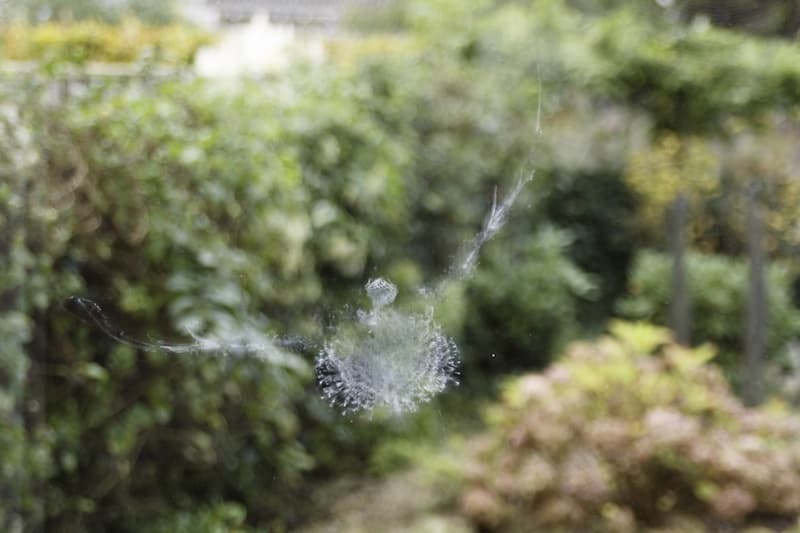
Why Birds Fly Into Windows
Reflections
Birds can’t distinguish reflections from reality. Glass windows reflect the sky, trees, and other flora.
Birds mistake windows for open spaces, and the result is a collision.
This issue happens in urban and suburban environments where glass buildings and home windows are common.
Transparent windows also pose a threat to birds. They can’t see the window and think there’s an open space ahead.
They might see plants inside the building and attempt to reach them, resulting in a crash. Solutions involve making windows more visible to birds from the outside.
Threat Perception
Birds might be perceiving threats in their environment. Territorial birds such as robins and cardinals can view reflections on windows as rival birds.
This behavior occurs primarily during the mating season, which makes males display aggression to protect their territory.
When they see their reflection, they assume it’s an intruding bird and attack the window. This behavior can lead to injury or death for the bird.
However, it tends to happen more during the springtime, when mating and territorial behavior are prevalent among birds.
Breeding Season
Breeding season intensifies the risk of window collisions. In spring, birds are more active, seeking mates and building nests.
Increased activity leads to more chances of flying into windows, both from heightened aggression and seeking new territories.
Raptors are predators that may hunt for birds near windows during the mating season. When birds are by feeding stations close to windows, it can attract raptors.
This increases window collisions for both the hunted birds and the predator, resulting in increased mortality rates.
Frequency and Impact of Window Collisions
Bird Species Affected
Window collisions affect many bird species, young and mature. Some species are more prone to these incidents, like the seven species of North American warblers.
The risk is not uniform, as some birds are more vulnerable during migration and breeding season.
Environmental Factors
Factors such as window angling and feeder placement have a significant impact on bird-window collisions.
As observed in a study, windows placed at a less reflective angle saw a decrease in collision frequency.
Additionally, bird feeders should be placed strategically to minimize collisions by either placing them very close or far away, but not in between.
The Death Toll
It is estimated that up to a billion birds die annually from window collisions in the United States alone.
This death toll takes a toll on the bird population, especially during migration, and affects the overall bird diversity on campuses and other locations.
- Factors that increase bird strikes:
- Window reflection
- Ill-placed bird feeders
- Proximity to trees and bushes
Understanding these factors helps prevent bird mortality from window collisions.
With this knowledge, we can create better environments for birds and protect different species by adapting our window designs and surroundings.
How to Prevent Bird-Window Collisions
Visual Deterrents
Visual deterrents can help birds see and avoid windows.
Using decals, tape, or screens with stripe and grid patterns made from clear UV-reflecting or UV-absorbing materials can effectively warn birds.
Options for Visual Deterrents:
- Bird tape
- Anti-collision stickers
- Transparent film
- White tape
- Collidescape
Proper Placement of Bird Feeders
The placement of bird feeders plays a significant role in bird-window collisions.
Placing bird feeders close to windows (less than 3 feet) or far from windows (more than 30 feet) reduces the likelihood of collisions.
Bird Feeder Placement Tips:
- Close to windows (< 3 feet)
- Far from windows (> 30 feet)
Window Treatments
Window treatments can reduce bird collisions by making windows more visible to birds or by reducing the reflection of the sky and vegetation.
Using awnings, external sun shades, or sun shades can prevent birds from seeing reflections that lead to collisions.
Effective Window Treatments:
- Awnings
- External shutters
- External sun shades
- Acopian Bird Savers
- Mosquito screens
- Collision stickers
- Sun shades
- Wind chimes
- Vertical blinds
Incorporating these deterrents and proper bird feeder placement can help protect birds from potentially fatal window collisions.
Caring for Injured Birds
Recognizing an Injured Bird
Injured birds often display specific signs that indicate distress. These include:
- Difficulty breathing or fast, shallow breaths
- Unable or unwilling to fly
- Obvious wounds, blood, or missing feathers
- Hopping or dragging themselves on the ground
- Lethargy or disorientation
What to Do with an Injured Bird
Follow these steps when encountering an injured bird:
- Carefully approach the bird and assess its condition.
- Use a towel or blanket to gently pick up the bird, avoiding direct contact with your hands.
- Place the bird in a safe, well-ventilated container with a soft lining.
- Keep the bird in a quiet, dark, and warm environment.
- Do not force-feed or provide water unless advised by a wildlife rehabilitator.
When to Call a Wildlife Rehabilitator
Seek the help of a wildlife rehabilitator if the injured bird exhibits any of the following situations:
- Obvious injuries such as broken wings or legs
- Signs of impact trauma from window collisions
- A chick or fledgling without nearby parents
- Victim of a cat or dog attack
- Entangled in debris or foreign objects
When contacting a wildlife rehabilitator, provide accurate information about the bird’s condition and location.
Remember that the primary job of a rehabilitator is to protect and care for these animals.
Symbolism and Spiritual Meaning of Bird-Window Collisions
Symbolism often accompanies bird-window collisions. Different cultures assign various meanings to these events.
Some view the collision as a warning, while others see it as a harbinger of death. Yet, others believe it holds a more profound spiritual meaning.
In certain traditions, a bird hitting a window represents an impending change or transition.
For example, Native American tribes see the event as an omen of transformation. This transformation may signify personal growth or a shift in life circumstances.
Some interpret the collision as a metaphysical message. In Irish folklore, for instance, a raven smashing a window portends misery.
Ravens and crows often symbolize darkness, and their presence in old myths frequently signifies impending doom or misfortune.