
Last updated on May 17th, 2023 at 12:00 am
Birdhouses offer diverse avian species with safe nesting environments, significantly supporting local ecosystems. As various types of birds possess distinct nesting preferences and requirements, understanding the different types of birdhouses can enrich gardens and natural landscapes while appealing to a multitude of species.
Here are 9 types of birdhouses:
By Bird Type
1. Bluebird and Tree Swallow Houses
Bluebird and Tree Swallow Houses are specifically designed for these two bird species, which are both known for using smaller birdhouses.
Bluebirds and Tree Swallows prefer houses with entrances that are 1.5 inches in diameter and 5 to 10 feet off the ground.
Mounting the birdhouses on poles or existing structures can help deter predators and ensure the safety of the young fledglings.
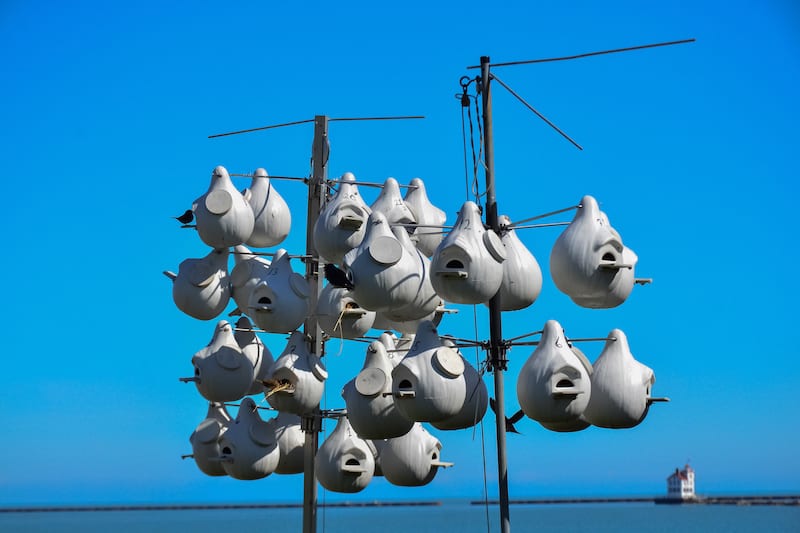
2. Purple Martin Houses
Purple Martins are migratory birds that live in colonies.
Their houses should be much larger than traditional birdhouses and mounted on poles 12 to 18 feet off the ground to keep predators away.
These multi-compartment birdhouses allow many pairs to nest together and often have an easy-to-lower feature, making it simple to clean and maintain.
The hole size should be around 2.25 inches in diameter.
3. Screech Owl Houses
Screech Owls benefit from having specially designed birdhouses, which are commonly called owl boxes.
They prefer nesting in mature trees, or the owl box can be attached to a suitable tree 10 to 30 feet off the ground.
Screech Owl houses should have a 3-inch entrance hole and be mounted facing away from the prevailing wind.
4. Songbird Houses
A diverse group of birds falls under the category of “songbirds,” including chickadees, titmice, and wrens.
These birds will use birdhouses if the house is located in a safe area with a hole size of approximately 1.25 inches in diameter and 6 inches above the floor.
Some songbirds enjoy nesting near water, while others prefer woodlands or shrubby areas.
Consider the habitat preferences of the specific songbird species you want to attract when placing their house.
5. Woodpecker Houses
Woodpeckers are cavity nesters that often create their own nesting holes in trees.
However, providing them with a birdhouse is still beneficial, particularly in areas where natural woodpecker habitat is lacking.
Woodpecker houses should have a hole size of 2 to 3 inches in diameter, and be mounted at least 10 feet high on a tree or pole.
The birdhouse can be attached directly to the tree or building with screws for stability.
By Mount Type
6. Freestanding
Freestanding birdhouses offer a versatile option for installation, allowing placement wherever there is a stable, level surface.
These birdhouses are often elevated, providing protection from predators and enhancing visibility for birds.
7. Hanging
Hanging birdhouses are a popular choice among bird enthusiasts due to their flexibility in positioning.
They can be suspended from tree branches, roof overhangs, or other sturdy structures.
Typically, a hook, string, or wire is used to attach the birdhouse, providing the necessary support.
When placing a hanging birdhouse, ensure it is sheltered from strong winds and predators.
8. Post-Mounted
Post-mounted birdhouses, as the name suggests, are attached to trees, fences, metal posts, or wood posts.
These birdhouses often come with a mounting bracket for secure installation.
Post-mounted birdhouses are advantageous for bird species that prefer nesting at specific heights, and they can be placed in various environments.
This includes gardens, backyards, and natural habitats.
9. Wall-Mounted
Wall-mounted birdhouses are affixed directly to the exterior of a building or structure.
These birdhouses were initially made of bricks, tiles, wood, stone, and mortar, and were used to shelter sparrows and swallows.
The integration of the birdhouse into a building’s exterior not only provides shelter for birds but can also add an aesthetic touch to the edifice.
When choosing the appropriate mount type for a birdhouse, it’s essential to consider the preferences of the bird species you wish to attract.
And also the specific environment where the birdhouse will be installed.
What Birds Use Bird Houses?
Birds of Prey
Providing birdhouses for birds of prey can help control rodent populations since many birds of prey, such as owls and kestrels, feed on rodents.
They work well when installed in suitable habitats like woodlands with old trees. Species include:
- American Kestrel
- Barn Owl
- Eastern Screech Owl
- Western Screech Owl
Chickadees And Tits
Chickadees and tits are among the common birds that use birdhouses.
Providing suitable birdhouses in wooded or suburban areas can attract these small cavity nesters. Species include:
- Black-Capped Chickadee
- Carolina Chickadee
- Chestnut-Backed Chickadee
- Tufted Titmouse
Ducks
Many species of ducks will use birdhouses as nesting sites, with some species even preferring them over natural cavities.
Construct and place these near suitable wetland habitats. Species include:
- Wood Duck
- Merganser
- Hooded Merganser
- Bufflehead
- Goldeneye
- Common Eider
- Barrow’s Goldeneye
- Harlequin Duck
Finches and Sparrows
Finches and sparrows are small birds that are common in many backyards and gardens. They might use a birdhouse as a shelter or nesting site. Species include:
- House Finch
- Purple Finch
- American Goldfinch
- House Sparrow
- Song Sparrow
- White-Throated Sparrow
Flycatchers and Warblers
Flycatchers and warblers are both insectivores, meaning they primarily feed on insects.
They are small and charming birds with a penchant for using birdhouses as their nesting sites. Species include:
- Eastern Phoebe
- Great Crested Flycatcher
- Black-And-White Warbler
- Common Yellowthroat
- Prothonotary Warbler
Nuthatches and Creepers
Nuthatches and creepers are small, tree-dwelling birds. They will use birdhouses when they are installed in wooded or suburban areas with plenty of tree cover.
Species include:
- Red-Breasted Nuthatch
- White-Breasted Nuthatch
- Brown Creeper
- Brown-Headed Nuthatch
Swifts and Swallows
Swifts and swallows are aerial acrobats that are known for their impressive flying skills.
It is best to place the birdhouses in open areas with clear flight paths and close to water or insect-rich feeding grounds. Species include:
- Purple Martin
- Chimney Swift
- Vaux’s Swift
- Tree Swallow
- Violet-Green Swallow
- Barn Swallow
- Cliff Swallow
Thrushes
Thrushes are medium-sized birds that are known for their beautiful songs and distinctive plumage. They are also known to use birdhouses as nesting sites. Species include:
- Eastern Bluebird
- Swainson’s Thrush
- Hermit Thrush
- Wood Thrush
- American Robin (less likely to nest in a birdhouse)
Woodpeckers
Woodpeckers are known for their distinctive behavior of pecking and drilling into trees. They may utilize birdhouses that mimic natural tree cavities in size, shape, and placement. Species include:
- Downy Woodpecker (the most common in North America)
- Hairy Woodpecker
- Red-Bellied Woodpecker
- Northern Flicker
- Pileated Woodpecker
Wrens
Wrens are known to use birdhouses as nesting sites when they’re installed in suitable habitats with nearby food sources and shelter.
Providing properly sized birdhouses encourages them to nest and raise their young in a safe environment. Species include:
- Carolina Wren
- House Wren
- Bewick’s Wren
- Winter Wren
Choosing the Right Material
Untreated Wood
Untreated wood is a popular choice for birdhouses due to its natural appearance, durability, and insulation properties.
Some of the best options include red cedar or bald cypress. Pine and plywood can also be suitable but may need more frequent replacement.
To ensure proper dwelling for birds, avoid varnished or treated wood, as they tend to attract and store heat.
Aluminum
Aluminum birdhouses offer lightweight and weather-resistant qualities. However, they don’t provide enough insulation for birds to stay warm during colder seasons.
To ensure thermal insulation, consider pairing aluminum with another material like untreated wood.
Tiles
Tiles offer a unique aesthetic for birdhouses but may not be the most practical choice. They can be heavy and may not provide sufficient insulation.
However, if you opt for tiles, ensure proper drainage and ventilation in the birdhouse design.
Ceramic
Ceramic birdhouses provide several advantages such as not leaking during rain, better heat-balancing capabilities, and resistance to cold weather.
Their unique and gorgeous appearance can be an attractive addition to any backyard.
Plastic
Birdhouses made of plastic or acrylics are generally not recommended.
They tend to attract and store heat, which may not provide a comfortable environment for birds.
The exception is synthetic materials like concrete, which can be suitable for specific bird species.
Metal
Metal birdhouses are not ideal due to their ability to conduct heat, making them uncomfortable for birds during hot weather.
However, if you decide to use metal, it’s essential to provide proper insulation to help regulate temperatures and create a more habitable space for birds.
Resin
Resin birdhouses can be both attractive and durable.
But it’s important to ensure they have proper ventilation and insulation properties to keep birds comfortable throughout the year.
Fabric
Fabric birdhouses, while unique and sometimes visually appealing, are not the most practical choice.
They may not hold up well to weather conditions and lack the structural stability needed for birds to nest securely.
Gourd
Natural gourds can make excellent birdhouses when properly cleaned and prepared.
Their organic shapes provide a unique dwelling for birds, while their thick walls offer insulation from weather elements.
Just ensure ventilation and drainage are addressed in the design.
In summary, consider factors like insulation, durability, and appearance when choosing birdhouse materials.
Don’t forget that the birds’ comfort should be the top priority in your decision-making process, as well as the birdhouse’s ability to blend with your backyard environment.
Habitat and Location
Open Fields and Small Trees
Birds such as bluebirds prefer open areas and grassy fields as their primary habitat.
To accommodate them, birdhouses should be placed on a post facing an open field, preferably 5-10 feet high and facing east, north, or south, with the west as the last resort.
Providing birdhouses in these locations will be particularly beneficial to nesting birds that feed on insects captured in open fields.
Shrubs, Woody Vegetation, and Thickets
Bird species like robins typically do not use birdhouses; instead, they build open nests on small trees, shrubs, and woody vegetation thickets.
To attract these birds to your property, focus on providing the proper habitat by planting native shrubs and trees that offer cover and a nesting site.
Keep in mind that birds assess birdhouses for dimensions, depth, surrounding vegetation, and safety from predators.
Ensure that their habitat requirements are met.
Apartment Houses and Nesting Gourds
For cavity-nesting birds like purple martins, apartment houses, and nesting gourds are attractive options.
Purple martins are known for their communal nesting behavior and prefer birdhouses shaped like apartments.
Some birds, such as house wrens, chickadees, and tree swallows, are also known to nest in houses.
In addition to meeting the specific habitat requirements, it’s crucial to ensure birdhouses are easily accessible for birds while adequately safeguarded from predators.
Providing a variety of birdhouses at different heights and locations will cater to the preferences of various nesting birds, enhancing the overall appeal of your backyard or property.
Key Features for Birdhouses
Ventilation
Proper ventilation is essential for maintaining a comfortable environment for birds.
A well-ventilated birdhouse prevents excess heat buildup, allowing birds to maintain a suitable temperature for nesting.
Ventilation can be achieved through strategically placed holes or slits near the top of the birdhouse.
Drainage
A birdhouse must have drainage holes at the bottom to allow water to escape, keeping the interior dry and reducing the risk of disease for its inhabitants.
Good drainage prevents moisture buildup, which could lead to mold or mildew growth.
Perch-free
Perches on birdhouses are unnecessary and can even be harmful as they may invite predators.
Birds do not require perches to enter birdhouses and removing them prevents predators from easily accessing the nest.
Predator Guards
To protect birds from predators like snakes, raccoons, chipmunks, and cats, birdhouses can be equipped with predator guards.
These may include a sloped roof or a collar around the entrance hole to deter predators from reaching the nest.
Attracting Birds
Bird-friendly landscaping, including providing food, water, and shelter, can help attract birds to a birdhouse.
Additionally, the color and design of the birdhouse can influence which bird species may be attracted. For example, bluebirds prefer lighter-colored birdhouses.
Proper Entrance Size
The entrance hole size is crucial for attracting desired bird species and deterring predators.
A correctly sized entrance hole allows the target species to enter while excluding larger, unwanted species.
Hinged Door
Birdhouses should have a hinged door or a removable side panel for easy access and cleaning.
This feature allows for regular monitoring of the nest and ensures that the birdhouse is clean and safe for nesting birds.
Thick Walls
Thicker walls in a birdhouse offer better insulation, keeping the birds warmer during colder months and cooler during warmer months.
This promotes comfort and survival for both eggs and young birds.
Rough Interior Walls
Having rough interior walls in a birdhouse helps birds with gripping and climbing. This is especially important for young birds as they learn to fly and exit the nest.
Recessed Floor
A recessed floor is beneficial for birdhouses as it minimizes the chance of water getting into the nest if the drainage holes become blocked.
This feature helps keep the nest dry and safe for the birds.
Extended Back
An extended back helps protect the entrance hole from rain and other weather elements.
It also provides a convenient location for attaching the birdhouse to a post or tree.
Sloped Roof
A sloped roof ensures rainwater runs off the birdhouse, preventing moisture from seeping into the interior habitat.
This design offers a more weather-resistant environment for nesting birds.
Untreated Wood
Untreated wood is the best material for birdhouses because it does not contain chemicals that could harm the birds.
Cedar and pine are popular choices due to their natural resistance to decay.
Galvanized Screws
Using galvanized screws for constructing birdhouses ensures longevity, as they are rust-resistant and durable.
This prevents unnecessary deterioration of the birdhouse over time.
Creating Bird-Friendly Colonies
Bird-friendly colonies are crucial for maintaining and promoting a healthy avian population in your backyard.
One way to achieve this is by providing various types of birdhouses that cater to the nesting preferences of different species.
When choosing birdhouses, take into account the habitat requirements of each species.
For example, bluebirds thrive in areas facing or surrounded by open fields, where they can find insects to eat and feed their young.
Similarly, chickadees, titmice, and wrens prefer birdhouses that suit their respective habitats.
To make your bird-friendly colony more appealing, keep the following factors in mind:
- Earth-tone colors: Select birdhouses with nature-inspired colors, which help the structures blend in with their surroundings and provide a sense of security for nesting birds.
- Garden pest control: Attract birds that feed on common garden pests, such as insects and insect larvae. Bluebirds and other insectivorous birds play a crucial role in maintaining the balance of your garden’s ecosystem.
- Proper spacing: Space birdhouses at least 25 feet apart (300 feet for bluebird houses) to reduce conflicts among species and provide each bird with its preferred nesting environment.
Consider providing a variety of birdhouses to accommodate different species:
| Species | Birdhouse Size | Entrance Hole Size |
|---|---|---|
| Eastern Bluebird | 5″ x 5″ x 9″ | 1.5″ diameter |
| House Wren | 4″ x 4″ x 8″ | 1″ diameter |
| American Goldfinch | 5″ x 5″ x 9″ | 1.125″ diameter |
| Black-Capped Chickadee | 5″ x 5″ x 9″ | 1.125″ diameter |
| Tree Swallow | 6″ x 6″ x 12″ | 1.5″ diameter |
| Purple Martin | 6″ x 6″ x 12″ (per compartment) | 2.25″ diameter |
| Northern Flicker | 7″ x 7″ x 16″ | 2.5″ diameter |
| Wood Duck | 10″ x 24″ x 12″ | 4″ x 3″ oval |
| Barn Owl | 10″ x 16″ x 24″ | 6″ x 6″ square |
By carefully selecting birdhouses that cater to the specific bird species’ needs, you can establish a thriving bird-friendly colony in your backyard.
How to Choose the Right Birdhouse
Consider the Species
When choosing a birdhouse, it’s essential to consider the specific bird species you want to attract. Different birds have unique nesting preferences and requirements.
For example, house wrens prefer smaller houses with an 8-inch height and a 4- by 6-inch base, while chickadees like 8-inch tall houses with a 5- by 5-inch base.
Research the preferred dimensions and nesting environments for the species you want to attract.
Assess the Size Requirements
Proper size is crucial for a birdhouse.
A house that is too tight or too large can negatively affect the birds’ nesting experience, making them vulnerable to predators and poor weather conditions.
It’s also essential to ensure that the birdhouse is spacious enough to accommodate a brood, as some species lay more eggs than others.
Consider the following aspects for birdhouse dimensions:
- Entrance hole size: The hole’s size should be large enough for the chosen species to fit through, but small enough to keep predators out.
- Interior base size: The base should be large enough to fit all the eggs safely and comfortably, with room for rearrangement if needed during incubation.
- House depth: The depth of the birdhouse should allow the adult birds to enter and exit easily while providing sufficient protection for the nest.
Evaluate the Location
The location where you install the birdhouse plays a vital role in attracting birds. Ensure the birdhouse is placed in an appropriate habitat for the desired species.
In addition to habitat, consider the following factors for optimal placement:
- Height: Some birds prefer nest boxes placed close to the ground, while others prefer higher elevations.
- Safety: Install the birdhouse in a location safe from predators and harsh weather conditions.
- Accessibility: Make sure the birdhouse is easily accessible for cleaning and monitoring.
By considering the species, size requirements, and location, you can choose the perfect birdhouse to attract your desired bird species.
And provide safe and comfortable nesting spaces for them.