
Hummingbirds are adaptive birds that can live in many ecosystems, but they do not live in Hawaii. In fact, they are banned from being introduced into the state.
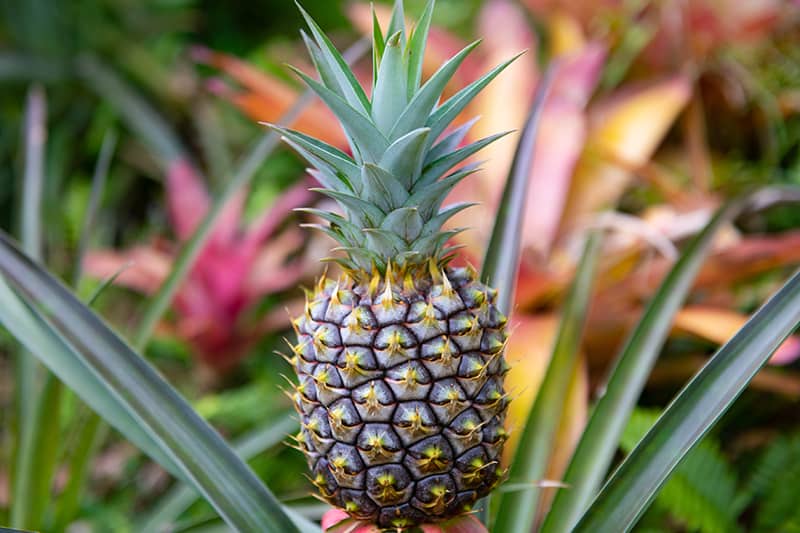
Hummingbirds are banned in Hawaii because they pollinate pineapple plants, causing seeds to develop and decreasing the value of the fruit. Hummingbirds are not native to the Hawaiian islands, and introducing non-native species to a new area also carries additional risks.
This Is Why Hummingbirds Are Banned in Hawaii
Hummingbirds are not native to Hawaii, so they’d have to either travel long distances outside their natural range or be introduced by humans to find a home in Hawaii.
However, the practice of bringing hummingbirds to live in Hawaii has been banned for some time, which is due to the hummingbird’s interactions with pineapple plants.
How Hummingbirds Pollinate Pineapples
When hummingbirds feed on nectar from pineapple plants, they inadvertently pollinate the plants, changing the way that the plants develop.
Pineapple plants that hummingbirds have pollinated develop more seeds than other pineapple plants, making them less appealing at the fruit market.
While pollination may seem like a good thing, in this case, it’s unnecessary to the production of pineapple plants.
These plants thrive without the hummingbird’s interference, and the hummingbird’s impact changes the plant’s composition rather than making it healthier or more fruitful.
Why Non-Native Species Pose a Risk in Hawaii
Like many ecosystems, Hawaiian ecosystems can easily be disrupted if non-native species are introduced.
There have been incidents in the past involving Barn owls, which were introduced as a solution to a rodent problem but then became a problem themselves.
The same happened with mongooses not long after, proving the point that non-native species can be dangerous.
Hawaiian ecosystems are very different from most others in the United States because they have developed on isolated islands.
This means that many species in the mainland United States would not mesh well with the ones developed in Hawaii.
For that reason, it’s important to follow all laws and guidelines regarding native and non-native species in Hawaii.
Other Animals Banned in Hawaii
Hawaii bans numerous different species, even if they are just pets because they can escape and be introduced to native ecosystems by accident.
The list of animals that you cannot bring into Hawaii includes:
- Most snakes
- Gerbils and hamsters
- Alligators
- Ferrets
- Geckos
- Dragon Lizards
- Piranhas
- Monk parakeets and toucans
- Snapping turtles
Additionally, there are laws regarding how you may bring in outside pets, even if they are legal species.
For example, you may not bring in a cat or dog that has not been tested for rabies.
Some animals also require special permits, like poultry and horses.
Which Birds Can You Bring to Hawaii?
You can bring domesticated birds to Hawaii as long as you abide by certain rules regarding the pre-travel veterinary inspection.
The birds must not have received a vaccine carrying a live agent within 60 days of travel, and most birds need to be isolated from mosquitos for seven days.
Commonly domesticated birds that you can bring into Hawaii include the following:
- Canaries
- Budgies
- Lovebirds
- Cockatiels
- Finches
- Parrots
- Parakeets
- Doves
Additionally, you may bring poultry birds like geese or ducks as long as you abide by additional requirements.
These requirements aim to ensure that no outside illnesses are spread to the Hawaiian islands.
Note that the transport of native migratory birds is banned to protect those species in the United States.
Even those birds that aren’t specifically banned in Hawaii may be unlawful to carry into the state.
In general, healthy pet birds are safe to transport, but birds taken from the wild are not.
Is It Legal To Transport Birds Across U.S. State Lines?
It is legal to transport birds across U.S. state lines as long as you abide by local laws regarding veterinary health certificates and banned species.
Note that each state has different laws, and you’ll need to investigate the laws in the specific states where you’ll be traveling.
Even if your state doesn’t require it, it’s often a good idea to visit a veterinarian before traveling with a bird to ensure that it is equipped to handle the journey.
Veterinarians can also advise on safe travel practices and reducing stress through a transition.
Traveling by Air With Birds
If you plan to travel by plane with birds, you’ll need to abide by the state laws in effect and the airline’s regulations.
Some airlines will not take birds as live cargo at all, and some prefer that passengers take a pet bird with them in the cabin rather than stowing them away with the luggage.
Regardless of which route you choose for air travel, you should ensure that your bird’s travel carrier is filled with familiar toys and treats.
This will keep your bird entertained and comfortable.
However, you’ll likely have to remove the bird from its carrier at a security checkpoint, and having a bird harness can make this process run smoothly.
For example, the Aviator Bird Harness (available on Amazon.com) attaches to most large birds and keeps them within range during the transition when the bird cannot be kept in a carrier.
Bird Transport Banned by the Migratory Bird Treaty Act
It is important to note that some transportation of birds is banned by the Migratory Bird Treaty Act as of 1918.
Within North America, native migratory birds are not allowed to be captured, traded, or transported without special authorization from the U.S. Fish and Wildlife Service.
Because of the Migratory Bird Treaty Act, it is, in fact, illegal to transport hummingbirds anywhere in the United States, beyond just Hawaii.
Hawaii has special provisions because of the impact that hummingbirds would have on their ecosystems.
Still, the federal government has provisions because of the impact that the hummingbirds would suffer given interference.
It is considered a violation of the Migratory Bird Treaty Act even just to hold a hummingbird, its nest, or its eggs without a permit.
Violations can result in fines ranging from $15,000 to $200,000, depending on the severity of the infraction.