
Last updated on October 15th, 2022 at 03:02 pm
When winds whip through trees on a blustery day, it may come as a surprise that you don’t see birds falling from great heights and being pushed around by the wind. But there are reasons why birds can hold on.
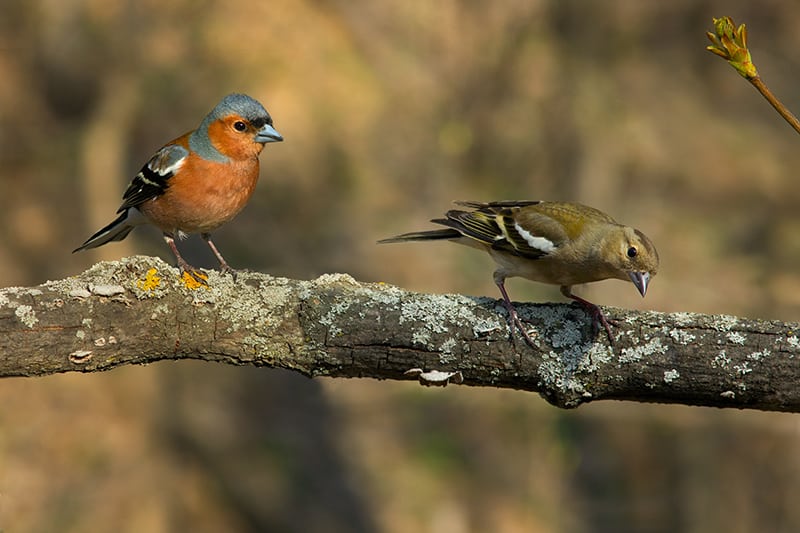
Birds avoid being blown away by using their feet to perch very tightly. Perching birds have feet that contract by default, staying clenched even while they’re asleep. Non-perching birds, like shorebirds, are more likely to fly with the wind, trying to reach the eye of the storm.
Why Are Birds Not Blown Away?
Even when wind speeds reach 50 mph or more, birds don’t have to worry about being blown away; they’re very good at staying perched.
In fact, passerine birds have feet that clench by default, closing on contact with a twig as a reflex. This reflex makes it easy for them to stay in place.
As a general rule, the branch where a bird is perched is more likely to break than the bird is to be blown off of it.
How Do Birds Avoid Being Blown Away in Storms?
Beyond being able to stay perched and correct the flight course, birds can also predict coming weather and prepare for it.
They detect changes in air pressure and then either fly away or position themselves somewhere sturdy where they can wait out the storm.
Even in major storms like hurricanes, mass bird casualties are rare. When a storm like this is coming, birds will stock up on food and then stay put.
They can even tell when a storm will get worse; some birds have been seen gathering food in the pouring rain in anticipation of a major tropical storm.
Only when birds are out over the open ocean, do storms pose a big risk to their survival.
Hurricanes can blow migrating birds hundreds of miles off course, delaying them from getting to their final destinations.
Some birders will even look for exotic birds during major storms, knowing that they might see unique species.
For birds, the most difficult part of adapting to storms in many cases is the habitat destruction that happens as a result.
However, sometimes the changes in habitat benefit some species, even as they hurt others.
How Birds Stay Perched When They’re Asleep
Unlike humans, birds don’t relax their muscles when they go to sleep.
Perching birds automatically keep their feet wrapped around their perch and clenched so they don’t fall.
Standing birds, like flamingos, have a similar mechanism for not falling over, standing on one leg with muscles contracted while sleeping.
Birds also remain half-awake most of the time when they’re sleeping, so it’s easy for them to become fully alert if something happens.
How Perching Birds’ Feet Keep Them Steady
Passerine, or perching, birds have feet that latch on to perches by default. They can do this because of the structure of their feet.
Passerine bird feet have a combination of muscles and tendons that stay contracted in a latched position in the presence of something to perch on.
The feet have three toes in the front and one in the back, with the rear toe curving forward for a good grip.
Birds That Are Passerines
Passerines are perching birds, and they include all of the following:
- Flycatchers
- Shrikes
- Corvids
- Swallows
- Larks
- Nuthatches
- Bushtits
- Chickadees
- Titmice
- Kinglets
- Warblers
- Thrushes
- Mockingbirds
- Starlings
- Waxwings
- Buntings
Passerines comprise 60% of living bird species in the world. This is about 6,000 species altogether.
Can Passerine Birds Walk on the Ground?
Passerine birds can walk on the ground. They do so by flattening their feet.
Some passerines have a true walk, whereas others have more of a hop; the difference has more to do with the bird’s weight than it does with the shape of the feet or body.
Many passerines rely on their ability to walk or hop on the ground for foraging.
Generally, the more that a bird relies on foraging on the ground, the faster it will walk or run.
How Shorebirds Avoid Being Blown Away
Shorebirds lack the curved feet of passerines, so they need an alternative way to tolerate high wind speeds.
Usually, shorebirds tolerate heavy storms like hurricanes by flying at the eye of the storm or by clearing the area before the storm hits.
The winds of a hurricane will naturally pull them in towards the center, and so if they haven’t left the area, they will travel with the hurricane in most cases rather than fighting.
When birds migrate, they’ll pay extra attention to the wind and plan their timing based on when the wind will be most helpful.
In the spring, they look for winds that will assist them the most, and in the fall, they look for winds that will offer the least resistance.
In either case, birds will use their natural steering systems to use the winds and avoid being blown off course.
How Do Birds Steer While Flying?
Birds can steer while flying by changing the position and angle of their feathers.
By changing the angle of their wings, they can create more or less lift, which moves them up and down.
By twisting their wingtips to the left or the right, they can move side to side.
Some birds have more methods for steering, in addition to these basics.
For example, gulls let one foot hang down on one side to pull their body in that direction and turn.
Pigeons, larks, and swallows use their tail as a rudder, positioning it according to which way they want to go.
Some birds also turn at the waist to steer, although some birds have much more flexibility of the spine and are more or less able to use this mechanism.
Ducks, for example, have a difficult time using a spinal adjustment to change direction while flying, while swallows are more able to do this.
Still, birds are sometimes blown off course by heavy winds even when they give their best efforts.
Thankfully, birds are also very good at navigating back home after this happens.