
Last updated on October 15th, 2022 at 03:04 pm
Whether you’re incubating eggs on your own or curious about eggs in the wild, you might wonder how to tell if an egg is dead or alive.
To tell if a bird egg is alive, check the egg to see if it is warm, unbroken, and has visible veins when under bright light. You can also watch for signs of movement if you’re incubating an egg. If an egg is in a nest, watch for a parent returning to the nest; this means it’s alive.
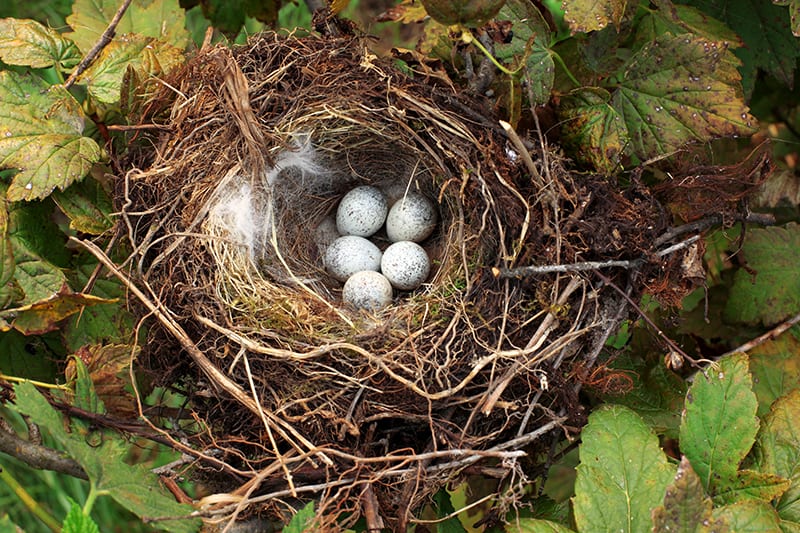
Signs of Life (or Death) in Bird Eggs
To check to see whether a bird egg is dead or alive, look for these cues:
- Is the egg warm? If so, it’s likely still alive.
- If the egg is in a nest in the wild, are birds returning to the nest? This is a sign that the egg is likely alive and being cared for.
- Is the egg fractured or broken? If it is damaged, the bird is likely dead.
- If you can, shine a light on the egg in a dark room. If you see veins, the egg is alive.
- If you’re incubating an egg, watch for signs of movement. Wobbling means that the egg is alive.
Reasons Why Bird Eggs Die
Bird eggs usually die from infection or poor egg handling, or lack of nutrition.
When bird eggs die, it usually happens within the first three days of incubation or the last three days before hatching.
Bacterial or Viral Infection
One of the most common causes of in-shell deaths for birds is a bacterial or viral infection.
Infectious pathogens can be introduced to the eggs by human handling, a dirty incubator, or rotten eggs.
If you’re using an incubator, make sure you clean it regularly to avoid infections.
You should also wash your hands before handling the eggs and remove infertile or dead eggs before they can spoil.
Shaking of a Bird’s Egg at Early Stages
Shaking a bird’s egg will kill the embryo at early stages in the bird’s development and cripple the chick later on.
You should always take care not to shake, drop, or otherwise physically agitate a bird’s egg.
By handling eggs gingerly and carefully, you can increase the likelihood that the chick will hatch healthily.
Lack of Nutrition
Improper nutrition can kill an egg, whether it be inadequate nutrient levels or elevated nutrient levels.
One common nutritional issue is hypercalcemia, which occurs when the egg has too much calcium.
This causes the shell to harden to the point where the chick can’t peck its way out to hatch, ultimately leading to death in most cases.
Reasons Why Bird Eggs Don’t Hatch
When bird eggs don’t hatch, it could be because the egg was never properly fertilized. Other times, it’s because the embryo died.
Factors like temperature and humidity, genetic defects, or a hen’s age and health may also impact the development of the eggs.
Temperature and Humidity
An unsuitable temperature or humidity can cause either infertility or embryo death.
Ideally, you should keep the eggs in an incubator in a room that’s about 70 degrees Fahrenheit (21.11°C).
You should also keep the eggs slightly moist, especially if they’re duck or goose eggs.
Lightly spraying the eggs with warm water now and then can prevent them from becoming dehydrated and increase the likelihood that they will hatch.
Genetic Defects
Some eggs are simply born with bad genetics, whether due to inbreeding or a random physical defect.
Additionally, some birds are intentionally bred to be infertile.
So the trait of not being able to create fertile eggs is more common than it otherwise would be, especially in budgies.
Hen Age
The hen’s age also plays a role in determining whether the eggs will be fertile or not.
Generally, you can expect that birds that are very young or very old will lay infertile eggs.
This is partly due to the limited supply of fertile eggs that a hen has and partly due to the experience and technique of fertilizing eggs.
Overall Hen Health
Hens need to be healthy to lay fertile eggs. Reasons why they might not lay fertile eggs may be nutritional deficiencies or a disease like psittacosis.
The most common nutritional deficiencies to impact egg-laying are in calcium, sodium, and energy levels.
On the other side of the coin, too much zinc can cause a hen to become infertile.
Psittacosis is a highly contagious disease spread between birds and humans through infected saliva, mucus, or droppings.
Blood-sucking insects are also a culprit in spreading this disease.
Why You Shouldn’t Touch Wild Bird Eggs
Even if you find an egg that appears abandoned, in most cases, you shouldn’t touch it.
There is a good chance that the eggs belong to a protected species, in which case it’s illegal to collect or tamper with the eggs or nest.
Touching eggs can also cause diseases to spread between birds and humans.
There is a myth that touching bird eggs will cause the parents to abandon the eggs, but this is only a myth.
In reality, birds will continue nurturing their eggs even after a human disturbance.
Tips for Incubating Healthy Eggs
If you’re incubating eggs at home, you should consider these tips:
- Purchase or build a high-quality incubator. The Harris Farms Nurture Right Incubator (on Amazon), for example, will allow you to carefully control both temperature and humidity without disturbing the eggs.
- Pay close attention to the temperature of the incubator. Eggs need to stay within a sometimes narrow temperature range to survive; for example, chicken eggs need to stay within one degree of 99.5 degrees Fahrenheit (37.5°C), or else they will die.
- Test the incubator for a day before inserting eggs. This will allow you to determine if it’s able to maintain a constant temperature and humidity level.
- Ensure that the incubator has good airflow so that the eggs can breathe in oxygen and breathe out carbon dioxide.
- Turn the eggs at least three times a day until day 18 of incubation, and then leave them alone. To keep track of your turning, consider marking the sides of the egg with a pencil. If you turn your eggs more than three times, at least make sure that you land on an odd number. This will ensure that the eggs don’t rest on the same side two nights in a row.
- Avoid helping the birds hatch when the time comes. They will often take six to twelve hours to break out of their shells after making their first hole, and it’s easy to injure the bird if you try to interfere.