
Last updated on October 15th, 2022 at 03:09 pm
Many common houseplants pose a threat to birds. Be sure to do your research before bringing any plants into the home. Also, make sure that any plants you buy aren’t on this list.
The plants that are poisonous to your pet birds include:
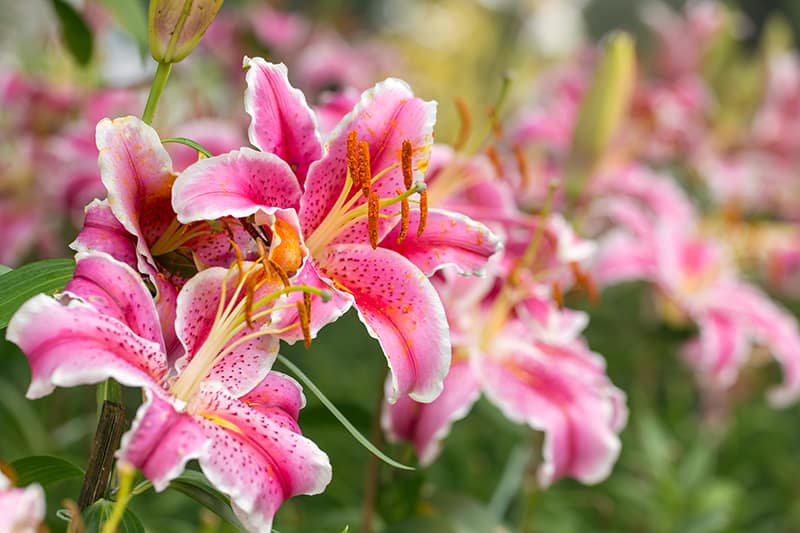
1. Lilies
All lilies are toxic to birds. This includes:
- Calla Lilies
- Peace Lilies
- Lilies-of-the-Valley
- Tiger Lilies
- Easter Lilies
- Oriental Lilies
Lilies cause a severe reaction in birds, irritating the mouth and the digestive tract. And, they are also poisonous for dogs and cats to eat.
The symptoms across species are similar, although the severity of the reaction depends on the amount eaten relative to the animal’s size.
2. Holly
Both the leaves and the berries of the holly plant are poisonous to birds. Unfortunately, birds are likely to mistake this plant as food because it has colorful berries.
If your pet bird eats the berries or leaves from a holly plant, you can expect vomiting, diarrhea, and other signs of gastrointestinal distress.
3. Avocado
The leaves, stems, and fruit of an avocado plant are all toxic to birds.
They cause cardiac disruptions, leading to overall weakness and an inability to complete normal physical tasks.
A bird that’s eaten avocado will often fluff its feathers and may also experience labored breathing.
4. Castor Bean
Every part of the castor bean plant is poisonous for birds. The castor bean plant contains ricin I and II and glycosidase, which are all toxic to birds.
If ingested, castor bean plants will cause vomiting and sometimes bloody diarrhea, similar to the effects of ingesting small foreign objects.
5. Philodendron
Philodendron plants contain oxalate toxins, which irritate the mouth and can cause vomiting and difficulty swallowing.
Of all the toxic plants accidentally consumed by pet birds, philodendron is one of the most common.
It is a popular house plant, and owners often let their birds play in its big leaves, not realizing how dangerous it is.
6. Ivy
Ivies are common houseplants but highly toxic for birds. All ivies cause gastrointestinal issues, convulsions, and skin irritation in birds if ingested.
Furthermore, the toxicity level in ivies is so high, birds can die after consuming only small quantities of them.
Make sure that you keep these plants strictly outside if you have birds in your household.
7. Daffodil
Daffodils contain the toxin lycorine, which causes gastrointestinal issues, seizures, and even death.
All parts of the daffodil are toxic, so they aren’t a safe choice to have in the house if you have a pet bird.
The severity of your bird’s reaction to daffodils will depend on the size of the bird and the amount of the plant it eats.
8. Baby’s Breath
Baby’s Breath, or Gypsophila elegans, causes gastrointestinal distress in birds. Symptoms of ingestion include vomiting and diarrhea.
Although Baby’s Breath is poisonous to birds, it is not to cats, dogs, or horses.
This is due to many biological differences, including the difference in size between birds and these other animals.
9. Amaryllis
All parts of the amaryllis plant are toxic to birds, as well as cats and dogs. The plant contains phenanthridine alkaloids and rapid oxalate crystals.
If your pet ingests amaryllis, it could experience:
- Abdominal pain
- Hypersalivation
- Diarrhea
- Vomiting
- Tremors
- A drop in blood pressure
- Respiratory depression
10. Christmas Cherry
All parts of the Christmas Cherry plant are toxic to birds. They contain solanine, atropine-like alkaloids, and saponins. These toxins cause the following symptoms:
- Seizures
- Vomiting
- Diarrhea
- Irregular or rapid heart rate
- Difficulty swallowing
- Labored breathing
- Dilated pupils
- Paralysis
- Lack of urine production
11. Foxglove
Foxglove is extremely toxic, so much so that even the water from a foxglove plant’s pot or vase is dangerous for birds to drink.
The plant contains glycosides and digitalis, which cause a severe reaction in the form of vomiting, diarrhea, irregular heart rate, and collapse.
You’ll also notice irritation of the mouth.
12. Milkweed
Milkweed plants and the juice of a milkweed plant are poisonous for birds to eat because they contain cardenolides.
These cause blisters to form on the face and mouth and cardiac disruptions like an irregular heart rate. They also ultimately cause incoordination and collapse.
13. Mistletoe
Mistletoe, also known as Phoradendron vilosum, is poisonous to birds. All parts of the plant are toxic, although the berries cause an especially severe reaction.
This is because they contain high amounts of viscotoxin.
Symptoms of mistletoe ingestion include nausea, diarrhea, vomiting, labored breathing, irregular heart rate, and collapse.
14. Poinsettia
The leaves, stems, and sap of poinsettia plants are toxic because they contain phorbol esters. These cause vomiting, diarrhea, and irritation of the eyes and face.
If your bird consumes a part of a poinsettia plant, keep an eye on it, but know that the reaction is likely to be minor.
Watch for symptoms as they develop, and consult a vet if they do become severe.
15. Rhododendron
Every part of the rhododendron plant is toxic to birds. It contains andromedotoxin and grayanotoxin, which cause vomiting and weakness, collapse, seizure, stupor, and coma.
Also, be aware that some rhododendron plants may be classified as Azaleas. These are part of the same species and will have the same effects if ingested.
What To Do if Your Bird Eats a Poisonous Plant
The most important thing you can do if your bird eats a poisonous plant is to watch the symptoms and consult a veterinarian.
Reactions to toxins can be severe and even deadly, especially if the bird consumes a large quantity of the plant.
Small songbirds are especially susceptible to severe reactions because of their size.
You can also call the Pet Poison Hotline 24/7 at 855-764-7661.
Which Plants Are Safe To Have Around Birds?
Some plants are perfectly safe for a bird to eat, and these are the best ones to have in your house with your bird.
Safe plants for birds include the following:
- African Violet
- Begonia
- Boston Fern
- Bottle Brush Fern
- Bird’s Nest Fern
- Fig Tree
- Rubber Tree
- Spider Plant
- Aloe
- Canary Island Palm
- Bamboo Palm
- Areca Palm
- Australian Laurel